 Pin it
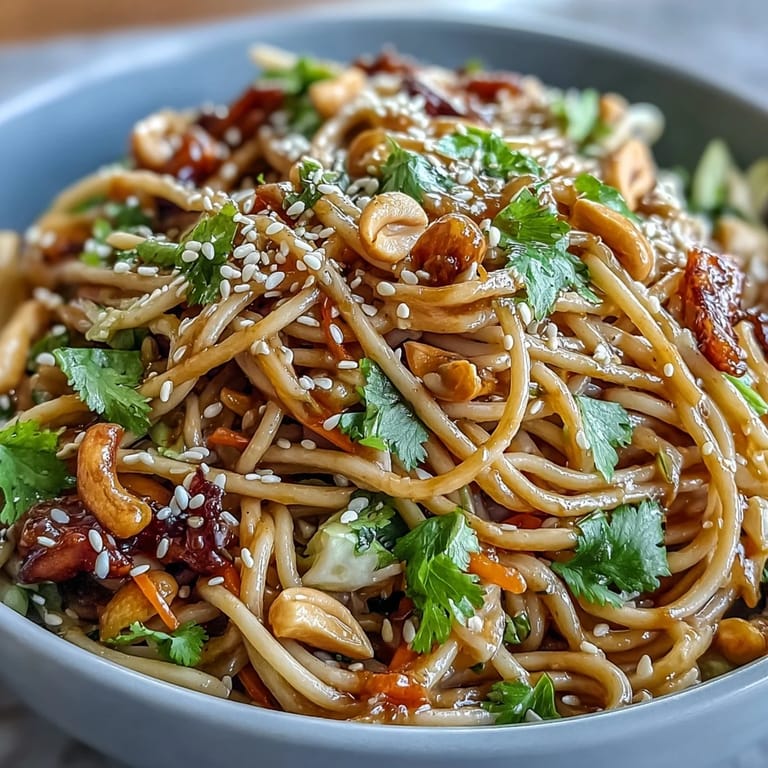
 One humid afternoon, I was rifling through my pantry feeling uninspired when a jar of peanut butter caught my eye, and I wondered what would happen if I treated it like the base of something bigger than a sandwich. Within twenty minutes, I had noodles cascading across a bowl with ribbons of vegetables, and the smell of toasted sesame oil filled my kitchen in a way that made the whole apartment feel intentional. That first bite was a revelation, and I've been making variations ever since, each time discovering something new about how the dressing clings to cold noodles.
I made this for a potluck once, and someone asked if I'd brought it from a restaurant, which felt like the highest compliment my home cooking has ever received. The noodles stayed perfectly chewy even after sitting out, and people kept returning to the bowl all evening, sneaking extra peanuts when they thought no one was looking. That's when I realized this salad had crossed over from weeknight dinner into something worth celebrating.
Ingredients
- Soba noodles or spaghetti: The structure of your salad matters here, so choose noodles that hold their shape when cold and have enough surface area to catch the dressing.
- Sesame oil: A small amount after cooking keeps noodles from clumping together, saving you from that frustrating texture later.
- Red cabbage: The natural crunch and slight sweetness balance the savory dressing beautifully, and the color makes the whole bowl look alive.
- Carrots: Julienned thin means they soften just slightly over time without becoming limp, releasing their natural sweetness into every bite.
- Bell pepper: Red or yellow peppers are sweeter than green, which matters when you're building a balanced dressing.
- Spring onions: Their mild bite adds freshness without overwhelming, so don't skip them thinking you can substitute regular onions.
- Cucumber: Add this right before serving if the salad is sitting, otherwise it releases water that dilutes your dressing.
- Fresh cilantro: If you're the type who thinks cilantro tastes like soap, parsley works just fine and won't ruin your meal.
- Roasted peanuts: Buy these separately rather than using the peanut butter itself, because the texture contrast is what keeps you coming back for more.
- Peanut butter: Creamy works better here than chunky, which seems counterintuitive until you taste how smoothly it coats each noodle.
- Soy sauce: This is your umami anchor, so don't rush past measuring it correctly.
- Rice vinegar: The acidity cuts through the richness of the peanut butter and keeps the salad from tasting heavy.
- Honey or maple syrup: Just a touch of sweetness rounds out the flavors without making it taste like dessert pretending to be a salad.
- Toasted sesame oil: This is different from regular sesame oil, and the toasted version has a deeper, nuttier flavor that matters.
- Fresh ginger: Grated ginger adds a subtle warmth that makes people say the dressing tastes good but can't quite name why.
- Garlic: One small clove is all you need, minced fine so it disperses evenly rather than hitting you in one aggressive burst.
- Sriracha: Keep this optional unless you're feeding people who actively enjoy heat, because it's easy to add but impossible to remove.
- Toasted sesame seeds: These are garnish magic, adding texture and a toasted flavor note that brings everything into focus.
Tired of Takeout? 🥡
Get 10 meals you can make faster than delivery arrives. Seriously.
One email. No spam. Unsubscribe anytime.
Instructions
- Cook the noodles until just tender:
- Get the water boiling, add noodles, and set a timer rather than eyeballing it, because that difference between al dente and soft is what determines whether your salad feels premium or lazy. After draining, run them under cold water while stirring gently with your fingers to stop the cooking, then toss with that measured teaspoon of sesame oil so they separate and stay loose.
- Whisk the dressing into silky perfection:
- In a bowl, combine peanut butter with soy sauce, vinegar, honey, toasted sesame oil, fresh ginger, and minced garlic, whisking until it's smooth and glossy. Add warm water one tablespoon at a time, tasting as you go, until it's pourable but still coats a spoon, because the right consistency makes all the difference between a salad that feels dressed and one that feels drowned.
- Prepare your vegetables with intention:
- Julienne means thin, uniform cuts, so take your time with the carrots and cucumber rather than rushing through with rough chops. Keep everything roughly the same thickness so each bite contains vegetables at the same stage of crispness.
- Build the salad in layers:
- In a large bowl, combine the cooled noodles with all your raw vegetables and cilantro, then pour the dressing over everything at once. Toss thoroughly with both hands if you have them, making sure the dressing coats every noodle and vegetable piece.
- Garnish and serve:
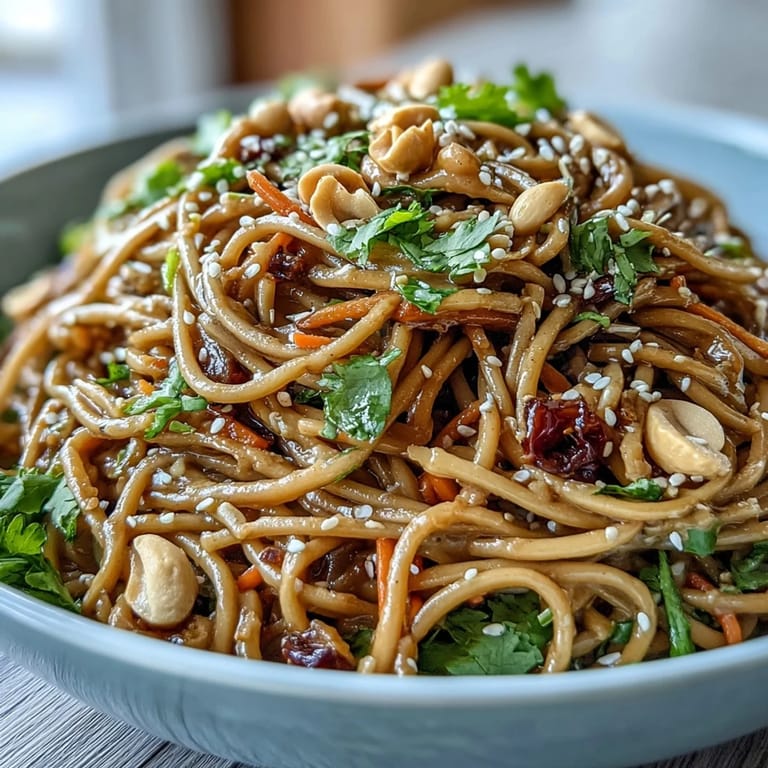
- Transfer to a platter or individual bowls, then top with toasted sesame seeds, extra cilantro, and chopped peanuts right before serving so they stay crunchy. If you're making this ahead, hold off on the peanuts until the last second, adding them only when you're ready to eat.
 Pin it
 I served this to my partner on a night when neither of us wanted to cook, and we ended up sitting on the porch eating out of the same bowl, passing it back and forth until it was empty and laughing about how something this simple felt like a small celebration. That's the moment I understood this recipe wasn't just about feeding yourself, it was about creating a moment that tastes as good as it feels.
The Secret to Getting Your Dressing Right
Most people make the dressing too thick, which is why their noodle salad feels gluey instead of glossy and alive. The trick is whisking the peanut butter with the wet ingredients first, watching how it transforms from a thick paste into something with movement and flow. If you're hesitant about adding water, remember that the dressing will thicken slightly as the salad sits, so what feels slightly loose when you're tossing is actually perfect for serving.
Why This Works as Both Lunch and Dinner
This salad occupies that rare space where it feels light enough for a hot afternoon but substantial enough that you won't be hungry two hours later. The noodles and peanut butter provide real staying power, while the vegetables and sesame oil keep it from feeling heavy or dense in your stomach.
Storage and Make-Ahead Strategy
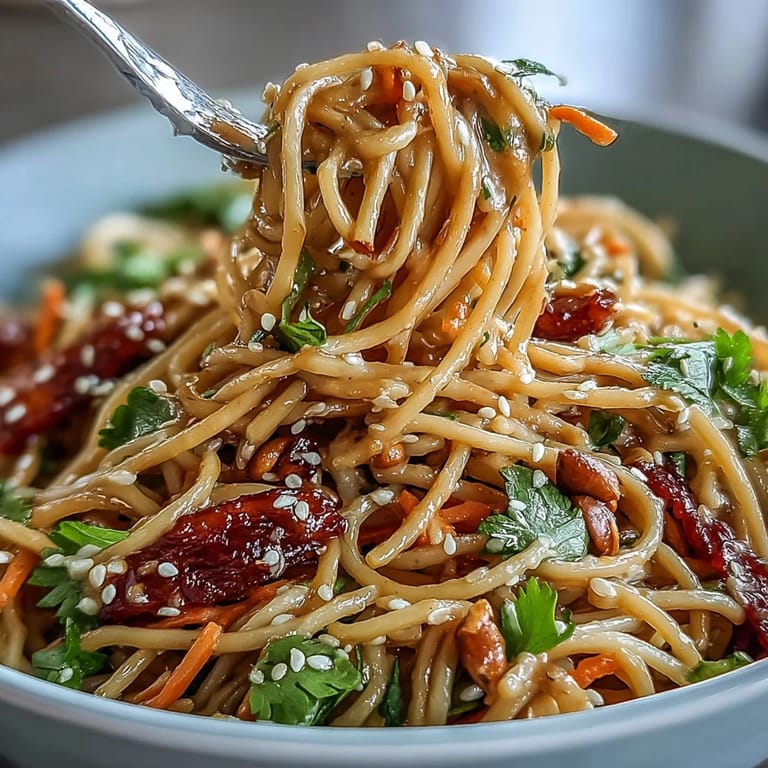
The beauty of this salad is that it actually gets better after sitting in the fridge for a few hours, as the vegetables soften slightly and the flavors meld together into something more cohesive. Store everything in an airtight container and keep the peanuts separate, adding them just before you eat so they stay crispy and don't absorb any moisture.
- If you're prepping for the week, make the dressing in a jar and store it separately from the noodle and vegetable mixture.
- On serving day, reheat the dressing gently in a bowl if it's thickened too much, adding warm water to return it to a pourable consistency.
- This salad keeps for up to two days, after which the noodles start to become mushy and lose their appealing texture.
 Pin it
 This salad has become my answer to the question of what to make when I want something that tastes interesting without demanding hours of my time. Every time I make it, I remember why I keep coming back to it.
Recipe FAQs
- → Can I substitute the soba noodles with other types?
Yes, rice noodles or spaghetti can be used instead, especially to accommodate gluten-free needs. Make sure to cook according to package instructions.
- → How do I make the dressing thinner if it's too thick?
Gradually add warm water, 1 tablespoon at a time, while whisking until the desired pourable consistency is reached.
- → What are good protein options to add?
Grilled chicken, tofu, or shrimp work well to add protein and make the dish more filling.
- → Can I prepare this salad ahead of time?
Yes, but it's best to add the chopped peanuts just before serving to keep the crunch fresh. The salad can be refrigerated for up to 2 days.
- → Is it possible to make this dressing vegan?
Absolutely. Replace honey with maple syrup to keep the dressing plant-based while retaining sweetness.