 Pin it
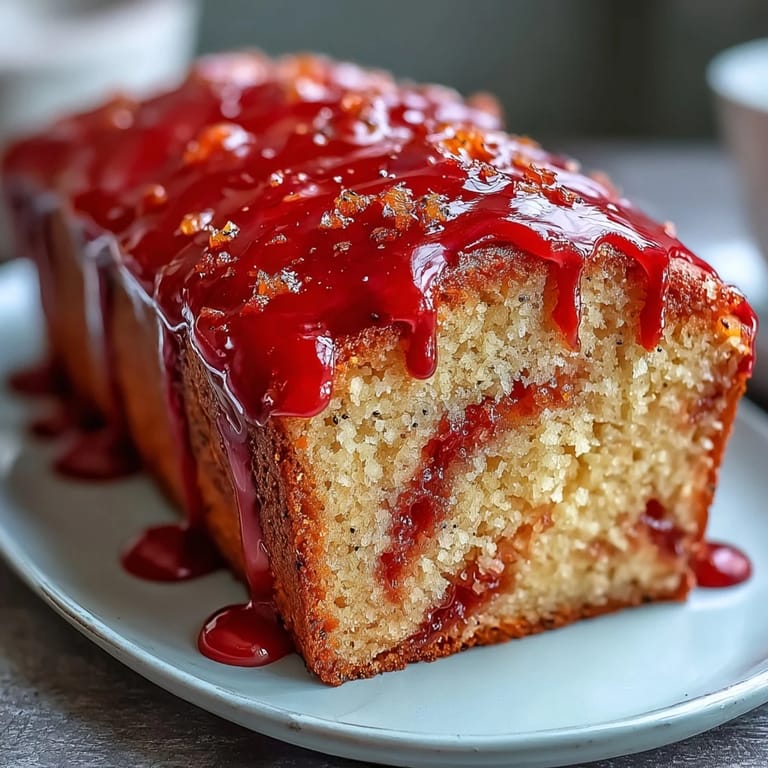
 My kitchen smelled like a candied dream the first time I zested blood oranges for this cake—that sharp, almost wine-like perfume filling the air while winter light streamed through the window. I'd found a bag of them at the market, their deep crimson skin practically glowing, and knew immediately they belonged in something special. The idea of pairing them with poppy seeds and marzipan came from a half-remembered pastry shop visit years ago, but this loaf cake felt like the honest, homey version of that memory. It turned out to be the kind of recipe that makes your kitchen feel a little bit fancy without demanding anything complicated. Now it's become my go-to when I want to impress someone without spending hours in front of the stove.
I'll never forget pulling this from the oven for my neighbor who'd just moved in—her kitchen still packed in boxes—and watching her face when she took that first bite. She actually closed her eyes, and we both just stood there in her empty living room with a slice of this cake, two cups of tea, and suddenly it felt like we'd known each other for years. That's when I realized this loaf does something beyond tasting good; it creates these small, warm moments that stick with you.
Ingredients
- All-purpose flour (200 g): The foundation that keeps everything tender and light, though you can swap in a bit of almond flour if you want extra richness.
- Baking powder (1½ tsp): Your gentle lift—don't skip this or you'll end up with a dense brick instead of a tender cake.
- Salt (¼ tsp): Barely there but absolutely necessary to make the blood orange flavor pop and balance the sweetness.
- Poppy seeds (2 tbsp): These tiny seeds are magic; they toast slightly during baking and give you those beautiful dark speckles throughout.
- Unsalted butter (120 g), softened: Room temperature is non-negotiable here—it's what creates that creamy base that traps air and keeps everything fluffy.
- Granulated sugar (200 g): Creamed with butter and zest, it becomes the backbone of moisture and structure.
- Blood orange zest (from 2 oranges): Use a microplane or fine grater so you capture only the colored part, not the bitter white pith underneath.
- Large eggs (2): They bind everything together and add richness; make sure they're at room temperature so they incorporate smoothly.
- Marzipan (80 g), grated: This is the secret weapon—it dissolves slightly into the batter, adding moisture and a delicate almond flavor that stays subtle and sophisticated.
- Blood orange juice (120 ml): Fresh squeezed tastes infinitely better than bottled; if your blood oranges aren't particularly juicy, supplement with regular orange juice.
- Whole milk (60 ml): It mellows the acidity of the citrus and keeps the crumb tender and moist.
- Vanilla extract (1 tsp): A small amount that rounds out all the flavors without announcing itself.
- Powdered sugar (120 g): For the glaze, whisked smooth with more blood orange juice until it's drizzle-worthy.
- Blood orange juice for glaze (2-3 tbsp): Add it gradually until you reach the consistency you want—thicker for a coat, thinner for a proper drizzle.
Tired of Takeout? 🥡
Get 10 meals you can make faster than delivery arrives. Seriously.
One email. No spam. Unsubscribe anytime.
Instructions
- Heat your oven and prepare the pan:
- Set the oven to 175°C (350°F) and grease your loaf pan thoroughly before lining it with parchment paper—this prevents sticking and makes turning out the cake almost foolproof. The parchment paper should hang slightly over the edges so you can grab it to lift the cooled cake out cleanly.
- Mix your dry ingredients:
- Whisk flour, baking powder, salt, and poppy seeds together in a medium bowl, making sure the poppy seeds are evenly distributed so you get them throughout the cake. Set this aside and don't touch it until you're ready to fold it in.
- Cream butter, sugar, and zest:
- In your largest bowl, beat softened butter with sugar and blood orange zest for about three minutes until the mixture looks pale, fluffy, and almost mousse-like. You're literally whipping air into it, which is what gives your finished cake that tender crumb.
- Incorporate eggs gently:
- Add eggs one at a time, beating well after each addition so each one fully incorporates before you add the next. This might take a couple of minutes per egg, but it's worth it because it prevents the batter from looking curdled.
- Fold in the marzipan:
- Gently fold the grated marzipan into the butter mixture using a spatula, stirring just enough so you can't see any white streaks. Don't overmix—you want some small nuggets of marzipan to remain visible.
- Combine wet ingredients:
- In a separate bowl, stir together blood orange juice, milk, and vanilla extract. This mixture will be added in alternation with your dry ingredients.
- Alternate dry and wet:
- Add the dry ingredients in three additions, alternating with the wet mixture and starting and ending with dry ingredients. After each addition, fold gently with a spatula just until you can't see streaks of flour—overmixing develops gluten and toughens the cake.
- Transfer and bake:
- Pour the batter into your prepared pan and smooth the top gently with the back of a spoon. Bake for 45 to 55 minutes until a toothpick inserted into the center comes out clean or with just a few moist crumbs clinging to it.
- Cool properly:
- Let the cake sit in the pan for 10 minutes—this allows it to set slightly so it won't fall apart when you turn it out. Then flip it onto a wire rack and let it cool completely before glazing, which usually takes about an hour.
- Make and apply the glaze:
- Whisk powdered sugar with blood orange juice, adding the juice slowly until you get a consistency that's pourable but still coats the back of a spoon. Once the cake is completely cool, drizzle the glaze over the top and let it set for at least 15 minutes before slicing.
 Pin it
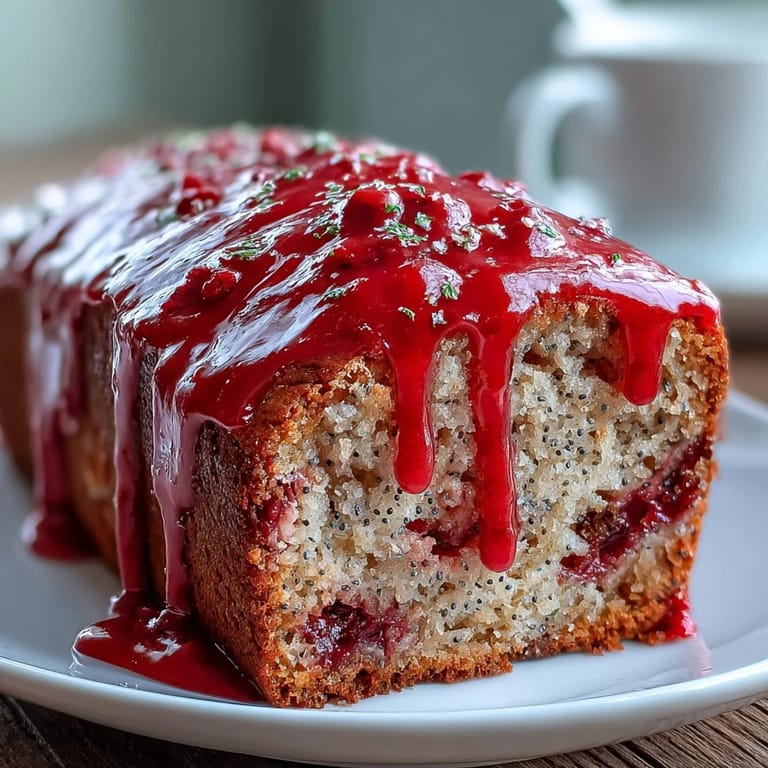
 There's something almost ceremonial about slicing into this cake once the glaze has set—that moment when your knife glides through the tender crumb and you see the poppy seeds scattered throughout like tiny stars. My kitchen always smells better for having made this, and the way it looks on a plate makes even an ordinary afternoon feel a bit special.
Why Blood Orange Makes All the Difference
Blood oranges have this wine-like complexity that regular oranges just can't match—they're sweeter but with this underlying sophistication that makes people pause mid-bite and try to figure out what they're tasting. The deep color also means you're getting more of the beneficial compounds, and the juice has this beautiful tart edge that prevents the cake from tasting one-note or overly sweet. Using the zest and juice together creates layers of flavor that build as you eat, so the last bite tastes as interesting as the first.
The Marzipan Secret
I used to think marzipan was just for shaping into little fruits for decoration, but grated into a cake batter it becomes invisible magic—it adds moisture, tenderness, and this barely-detectable almond undertone that somehow makes the blood orange flavor taste more like itself. The marzipan also helps the cake stay moist for days, so this is the kind of loaf that actually improves slightly after sitting overnight. If you can't find marzipan or want something different, almond paste works too, though it's more assertively flavored so use slightly less.
Storage, Serving, and Perfect Pairings
This cake keeps beautifully in an airtight container at room temperature for two to three days, and honestly tastes better on day two when all the flavors have had time to get cozy with each other. Serve it slightly warm or at room temperature with Earl Grey tea, strong coffee, or a glass of Prosecco if you're feeling fancy. A thin slice is all you need because it's quite rich and satisfying, and the glaze adds just enough sweetness to make it feel like dessert even though it's refined enough for breakfast.
- If you want to gild the lily, add a splash of Cointreau or Grand Marnier to the glaze for extra sophistication.
- Wrap cooled slices individually in parchment and freeze for up to two weeks if you want to make this ahead for unexpected guests.
- Leftovers taste wonderful toasted lightly the next day with a smear of butter or whipped mascarpone.
 Pin it
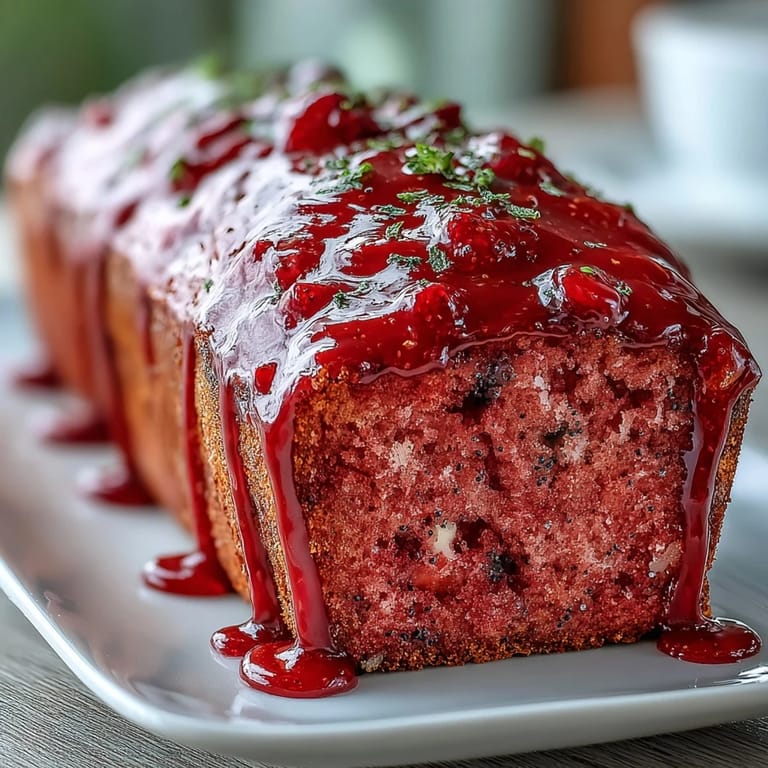
 Making this cake feels like a small luxury that doesn't require any special equipment or extensive baking experience, just a little care and attention to detail. Every time someone takes a bite, you get to watch their face light up, and that never gets old.
Recipe FAQs
- → Can I use regular oranges instead of blood oranges?
Yes, you can substitute regular oranges, though you'll lose the distinctive ruby color and slightly tart flavor profile. Consider adding a splash of cranberry juice for color if desired.
- → How do I know when the loaf is fully baked?
Insert a toothpick into the center of the loaf. If it comes out clean or with just a few moist crumbs, the cake is done. The top should be golden and spring back when gently pressed.
- → Can I make this loaf ahead of time?
Absolutely. This loaf actually improves after a day as the flavors meld. Wrap tightly in plastic wrap and store at room temperature for up to 3 days, or freeze for up to 3 months.
- → What can I substitute for marzipan?
Almond paste works well and provides a deeper almond flavor. Alternatively, add 60g ground almonds and reduce the flour by the same amount for a similar texture without marzipan.
- → Why is my loaf cracking on top?
A crack down the center is perfectly normal and actually desirable in loaf cakes. It occurs when the batter rises quickly and indicates proper oven temperature and leavening.
- → How should I store leftover loaf?
Store in an airtight container at room temperature for 2-3 days. The glaze helps seal in moisture. For longer storage, wrap well and freeze for up to 3 months.