 Pin it
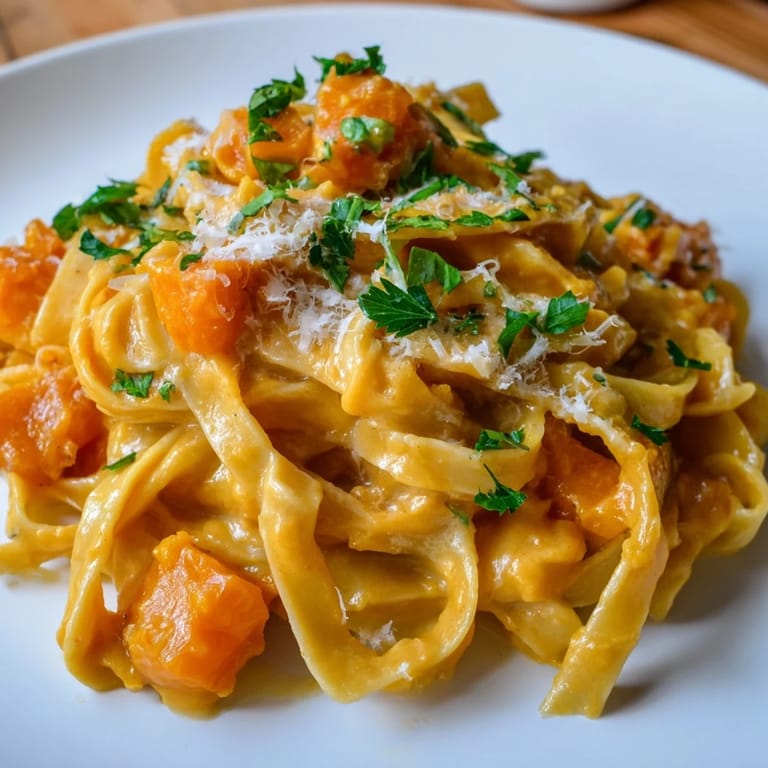
 The first time I made this squash pasta, my roommate walked in and asked why I was making baby food for dinner. She changed her tune after one bite. That was three years ago, and now it is our go-to comfort food whenever the weather turns crisp.
I hosted a small dinner party last November and served this as the main course. My friend Sarah, who claims to hate squash in any form, went back for seconds and asked for the recipe before she even put her coat back on.
Ingredients
- 1 medium butternut squash: Pick one that feels heavy for its size and has no soft spots, the sweetness comes through better when fully ripe
- 2 cloves garlic: Roasting them unpeeled makes them mellow and almost buttery, no sharp bite here
- 1 small yellow onion: Yellow onions caramelize better than sweet ones and add depth to the sauce
- 1 tablespoon fresh sage: Fresh sage holds up to roasting better than dried, though dried works in a pinch
- 2 tablespoons fresh parsley: This is mostly for brightness and color contrast against the golden sauce
- 12 oz dried fettuccine or tagliatelle: The wider noodles catch more sauce, and fresh pasta makes this feel extra special
- 2 tablespoons olive oil: Divide this between roasting the squash and sautéing the onion
- 1/2 cup heavy cream: Full fat coconut milk works beautifully if you need this to be vegan
- 1/3 cup grated Parmesan cheese: Nutritional yeast or vegan Parmesan can substitute here
- 3/4 cup vegetable broth: Homemade broth adds more flavor, but store bought works fine
- Salt and black pepper: Season generously at every step, squash needs more salt than you might expect
- Pinch of nutmeg: This is optional but it makes the sauce taste more complex and restaurant quality
Tired of Takeout? 🥡
Get 10 meals you can make faster than delivery arrives. Seriously.
One email. No spam. Unsubscribe anytime.
Instructions
- Roast the squash and garlic:
- Preheat your oven to 400°F and line a baking sheet with parchment. Toss the cubed squash and unpeeled garlic cloves with 1 tablespoon olive oil, salt, and pepper until everything is evenly coated. Spread in a single layer and roast for 25 to 30 minutes, flipping halfway through, until the squash is tender and starting to caramelize at the edges.
- Cook the pasta:
- While the squash roasts, bring a large pot of salted water to boil and cook the pasta according to package directions. Before draining, scoop out 1/2 cup of the starchy pasta water and set it aside, then drain the rest.
- Sauté the aromatics:
- Heat the remaining tablespoon of olive oil in a large skillet over medium heat. Add the diced onion and chopped sage, cooking for about 4 minutes until the onion is soft and fragrant.
- Blend the sauce:
- Squeeze the roasted garlic cloves from their skins and add them to a blender along with the roasted squash, sautéed onion and sage, vegetable broth, and heavy cream. Blend until completely smooth and creamy, scraping down the sides as needed.
- Finish the sauce:
- Pour the sauce back into the skillet over low heat and stir in the Parmesan cheese and nutmeg if using. Season with salt and pepper, adding splashes of the reserved pasta water if the sauce seems too thick.
- Combine and serve:
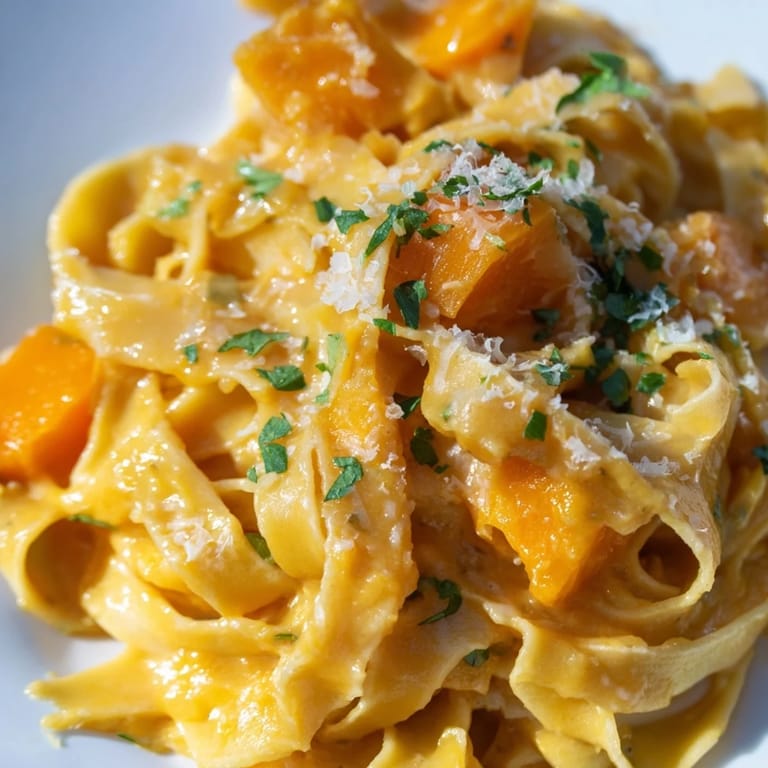
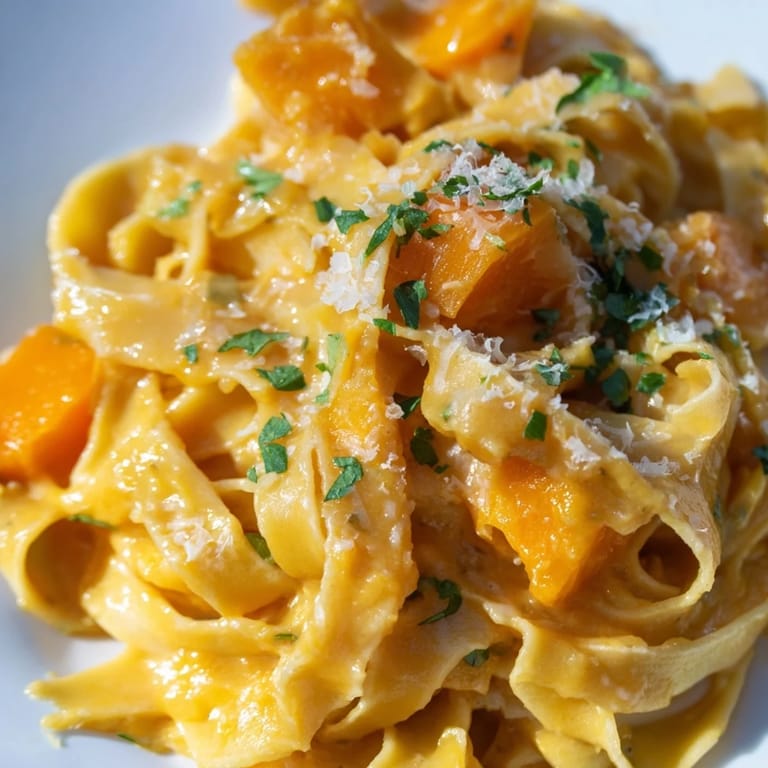
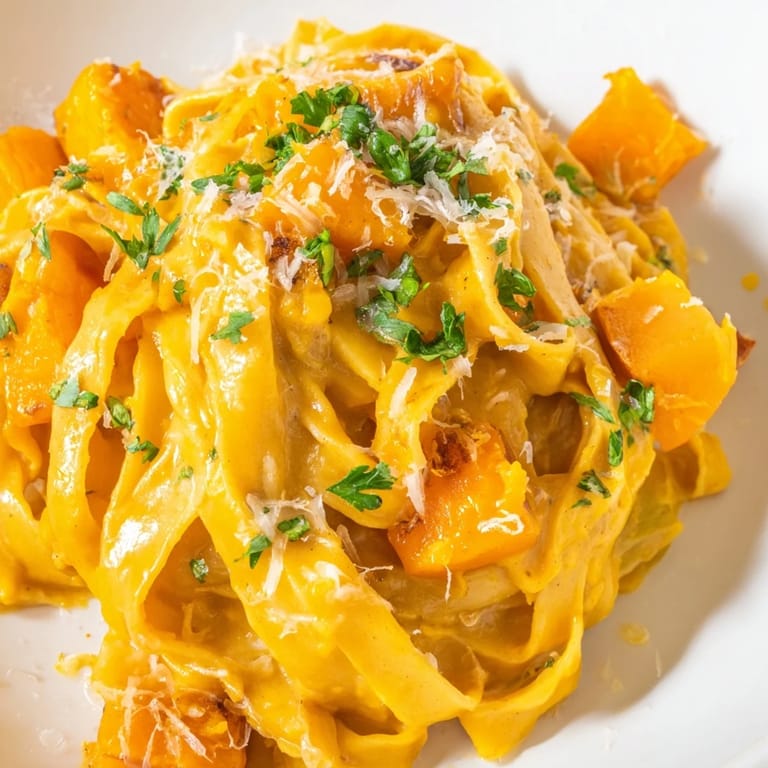
- Add the cooked pasta to the sauce and toss gently until every strand is coated. Let everything warm through for 2 to 3 minutes, then serve immediately topped with chopped parsley and extra Parmesan.
 Pin it
  Pin it
 This recipe became a staple during my first year of graduate school when I needed something that felt indulgent but did not cost much to make. Now every time I smell roasting squash, I think of late nights studying and comfort food that got me through.
Making It Your Own
I have learned that this sauce base is incredibly forgiving. Sometimes I add sautéed mushrooms or spinach for extra nutrition, and toasted walnuts on top add a nice crunch that contrasts with the creamy pasta.
Wine Pairing
A crisp Pinot Grigio cuts through the richness of the sauce without overpowering the subtle squash flavor. If you prefer red, a light Pinot Noir works surprisingly well too.
Storage and Reheating
The sauce keeps in the refrigerator for up to four days and actually tastes better the next day as the flavors meld together. Reheat gently with a splash of water or broth to bring back the creamy consistency.
- Freeze the sauce without the pasta for up to three months
- Undercook the pasta slightly if you plan to reheat it later
- Add a fresh grating of nutmeg when reheating to revive the flavor
 Pin it
  Pin it
 There is something deeply satisfying about turning a humble squash into something this elegant and comforting. Hope this brings your kitchen as much warmth as it has brought mine.
Recipe FAQs
- → Can I make this dairy-free?
Yes, simply substitute heavy cream with full-fat coconut milk and use vegan Parmesan or nutritional yeast. The sauce remains creamy and flavorful.
- → What pasta works best?
Fettuccine or tagliatelle are ideal because their wide surface holds the thick sauce well. Penne or rigatoni also work if you prefer shorter shapes.
- → Can I prep the sauce ahead?
Absolutely. Roast the squash and blend the sauce up to 2 days in advance. Reheat gently, adding a splash of pasta water to loosen before tossing with cooked pasta.
- → How do I store leftovers?
Store in an airtight container in the refrigerator for 3-4 days. Reheat with a splash of water or broth to restore creaminess. The sauce may thicken when cold.
- → What can I add for extra protein?
Stir in white beans, sautéed chickpeas, or crispy pancetta. Grilled chicken or roasted chickpeas also complement the sweet squash flavors beautifully.
- → Is this freezer-friendly?
The sauce freezes well for up to 3 months. Freeze without pasta, then thaw overnight in the refrigerator and reheat gently before tossing with freshly cooked pasta.