 Pin it
 A friend once brought this to a potluck on a blistering summer afternoon, and I watched it disappear faster than the ice in everyone's glasses. The moment I tasted it—that bright lemon cutting through warm spices, the little pops of sweetness from the raisins—I knew I had to learn how to make it. What struck me most was how it tasted even better the next day, the flavors settling into something more confident and rounded.
I made this for a weeknight dinner when I was too tired to think, and it became the kind of meal that quietly saved the evening. My partner asked for seconds before I'd even sat down, and suddenly we weren't just eating—we were talking about flavors and why this simple bowl felt so satisfying. That's when I realized how the roasted vegetables brought this savory depth that kept the whole thing from feeling too light or summery.
Ingredients
- Couscous: Use the regular kind, not pearl—it absorbs the broth perfectly and becomes fluffy rather than stodgy, and that 5-minute rest is non-negotiable for separating the grains.
- Vegetable broth: Hot broth is the secret; it doesn't just cook the couscous, it starts infusing it with flavor from the first moment.
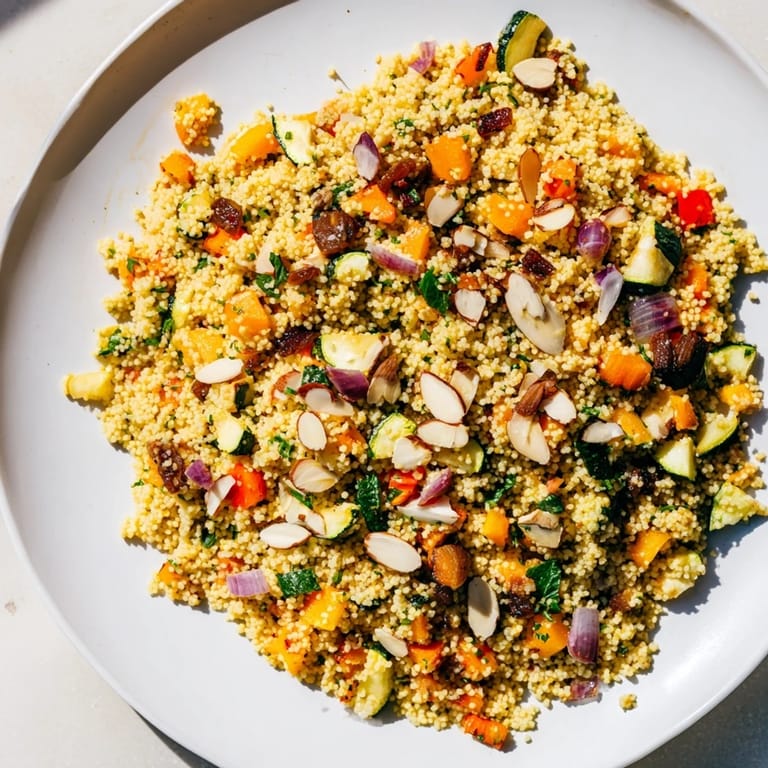
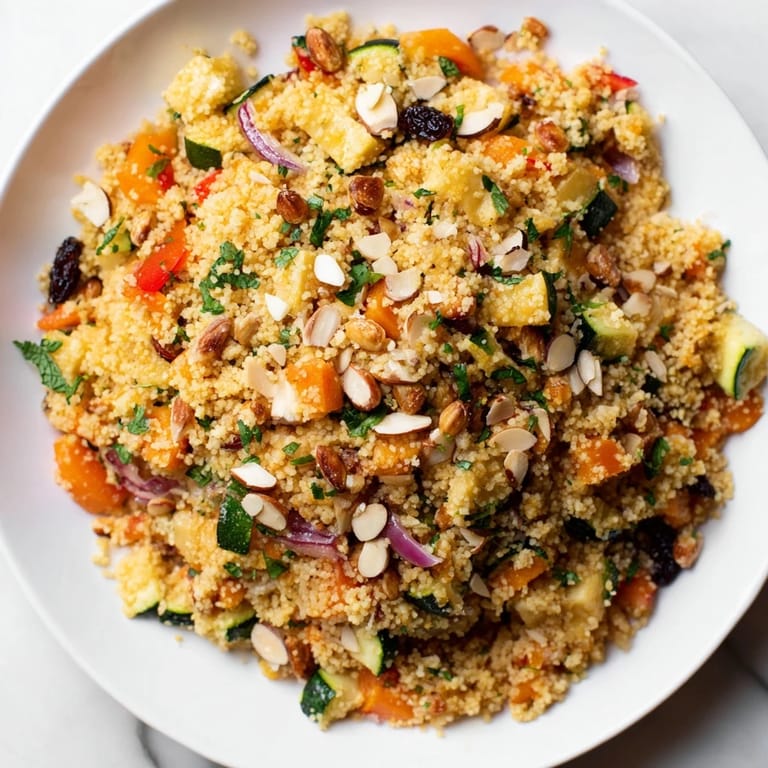
- Zucchini, bell pepper, carrot, and red onion: Dice them all to roughly the same size so they roast evenly and create that tender, caramelized exterior that makes this dish work.
- Cumin, coriander, and smoked paprika: These three together create the Moroccan backbone—don't skip the smoked paprika, it's what makes people ask what that depth is.
- Chickpeas: They add protein and a satisfying texture, and draining and rinsing them prevents the salad from becoming watery.
- Raisins: They soften slightly as the salad sits, releasing little bursts of sweetness that balance the lemon and spices beautifully.
- Fresh parsley and mint: Don't chop them until the last moment—fresh herbs are what give this its final spark of life.
- Lemon and garlic dressing: The lemon should be freshly squeezed; bottled juice tastes tinny and misses the bright, alive quality this salad needs.
Tired of Takeout? 🥡
Get 10 meals you can make faster than delivery arrives. Seriously.
One email. No spam. Unsubscribe anytime.
Instructions
- Get your oven ready and prep the vegetables:
- Heat the oven to 425°F and line a baking sheet with parchment—this prevents sticking and makes cleanup effortless. Toss your diced vegetables with olive oil and the spices, making sure every piece gets a light coating so they'll caramelize evenly.
- Roast until they're golden and tender:
- Spread them on the sheet and roast for 20–25 minutes, stirring halfway through so nothing burns on the edges. You're looking for that slightly charred, caramelized look where the edges turn golden and the vegetables soften.
- Prepare the couscous while vegetables roast:
- Place couscous in a large bowl with the hot broth and olive oil, cover it with a plate, and let it sit untouched for 5 minutes. After that, fluff it with a fork—this step is what transforms clumpy couscous into those separate, fluffy grains.
- Make the dressing:
- Whisk together fresh lemon juice, extra-virgin olive oil, minced garlic, and a touch of honey, seasoning to taste. This should taste bright and slightly sharp—you're building flavor that will carry through the whole salad.
- Bring it all together:
- Once the vegetables have cooled slightly, add them to the couscous along with the chickpeas, raisins, and fresh herbs. Pour the dressing over and toss gently—you want everything evenly coated but the couscous still loose and fluffy, not compressed into a paste.
- Serve and taste:
- This is best at room temperature or chilled, which also makes it perfect for preparing ahead. Let it rest for a few minutes before serving so the flavors settle together.
 Pin it
 There's a moment when you're stirring this together—when the warm vegetables meet the fluffy couscous and everything starts to meld with that bright lemon—where cooking stops feeling like a task and becomes something almost meditative. It's in that moment you realize why people come back to certain dishes again and again.
The Magic of Roasting Vegetables
Roasting isn't just a cooking method here; it's what separates a forgettable salad from one that actually matters. When those vegetables hit the hot oven, their natural sugars caramelize and their flavors concentrate into something savory and rich that raw vegetables could never deliver. The slight char on the edges creates complexity and depth that makes you feel like this took far more effort than it actually did.
Why This Works as a Complete Meal
On paper it's just a salad, but the chickpeas bring protein, the couscous brings substance, and the vegetables bring nutrients—you're not leaving the table hungry. I've served this at dinners where people asked if there was meat in it, and when I said no, they looked genuinely surprised. That's when you know you've created something that transcends the category it's in.
Variations and Seasonal Shifts
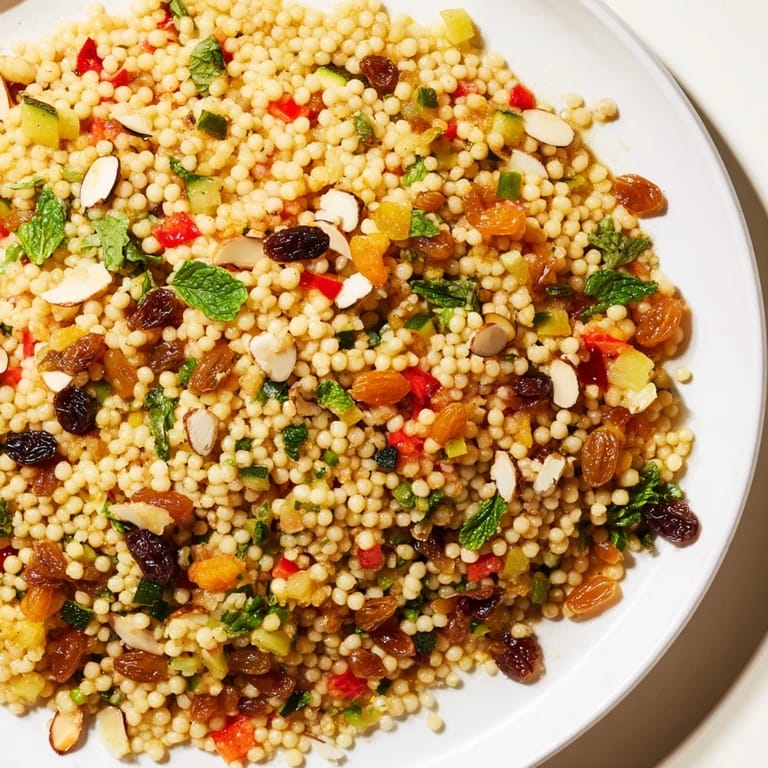
This salad is endlessly flexible, which is part of why I come back to it season after season. In spring I've swapped the red onion for spring onions and added fresh peas; in autumn I've roasted butternut squash instead of zucchini and used dried apricots instead of raisins. The structure stays the same—roasted vegetables, fluffy couscous, fresh herbs, bright dressing—but you can pivot the specific ingredients based on what's good and what you're craving.
- Try feta cheese for richness, or toasted sunflower seeds if you need the salad dairy-free.
- Pomegranate seeds are stunning in place of or alongside raisins for an extra pop of tartness.
- A pinch of harissa stirred into the dressing transforms this from gentle to boldly spiced.
 Pin it
 This is the kind of recipe that lives on rotation because it works for so many moments—quick weeknight dinners, potluck contributions, light lunches, or even as part of a larger spread. Once you make it once, you'll understand why.
Recipe FAQs
- → How do I achieve fluffy couscous?
Pour boiling vegetable broth over couscous, cover and let it steam for 5 minutes, then fluff gently with a fork to separate the grains.
- → Can I roast the vegetables ahead of time?
Yes, roasting vegetables in advance and cooling them slightly helps deepen their flavors and makes assembly quicker.
- → What alternatives are there for raisins?
Dried apricots or cranberries provide a pleasant sweet contrast and can substitute raisins without altering texture much.
- → How can I make this dish vegan?
Replace honey in the dressing with maple syrup to ensure it fits a vegan diet.
- → What nuts add crunch to this dish?
Toasted slivered almonds lend a mild crunch that complements the softness of the couscous and vegetables.
- → Is it better served warm or cold?
This dish is versatile, equally delicious served chilled or at room temperature depending on preference.