 Pin it
 I discovered this presentation at a friend's Moroccan-inspired dinner party, where the appetizer table took my breath away—vegetables arranged like a geometric tent, dips gleaming at the center, and the whole thing begging to be deconstructed by hungry hands. What struck me wasn't just the flavors, but how the visual impact made everyone slow down and gather. That night, I realized appetizers don't have to be fussy; they just need an idea that feels intentional, even playful. The Moroccan Tent became my answer when I wanted to impress without spending hours in the kitchen.
I made this for a small gathering during the first cool September evening, and something about the ritual of arranging those vegetables felt meditative—like I was building something, not just plating food. My neighbor brought wine, someone else brought music, and suddenly we were having a dinner party without any of the stress. The tent shape became a conversation starter; people wanted to know how I'd thought it up, and I loved admitting it was borrowed from someone else's brilliant idea.
Ingredients
- Cucumber: Sliced lengthwise into elegant planks that hold their crunch; they're your sturdy base for the tent structure.
- Red and yellow bell peppers: The real visual stars—their brightness feels celebratory, and they stay crisp for hours.
- Carrots: Cut into sticks for easy grabbing and a natural sweetness that balances the earthier dips.
- Cherry tomatoes: Halved to show off that jewel-like interior; they add moisture and a hint of acidity.
- Red onion: Paper-thin slices bring a sharp, fresh bite that wakes up your palate.
- Radishes: Underrated and peppery; they add a textural surprise most people don't expect.
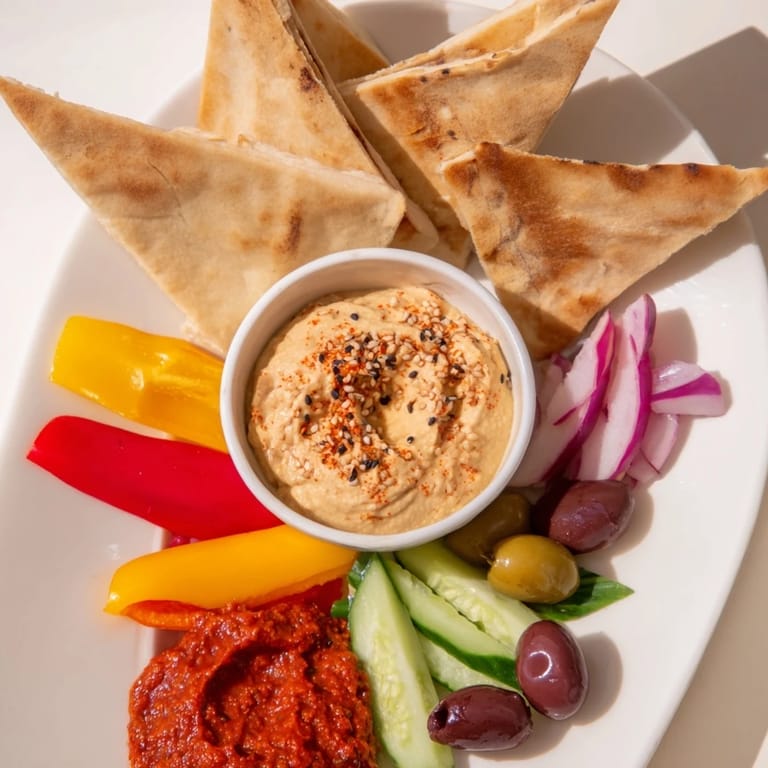
- Pita or msemen: Warming them briefly softens the crumb and makes them feel freshly baked, even if they're store-bought.
- Hummus: Creamy, nutty, and the foundation of the flavor story.
- Muhammara: That roasted red pepper base delivers a gentle heat and unexpected depth.
- Baba ganoush: Smoky and luxurious, it's the dip that people return to again and again.
- Olives and garnishes: They're not afterthoughts—cumin, paprika, cilantro, and sesame seeds are the final flourish that says you actually care.
Tired of Takeout? 🥡
Get 10 meals you can make faster than delivery arrives. Seriously.
One email. No spam. Unsubscribe anytime.
Instructions
- Set the stage:
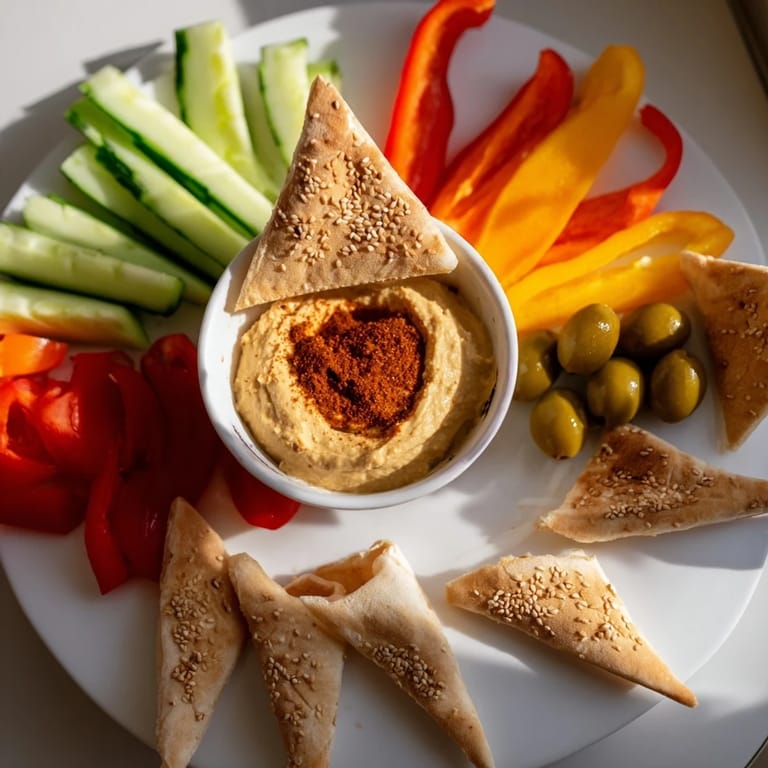
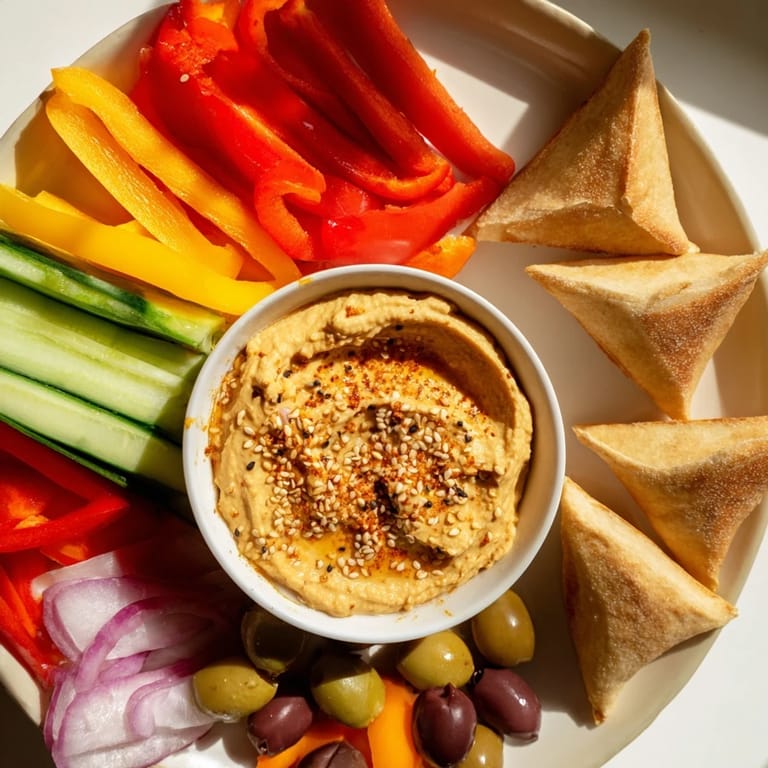
- Arrange your vegetables in pointed, triangular groupings on a large platter, building upward like you're creating a tent canopy. Alternate colors as you go—red pepper next to carrot, yellow next to cucumber—so the eye travels across layers of color and texture.
- Warm the bread:
- Heat your pita or msemen in a dry skillet or oven for just 2-3 minutes until they're pliable but still warm, then cut into triangles. Fan them out around the base of your vegetable structure so guests can see they're ready to use.
- Dress the dips:
- Spoon hummus, muhammara, and baba ganoush into small bowls, then sprinkle each with cumin, paprika, and sesame seeds. This final step transforms store-bought dips into something that feels intentional and homemade.
- Add the finishing touches:
- Scatter olives across the platter and finish with a generous handful of fresh cilantro or parsley. The herbs bring brightness and that last whisper of freshness.
- Serve with intention:
- Bring it straight to the table and let your guests dip, tear, combine, and experiment—that's where the real magic happens.
 Pin it
 There's a moment at every gathering when someone breaks off the first piece of bread, loads it with dip and vegetables, takes that first bite, and smiles without saying anything. That's when I know the platter worked—not because it's beautiful, but because it transformed a simple appetizer into an experience. The tent became shorthand for "we're taking this seriously" and "you're welcome to take your time."
Building the Perfect Tent Shape
The geometry matters, but not in a fussy way. Think of your vegetables as building blocks rather than individual items—each one supports the next, creating that peaked silhouette. Start with your tallest, sturdiest pieces (carrots and cucumber planks work beautifully), then fill in around them with peppers and softer vegetables. The triangular groupings should point upward, creating that canvas-tent look. Stand back as you arrange; you'll know it's right when your eye naturally travels to the center and the whole thing feels balanced, not cramped.
Making Store-Bought Dips Look Homemade
The honest truth is that store-bought hummus, muhammara, and baba ganoush are already delicious—you're not fixing them, you're honoring them. Spoon each into a shallow bowl so guests can see the texture, then dust with just a touch of cumin and smoked paprika. Those spices add visual warmth and a hint of complexity that makes people pause and think you've done something special. Toasted sesame seeds scattered on top catch the light and add a subtle nuttiness that ties everything together.
Timing and Storage Secrets
This platter rewards preparation—slice your vegetables in the morning or early afternoon, wrap them separately in damp paper towels, and refrigerate. Right before guests arrive, arrange everything on the platter but hold off on the bread until the last possible moment; warm it in the oven or skillet while people are arriving so it's still steaming when you set it down. The dips are happiest at cool room temperature, so take them out of the fridge about 15 minutes before serving.
- Vegetables stay crunchiest when stored wrapped and chilled, then arranged just before service.
- The bread tastes freshest within 5 minutes of warming, so time it right.
- Everything except the bread can sit for 2-3 hours once arranged, so don't stress about perfect timing.
 Pin it
 There's something generative about a platter that invites people to build their own bites, to experiment with combinations you didn't plan for. The Moroccan Tent stops being about appetizers and becomes an invitation—to slow down, to share, to trust that simple, beautiful food brings everyone together.
Recipe FAQs
- → What flatbreads work best for this platter?
Pita breads or Moroccan msemen cut into triangles are ideal, warmed lightly for softness and shape.
- → Can the vegetable selection be varied?
Yes, snap peas or blanched green beans can be added or swapped for extra crunch and color.
- → How should the dips be seasoned?
Dips are enhanced with ground cumin, smoked paprika, and toasted sesame seeds for balanced warmth and aroma.
- → Is this platter suitable for vegetarians?
Yes, all components are vegetarian-friendly, featuring fresh produce, legumes, and herbs without meat products.
- → What serving tools are recommended?
A large serving platter, bowls for dips, and a sharp knife for cutting vegetables and breads are essential.
- → Can this platter accommodate special diets?
With dairy-free dips and breads, this can be adjusted to suit vegan diets with ease.