 Pin it
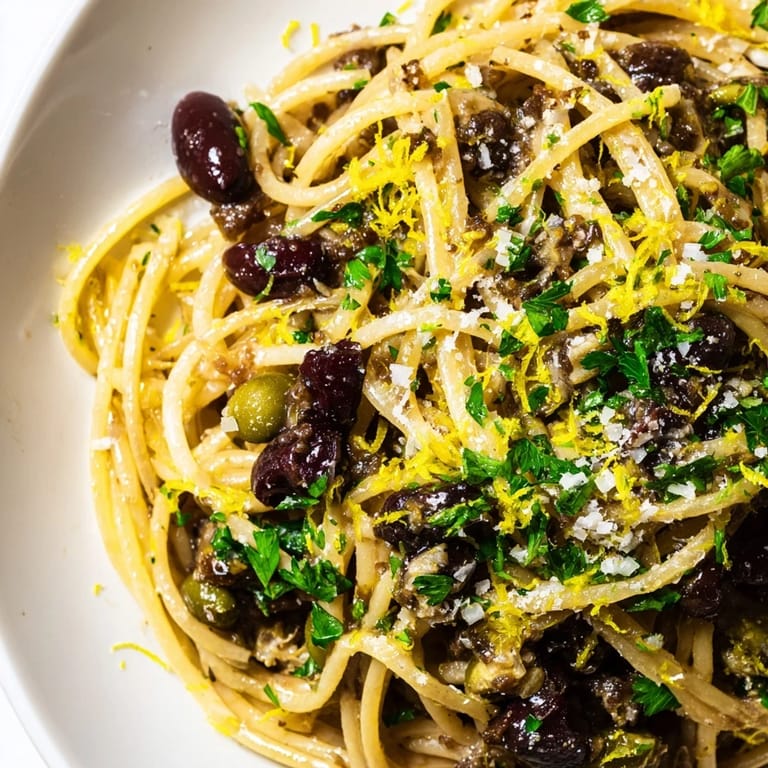
 The salt air hits me before I even step into the kitchen. That night in Nice, sitting at a tiny corner table, the waiter brought out this rough, chunky olive paste that changed everything about how I think about pasta. It wasn't fancy restaurant food, just honest ingredients smashed together with confidence. I've been chasing that memory ever since, and honestly, my version might be better.
My sister was skeptical when I described it. Olives on pasta sounds intense, right? But one bite in and she was literally scraping her plate. Now she requests it every time she visits, even in the dead of winter when we're craving something that tastes like sunshine.
Ingredients
- Mixed pitted olives: The combo of briny Kalamata and bright green olives creates layers of flavor, and buying them pitted saves you tedious work
- Capers: These little bursts of saltiness add complexity, just drain them well first
- Garlic: Use it raw here because the food processor breaks it down perfectly, no harsh bite
- Fresh parsley: This isn't just garnish, it cuts through the richness with its clean, peppery flavor
- Extra-virgin olive oil: Don't skimp here because this oil becomes your sauce, carrying all those bold flavors
- Dried spaghetti or linguine: The long strands hold the chunky tapenade beautifully
- Pasta water: That starchy liquid is the secret weapon that transforms tapenade into silky sauce
Tired of Takeout? 🥡
Get 10 meals you can make faster than delivery arrives. Seriously.
One email. No spam. Unsubscribe anytime.
Instructions
- Get your pasta water going:
- That salted pot needs to be boiling vigorously before you drop in the pasta, and don't forget to save some water before draining
- Make the tapenade:
- Pulse the olives, capers, garlic, parsley and lemon juice until coarsely chopped, then drizzle in olive oil while the motor runs for the perfect texture
- Bring it together:
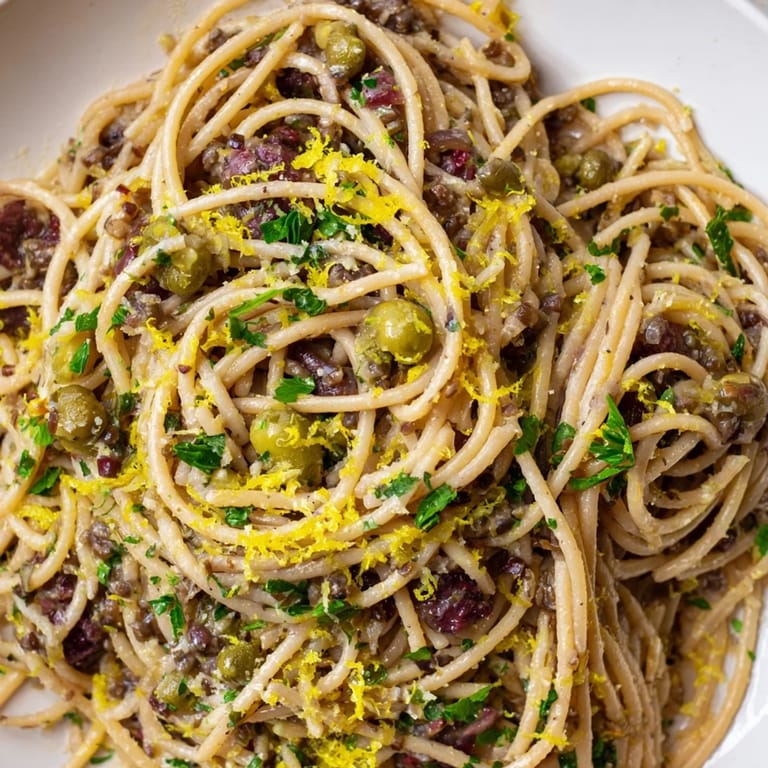
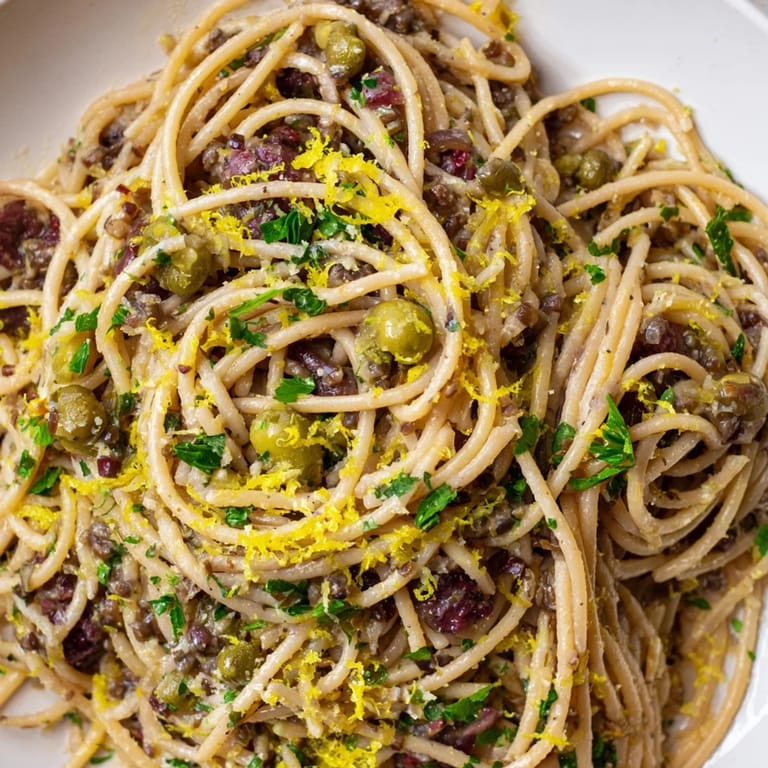
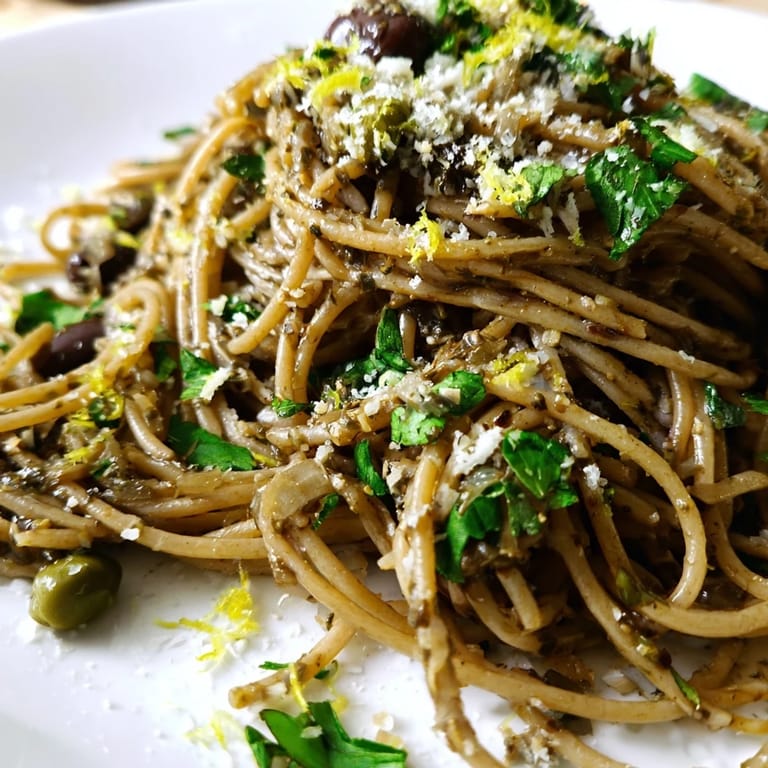
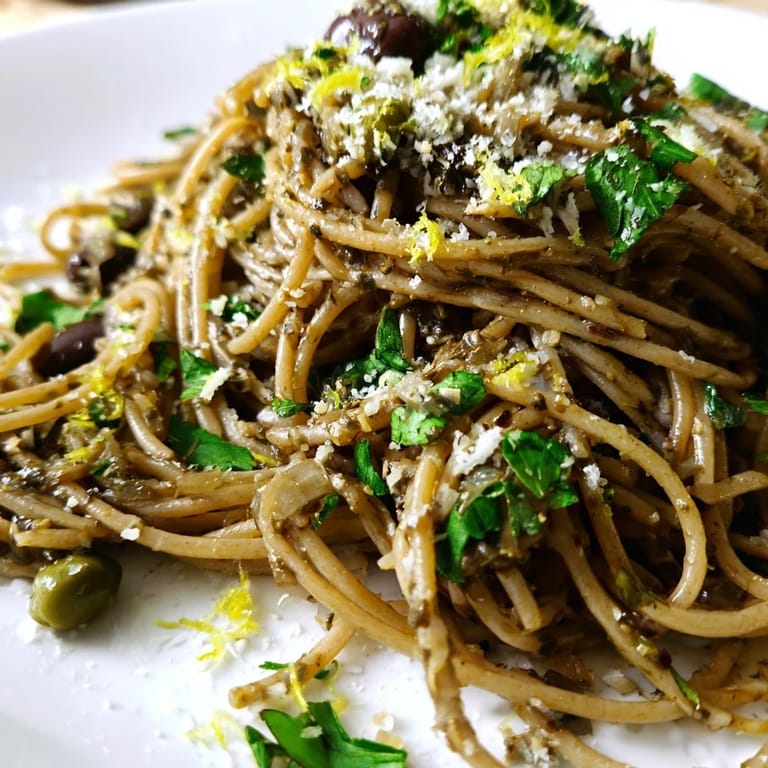
- Toss the hot pasta directly with the tapenade, adding splashes of pasta water until everything coats in a glossy, clinging sauce
 Pin it
  Pin it
 Last summer, my neighbor caught me eating this straight from the pot on my back porch. She asked for a taste and ended up staying for dinner. That's the kind of recipe this is, one that pulls people in.
Making It Your Own
I've learned that some people want heat and others don't. A pinch of red pepper flakes in the tapenade adds this gentle warmth that balances the salt perfectly, but it's completely optional. Start without and see how it tastes first.
Serving Suggestions
This dish stands alone beautifully, but a crisp white wine makes it sing. Sometimes I'll serve it with a simple arugula salad dressed in nothing but lemon and olive oil to echo those same flavors.
Storage And Make-Ahead
The tapenade keeps for a week in the fridge, which means I often double the batch just to have it ready for quick weeknight dinners. It's also amazing on sandwiches or as a dip for crusty bread. The pasta, though, is best enjoyed immediately while that sauce is still warm and clinging to every strand.
- Make the tapenade up to three days ahead and store it in an airtight container
- Bring the tapenade to room temperature before tossing with hot pasta for better mixing
- The pasta itself doesn't reheat well, so only cook what you'll eat right then
 Pin it
  Pin it
 Some recipes are about technique and others are about letting great ingredients shine. This one is definitely the latter.
Recipe FAQs
- → Can I make the tapenade ahead of time?
Yes, prepare the tapenade up to 5 days in advance and store it in an airtight container in the refrigerator. The flavors actually develop and intensify over time, making it even more delicious.
- → What pasta shapes work best?
Long strands like spaghetti, linguine, or fettuccine are traditional choices that allow the chunky tapenade to coat evenly. Short shapes like penne or fusilli also work wonderfully if you prefer something that holds bits of olives and capers in every bite.
- → Is this suitable for meal prep?
The dish reheats well, though the pasta may absorb some sauce. Store in an airtight container for up to 3 days and add a splash of olive oil or water when reheating to restore the silky texture.
- → Can I use different olives?
Absolutely. While Kalamata and green olives create a balanced flavor profile, you can use niçoise, castelvetrano, or even black olives. Mix varieties for complex briny notes or stick to one type for a more focused taste.
- → How do I adjust the consistency?
If the mixture feels too thick, gradually add more reserved pasta water, one tablespoon at a time, while tossing. This starchy liquid helps emulsify the olive oil and creates a smooth, glossy sauce that clings perfectly to the pasta.