 Pin it
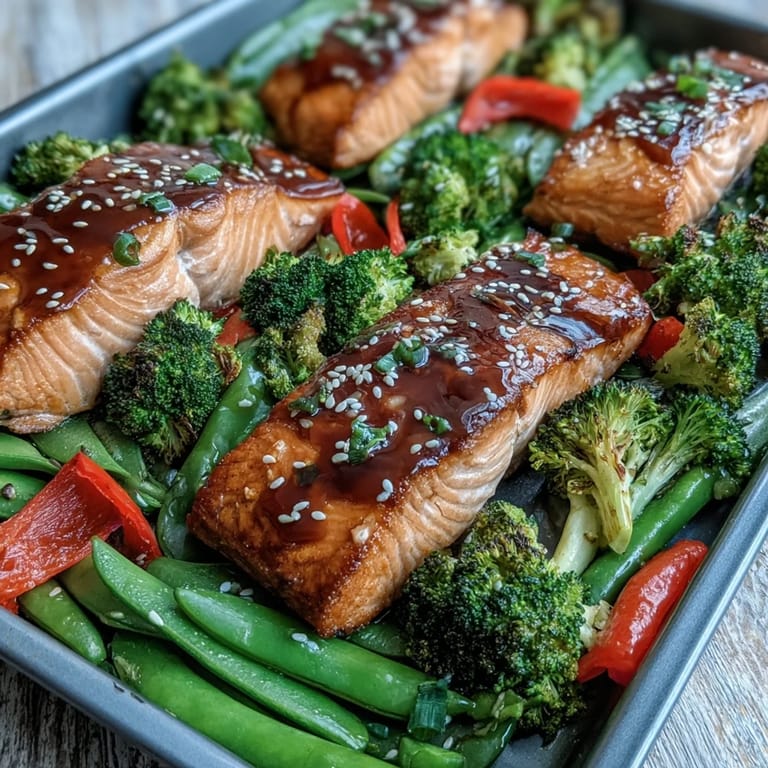
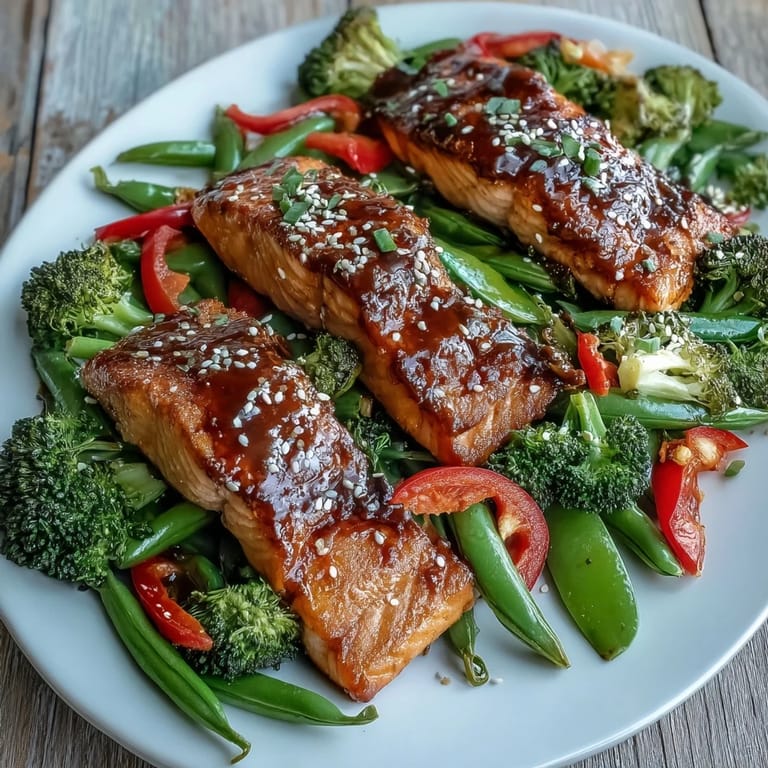
 Experience the perfect fusion of health and flavor with this Sheet Pan Teriyaki Salmon. This vibrant dish features succulent salmon fillets and a colorful array of crisp broccoli and snap peas, all brought together by a rich, homemade glaze. It is the ultimate solution for a wholesome, Asian-inspired meal that requires minimal effort and delivers maximum taste.
Pin it By roasting the salmon and vegetables together, the flavors meld beautifully. The natural sweetness of the snap peas and bell peppers complements the savory-sweet notes of the honey and soy-based sauce, while the broccoli provides a satisfying char and crunch.
Ingredients
Tired of Takeout? 🥡
Get 10 meals you can make faster than delivery arrives. Seriously.
One email. No spam. Unsubscribe anytime.
- Salmon: 4 (5–6 oz) skin-on salmon fillets
- Vegetables: 2 cups broccoli florets, 2 cups sugar snap peas (trimmed), 1 red bell pepper (sliced)
- Teriyaki Sauce: 1/4 cup low-sodium soy sauce, 3 tbsp honey or maple syrup, 1 tbsp rice vinegar, 1 tbsp sesame oil, 2 cloves garlic (minced), 1 tsp fresh ginger (grated), 1 tsp cornstarch mixed with 2 tsp water
- Garnishes: 1 tbsp sesame seeds, 2 scallions (thinly sliced), lime wedges
Instructions
- 1. Oven Setup
- Preheat oven to 400°F (200°C). Line a large sheet pan with parchment paper or foil for easy cleanup.
- 2. Prepare Teriyaki Sauce
- In a small saucepan over medium heat, combine soy sauce, honey, rice vinegar, sesame oil, garlic, and ginger. Bring to a gentle simmer, then stir in the cornstarch slurry. Cook, whisking, until thickened (about 1–2 minutes). Remove from heat.
- 3. Glaze Salmon
- Arrange salmon fillets on one side of the prepared sheet pan. Brush each fillet generously with teriyaki sauce, reserving some for the vegetables.
- 4. Prepare Vegetables
- In a bowl, toss broccoli, snap peas, and bell pepper with a drizzle of olive oil and a tablespoon of the teriyaki sauce. Spread vegetables in a single layer beside the salmon.
- 5. Roast
- Roast for 15–18 minutes, or until the salmon flakes easily and vegetables are crisp-tender.
- 6. Optional Broil
- Broil for 1–2 minutes at the end for extra caramelization, if desired.
- 7. Serve
- Drizzle remaining teriyaki sauce over salmon and vegetables. Garnish with sesame seeds, scallions, and a squeeze of lime. Serve immediately.
Zusatztipps für die Zubereitung
Using a large sheet pan is essential to prevent overcrowding, which ensures the vegetables roast rather than steam. A brush for glazing helps apply the sauce evenly, while a small saucepan and whisk are needed to achieve the perfect glossy consistency for the homemade teriyaki sauce.
Varianten und Anpassungen
For a gluten-free version, simply substitute the soy sauce with tamari. You can also customize the vegetable mix based on your preference; green beans or asparagus make excellent alternatives to snap peas. For a spicy kick, add a pinch of chili flakes to the glaze.
Serviervorschläge
Serve this dish over a bed of steamed jasmine or brown rice to soak up the delicious glaze. If you are meal prepping, portion the leftovers into airtight containers; they stay fresh and flavorful in the refrigerator for up to 2 days.
 Pin it
 With 28g of protein per serving and a wealth of vitamins from the fresh vegetables, this Sheet Pan Teriyaki Salmon is as nourishing as it is delicious. Enjoy a restaurant-quality meal from the comfort of your own kitchen with very little cleanup required.
Recipe FAQs
- → Can I use frozen salmon for this dish?
Yes, frozen salmon works well. Thaw completely in the refrigerator overnight and pat dry before applying the teriyaki glaze for the best results.
- → What vegetables can I substitute?
Green beans, asparagus, snow peas, or baby bok choy all work beautifully. Just adjust roasting time accordingly—thicker vegetables may need a few extra minutes.
- → Is this suitable for meal prep?
Absolutely. Portion leftovers into airtight containers and store in the refrigerator for up to 2 days. Reheat gently to maintain the salmon's texture.
- → Can I make this gluten-free?
Simply replace the soy sauce with tamari or a certified gluten-free soy sauce alternative. All other ingredients naturally contain no gluten.
- → How do I know when the salmon is done?
The salmon should flake easily with a fork and reach an internal temperature of 145°F. The flesh will turn opaque and spring back when lightly pressed.
- → Can I grill this instead of roasting?
Yes, grill salmon and vegetables separately on medium-high heat. Brush with teriyaki sauce during the last few minutes of cooking for that caramelized finish.