 Pin it
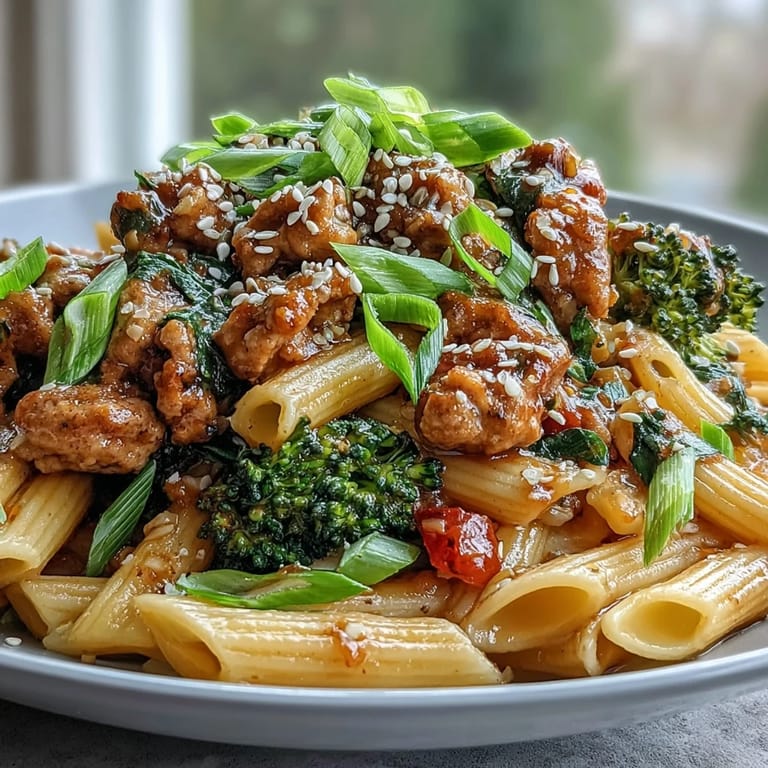
 There's something about the sizzle of ground turkey hitting a hot skillet that makes a weeknight feel less like an obligation and more like an adventure. I stumbled onto this sweet and spicy pasta combo on a Tuesday when I was determined to move away from my usual rotation, armed with sriracha and a stubborn refusal to order takeout again. The first bite—that perfect balance of honey's warmth against the chili's kick—felt like a small victory, the kind that makes you wonder why you didn't discover it sooner. Now it's become my go-to when I want something that tastes restaurant-quality but requires barely any cleanup.
My neighbor stopped by one evening just as the aroma was drifting through the open kitchen window, and she asked what smelled so good before I'd even finished plating. I made her a quick bowl, and watching her eyes light up at that first forkful was better than any compliment—it became the dish I now make whenever she visits. There's something special about food that brings people to the table without being asked, and this pasta does exactly that.
Ingredients
- Penne pasta (12 oz): Al dente is your target—it should have just a whisper of resistance when you bite it, not mushy.
- Ground turkey (1 lb): The leanest option keeps this dish feeling fresh, but don't skip the browning step or you'll lose all that caramelized flavor.
- Broccoli florets (2 cups): Cut them small enough to coat with sauce but large enough that they don't disappear into oblivion.
- Red bell pepper (1 medium): The sweetness balances the heat beautifully, and it adds a burst of color that makes the dish feel less weeknight-rushed.
- Onion (1 small) and garlic (2 cloves): These build the foundation—don't skip the mincing step, as larger chunks will overpower the delicate sauce balance.
- Olive oil (2 tbsp): Medium-high heat is crucial here; too low and you won't get that gorgeous browning on the turkey.
- Soy sauce (1/4 cup): Low-sodium is worth seeking out, since you control the salt from there forward.
- Honey or brown sugar (2 tbsp): Honey dissolves more smoothly into the sauce, but brown sugar adds a deeper molasses note if that's your preference.
- Sriracha (1.5 tbsp): This is where personality enters the dish—taste as you go and adjust to your heat tolerance.
- Rice vinegar (1 tbsp): The acidity cuts through the richness and keeps the sauce from becoming one-dimensional.
- Toasted sesame oil (1 tsp): A little goes a long way; cheap sesame oil tastes flat, so invest in the real thing.
- Black pepper (1/2 tsp): Freshly ground makes all the difference in a sauce this balanced.
- Green onions and sesame seeds (garnish): These finish the dish with texture and freshness that elevates it from simple to special.
Tired of Takeout? 🥡
Get 10 meals you can make faster than delivery arrives. Seriously.
One email. No spam. Unsubscribe anytime.
Instructions
- Get your pasta going:
- Bring a large pot of salted water to a rolling boil—the water should taste like the sea—then add your penne and cook according to package directions until it's just tender with a little bite. Drain it but don't rinse it; that starch helps the sauce cling.
- Brown the turkey:
- Heat your olive oil in a large skillet over medium-high heat until it shimmers, then add the ground turkey, breaking it into small pieces as it cooks. You want it golden and completely cooked through, which takes about 5 minutes—don't rush this step, as it's where flavor builds.
- Build your base:
- Add the chopped onion, minced garlic, and diced red pepper to the turkey, stirring everything together and letting it soften for 2 to 3 minutes. The kitchen should smell amazing at this point, like the beginning of something delicious.
- Add the broccoli:
- Toss in your broccoli florets and cook for 3 to 4 minutes, stirring occasionally, until they brighten in color and become tender but still have a little snap. You're looking for that moment where they've softened just enough but haven't gone gray.
- Whisk your sauce:
- In a small bowl, combine your soy sauce, honey, sriracha, vinegar, sesame oil, and black pepper, stirring until the honey dissolves and everything comes together. This is your moment to taste and adjust the heat if needed.
- Bring it together:
- Pour the sauce over the turkey and vegetables, stirring constantly to coat everything evenly, then let it simmer for about 2 minutes so the flavors meld. The sauce will smell even more incredible at this point.
- Finish strong:
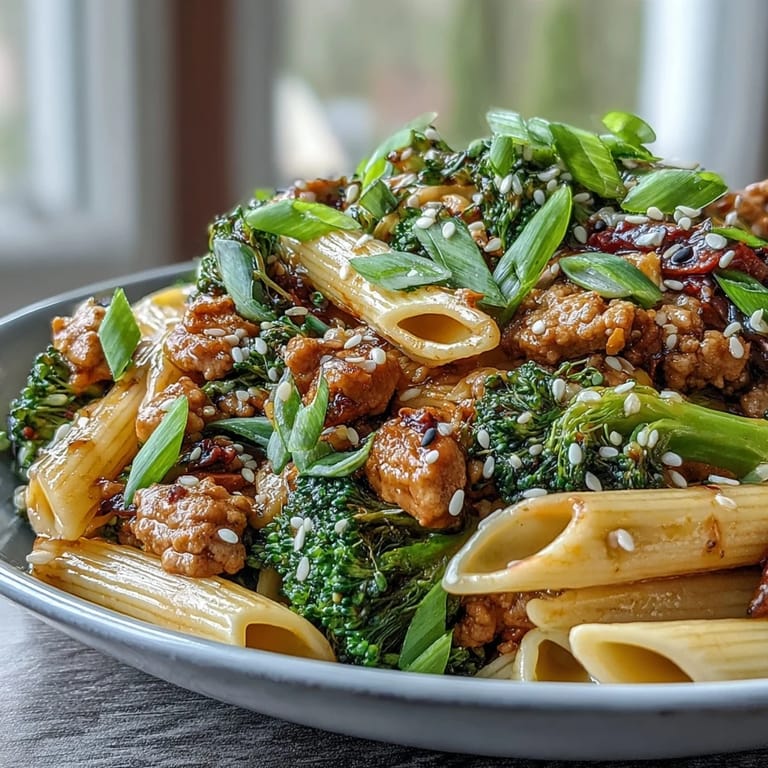
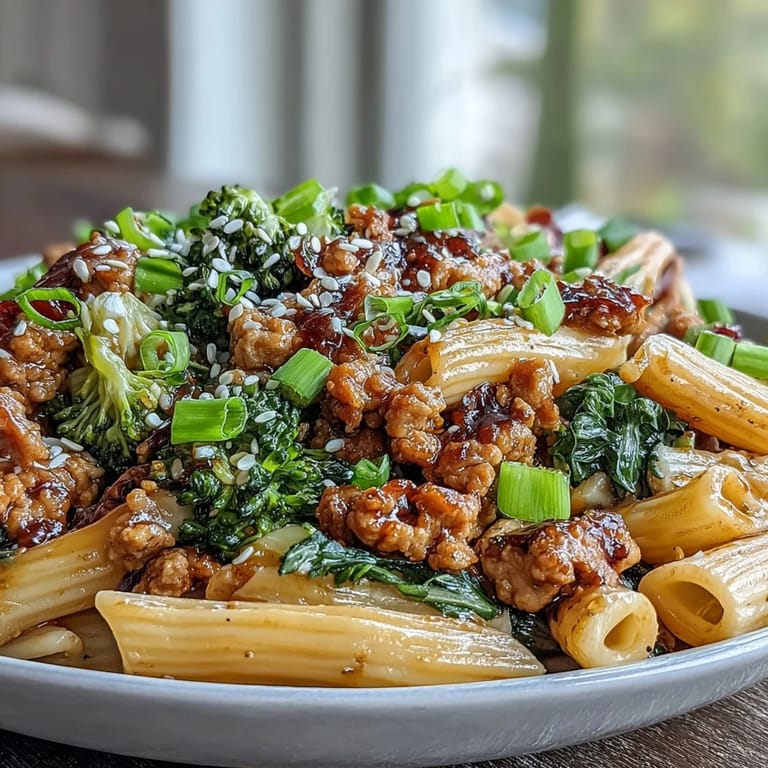
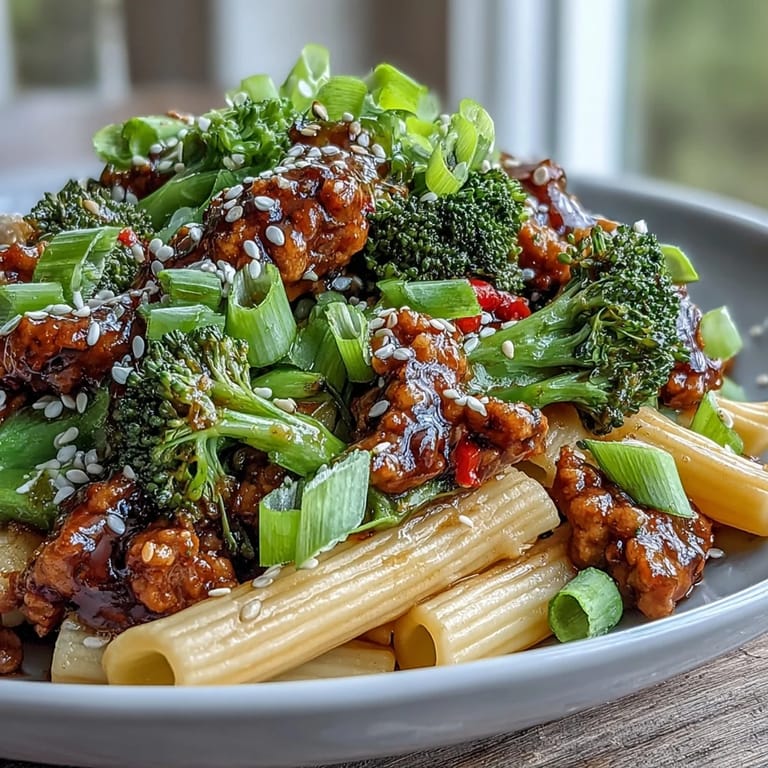
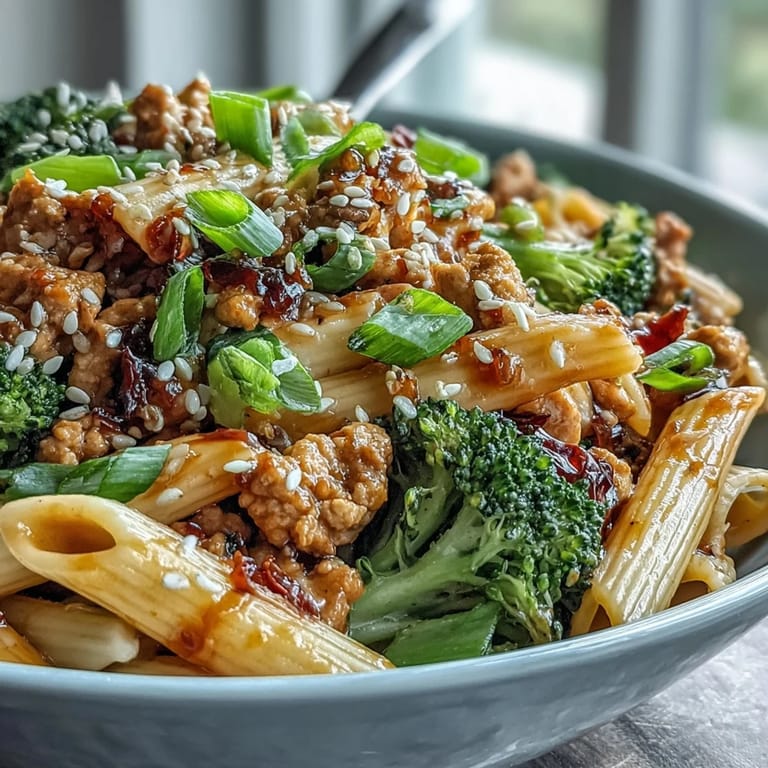
- Add your drained pasta to the skillet and toss everything together for 1 to 2 minutes until the sauce coats every piece and the heat distributes evenly. You should see the pasta glistening and everything moving as one cohesive dish.
- Plate and garnish:
- Divide into bowls and scatter green onions, sesame seeds, and cheese (if using) over the top, which adds freshness, crunch, and visual appeal in one move.
 Pin it
  Pin it
 I made this dish one rainy Sunday when my teenager actually asked to help in the kitchen instead of disappearing upstairs, and watching them taste-test the sauce and request more sriracha felt like a small parenting win. Food has a way of creating moments you don't plan for, and this pasta managed to be one of those unexpected connections.
Why This Sauce Works So Well
The magic here isn't in any single ingredient but in how they work together—soy sauce brings umami depth, honey adds sweetness that rounds out the heat, sriracha delivers the kick, and rice vinegar keeps everything balanced so nothing overpowers the plate. I learned this by accident after my first attempt with too much sriracha left me wondering why the dish felt one-note, but once I understood the interplay, everything clicked. The sesame oil ties the whole thing together with a toasted, almost nutty undertone that makes people pause mid-bite wondering what that flavor is.
Swaps and Substitutions That Work
Ground chicken works beautifully here if turkey isn't your thing, and lean beef brings an earthier depth that pairs unexpectedly well with the sweet-spicy sauce. I've thrown in sugar snap peas, shredded carrots, and even baby bok choy when I wanted more vegetables, and the dish adapts without complaining. For the sauce, I've experimented with chili garlic paste instead of sriracha when I wanted something slightly different, and brown sugar in place of honey when I had it on hand—both deliver perfectly valid results.
Making This Dairy-Free and Gluten-Free
If you're avoiding dairy, simply skip the cheese garnish or use nutritional yeast for a subtle savory note that won't be missed. For gluten-free eating, swap your regular pasta for a gluten-free version and use tamari instead of soy sauce, which gives you the same umami-rich depth without the wheat.
- Tamari tastes nearly identical to soy sauce but without any gluten hiding in it.
- Gluten-free pasta performs best when cooked exactly to package directions—a minute over and it falls apart.
- Always double-check your sriracha bottle, as some brands sneak in wheat paste as a thickener.
 Pin it
  Pin it
 This pasta has become my quiet weapon for busy weeknights and unexpected guests alike, because it tastes like you put in way more effort than you actually did. Make it once and you'll understand why it keeps getting added to my regular rotation.
Recipe FAQs
- → Can I make this gluten-free?
Yes. Use gluten-free penne and replace soy sauce with tamari to make this completely gluten-free while maintaining the same great flavor.
- → How can I adjust the spice level?
Reduce sriracha to 1 teaspoon for milder heat or increase to 2 tablespoons for extra kick. You can also add red pepper flakes or chili oil for additional spice.
- → What other proteins work well?
Ground chicken, lean beef, or turkey sausage make excellent substitutes. For a vegetarian version, use crumbled tofu or meat alternatives.
- → Can I prep this ahead?
Cook vegetables and sauce in advance, then store separately. Reheat and combine with freshly cooked pasta when ready to serve.
- → What vegetables can I add?
Snap peas, shredded carrots, mushrooms, or spinach work beautifully. Add quick-cooking vegetables during the last few minutes of cooking.
- → How should I store leftovers?
Keep in an airtight container in the refrigerator for up to 3 days. Reheat gently with a splash of water to restore the sauce's consistency.