 Pin it
 My neighbor Maria handed me a jar of homemade guava paste last summer, still warm from her kitchen, and I couldn't stop eating it straight from the spoon. She laughed when she caught me, then taught me that the secret was patience and a wooden spoon that doesn't quit. That afternoon, standing in her kitchen listening to the soft bubble of reduction, I realized this wasn't just a preserve—it was how she held onto home. Now whenever I make it, I chase that same meditative rhythm, that moment when the raw pink deepens into ruby and the kitchen fills with something almost floral.
The first time I made this for a dinner party, I was convinced I'd mess it up—the paste seemed too thin at the 30-minute mark, and I nearly panicked. But my friend Elena, sitting at my counter with wine in hand, reminded me that good things take time and that the paste would tell me when it was ready. She was right; watching it go from loose jam to something that held its shape felt like alchemy, and serving it alongside aged Manchego became the thing everyone asked about for weeks.
Ingredients
- Ripe guavas (1 kg / 2.2 lbs): Choose fruit that yields slightly to pressure and smells fragrant—this is where your paste's flavor begins, and underripe guavas will leave you with something too tart and thin.
- Granulated sugar (450 g / 2 1/4 cups): This is your thickener and preservative in one; don't skimp or swap it out for honey, as the paste won't set properly.
- Fresh lemon juice (2 tbsp): The acid brightens the tropical sweetness and keeps the paste from tasting one-dimensional.
- Water (120 ml / 1/2 cup): This jump-starts the cooking process and helps the guavas release their natural pectin.
Tired of Takeout? 🥡
Get 10 meals you can make faster than delivery arrives. Seriously.
One email. No spam. Unsubscribe anytime.
Instructions
- Ready Your Guavas:
- Wash and trim the ends, then cut into quarters. You can seed them now for silkier paste, or leave them—the food mill handles seeds beautifully either way.
- Soften the Fruit:
- Drop the quarters into a large saucepan with water, bring to a boil, then cover and let them simmer for 15 to 20 minutes until they collapse completely. The kitchen will smell tropical and inviting.
- Strain to Silk:
- Once cool enough to handle, push everything through a food mill or fine mesh strainer, letting the pulp fall through while leaving skins and seeds behind. Don't rush this step—take your time and you'll be rewarded with velvety paste.
- Measure and Combine:
- Measure your puree, then return it to the pot with sugar and lemon juice in a roughly one-to-one ratio. This is your chance to taste and adjust sweetness if your guavas were particularly tart or honeyed.
- The Long Stir:
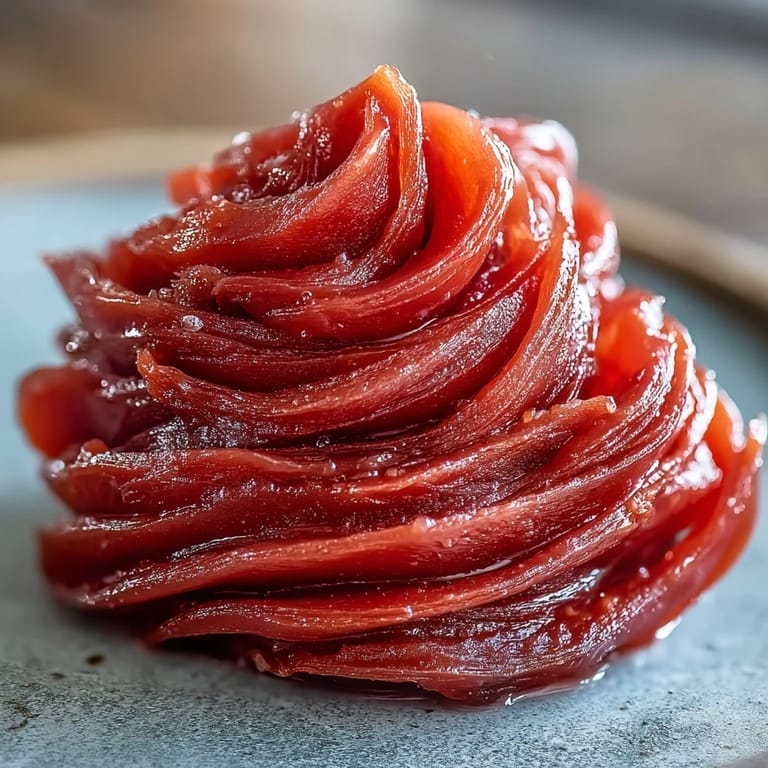
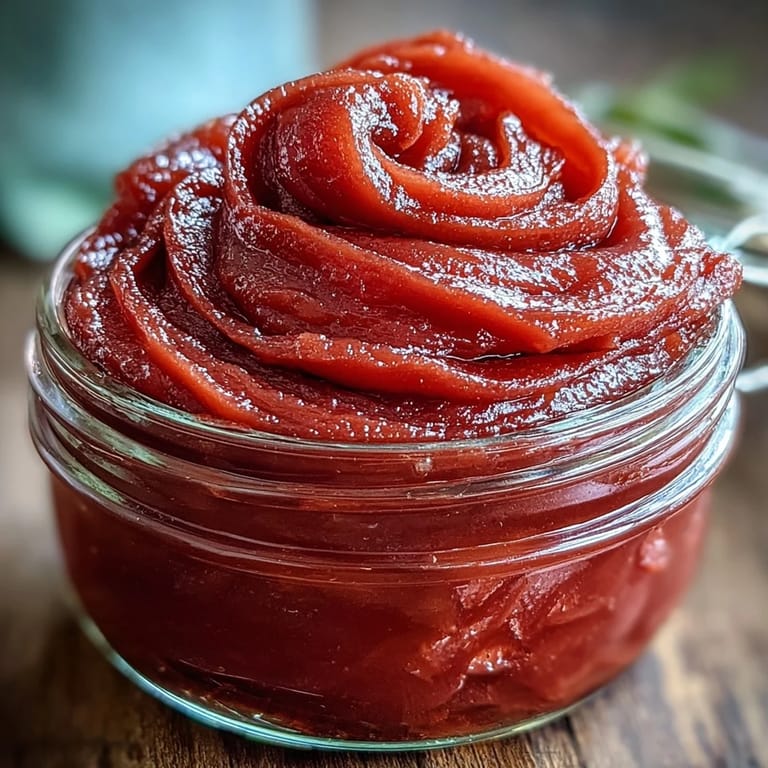
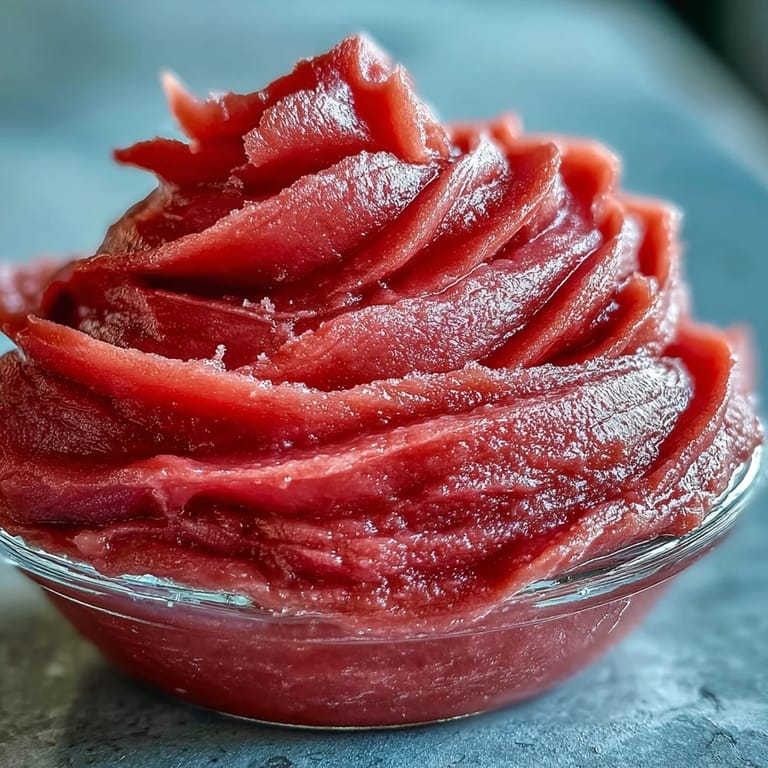
- Cook over low heat, stirring constantly for 40 to 50 minutes—this is meditation time, not a shortcut moment. Watch as the mixture transforms from pink pulp into something glossy and deep crimson, pulling away from the sides of the pan as it thickens.
- Test for Doneness:
- Drop a small spoonful onto a cool plate; if it holds its shape without running, you're done. This moment arrives somewhere between 40 and 50 minutes, depending on your heat and how much water your guavas contained.
- Set and Cool:
- Pour the hot paste into a parchment-lined loaf pan, smooth the top, and let it rest at room temperature for 2 to 3 hours until it's completely firm. Unmold, slice into squares, and marvel at what you've made.
 Pin it
 Last Christmas, I brought jars of guava paste to friends and colleagues, and something unexpected happened—it became the gift that got traded, shared, and talked about long after the holidays faded. There's something about homemade paste that people don't quite expect in a modern kitchen, and that small surprise turned simple fruit into connection.
The Magic of Low and Slow
I learned early on that cranking the heat doesn't save time; it only risks burning the bottom while leaving the top too thin. Low heat feels like you're moving backwards, but that gentle bubble and the way the paste darkens gradually, almost imperceptibly, is exactly how you build deep, true flavor. Your wooden spoon becomes an extension of your patience, and somehow that matters.
Storage and Second Lives
A jar of guava paste keeps for three months in the refrigerator, which sounds practical until you realize you'll want it gone much faster—sliced onto a cheese board, melted into pastry dough, swirled into yogurt, or simply eaten with a spoon while standing at the kitchen counter at midnight. It's the kind of thing that demands to be used, not saved for a special occasion.
Pairing Possibilities
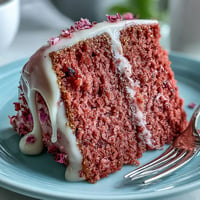
The real magic happens when guava paste meets Manchego or other aged cheeses, or when it becomes the filling for empanadas, alfajores, or tucked into the center of butter cookies. I've also stirred a spoonful into whipped cream, layered it into cake, or simply served it alongside sharp cheddar and crusty bread. Think of your jar as possibility waiting to happen.
- Serve thin slices with aged Manchego and quince paste for a Spanish-inspired board.
- Melt it slightly and use as a filling for pastries, pies, or thumbprint cookies.
- Swirl it into plain yogurt or cream cheese for an unexpected, tropical spread.
 Pin it
 Making guava paste is slower than opening a jar, but it's the kind of slow that fills your kitchen with warmth and leaves you with something that tastes like you cared enough to wait. That's the whole point.
Recipe FAQs
- → How do I know when the guava paste is ready?
The paste is ready when it's thick, glossy, and holds its shape on a spoon. It should pull away from the sides of the pan as you stir.
- → Can I use frozen guavas?
Yes, frozen guavas work well. Thaw completely before cooking and adjust cooking time slightly as they may release more liquid.
- → What's the best way to strain the guava pulp?
A food mill works best for smooth results. Alternatively, press through a fine mesh strainer with the back of a spoon, working in batches.
- → How should I store the finished paste?
Store in an airtight container in the refrigerator for up to 3 months. For longer storage, wrap tightly and freeze for 6-8 months.
- → What cheeses pair best with guava paste?
Manchego is the classic pairing, but it also works beautifully with sharp cheddar, brie, goat cheese, or cream cheese on crackers.
- → Can I reduce the sugar amount?
Sugar helps preserve and set the paste. Reducing it may affect texture and shelf life, but you can slightly adjust based on guava sweetness.