 Pin it
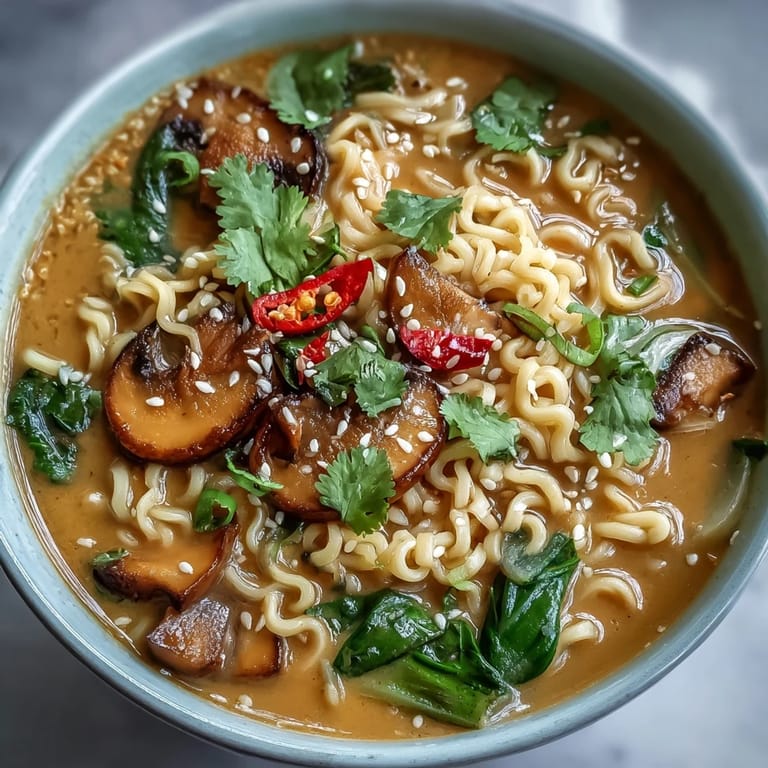
 There's something about the smell of coconut milk hitting hot spices that stops me mid-conversation every single time. My friend Maya brought me a bowl of fragrant curry ramen on one of those days when I really needed it, and I spent the whole meal asking her questions instead of eating. The broth was so clean and creamy, the noodles perfectly tender, and somehow it felt both light and deeply satisfying. I've been making versions of this ever since, tweaking the balance of umami and sweetness until it felt like mine.
I made this for a dinner party where I was nervous about feeding non-vegan people something they'd actually want seconds of. The moment someone said the broth tasted richer than anything they'd had at restaurants, I stopped worrying. By the end of the meal, three people were asking for the recipe, and one person confessed they'd been craving noodle soup all week without knowing it.
Ingredients
- Coconut oil: This is your flavor foundation—it carries the warmth of the spices without being too heavy, and it keeps the broth silky when the coconut milk breaks.
- Yellow onion: Chopped fine so it melts into the broth and sweetens everything around it without any textural chunks.
- Garlic and fresh ginger: Mince them separately so the garlic doesn't burn while you're waiting for the ginger to release its brightness.
- Red curry paste: Check the label because some have fish sauce hiding in there—look for explicitly vegan versions.
- Ground turmeric: Don't skip this; it adds earthiness and that golden warmth that makes the dish feel whole.
- Vegetable broth: Use something with decent flavor, not the watered-down kind, because this is doing most of the heavy lifting.
- Full-fat coconut milk: Buy the kind with nothing but coconut and water listed—the cheap stuff separated on me once and I've never forgotten it.
- Soy sauce or tamari: This is the umami anchor that makes mushrooms taste like mushrooms and everything taste more like itself.
- Maple syrup: Just a teaspoon balances the heat and salt without making anything taste sweet—it's subtle but crucial.
- Sesame oil: A finishing touch that adds nuttiness and prevents the broth from feeling one-dimensional.
- Cremini or shiitake mushrooms: Sliced thick enough that they stay meaty when they cook, not wispy and sad.
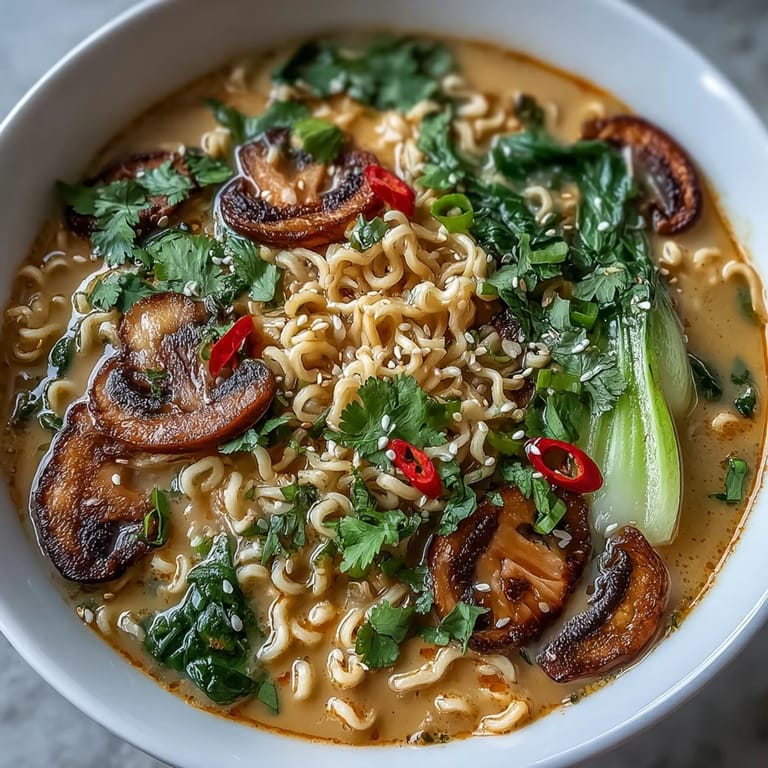
- Baby bok choy: Quartered lengthwise so it stays intact and looks beautiful in the bowl instead of falling apart into soup.
- Ramen noodles: Fresh ones are incredible if you can find them, but dried ones work—just don't overcook them before they hit the broth.
- Carrot: Julienned thin so it cooks in the hot broth without needing extra cooking time.
- Scallions, sesame seeds, chili, cilantro, lime: These are your personal expression—pile them on or keep it simple depending on your mood.
Tired of Takeout? 🥡
Get 10 meals you can make faster than delivery arrives. Seriously.
One email. No spam. Unsubscribe anytime.
Instructions
- Warm the oil and soften the onion:
- Heat coconut oil in a large pot over medium heat and watch it shimmer, then add your finely chopped onion. Stir it every minute or so until it goes from raw and sharp-smelling to soft and golden, about 3 to 4 minutes total—this is where the sweetness comes from.
- Wake up the aromatics:
- Add garlic and ginger and let them sizzle for just about a minute until you can smell that bright, spicy pungency cutting through the kitchen. Don't walk away or they'll burn into something bitter.
- Toast the spice base:
- Stir in the red curry paste and turmeric, letting them sit in the hot oil for a minute while everything gets fragrant. This step is doing the real work of building flavor.
- Build the broth:
- Pour in your vegetable broth and coconut milk slowly while stirring, then add soy sauce, maple syrup, and sesame oil. Bring it to a gentle simmer—not a rolling boil, which can make the coconut milk break apart and get grainy.
- Cook the mushrooms:
- Add your sliced mushrooms and let them simmer for 8 to 10 minutes until they've softened and absorbed some of the spiced broth. They'll release their own flavor into the soup and deepen everything.
- Cook the noodles separately:
- While the mushrooms are simmering, cook your ramen noodles in salted water according to the package directions, then drain them immediately. Keeping them separate prevents them from absorbing too much broth and getting mushy before you even serve the bowl.
- Add the quick-cooking vegetables:
- Stir in your bok choy and carrot strips and let them cook for 2 to 3 minutes just until the bok choy turns a bright darker green and is tender but still has a tiny bit of snap. Overcooked bok choy loses its appeal fast.
- Taste and season:
- Give it a generous taste with a spoon and add salt and black pepper until it tastes like something you want to eat, not like a cooking experiment.
- Assemble the bowls:
- Divide your drained noodles among bowls, then ladle the hot broth and vegetables over them generously. The heat of the broth will warm everything through.
- Finish with personality:
- Top each bowl with scallions, sesame seeds if you have them, fresh cilantro, maybe some sliced red chili, and serve with lime wedges on the side so everyone can squeeze their own amount.
 Pin it
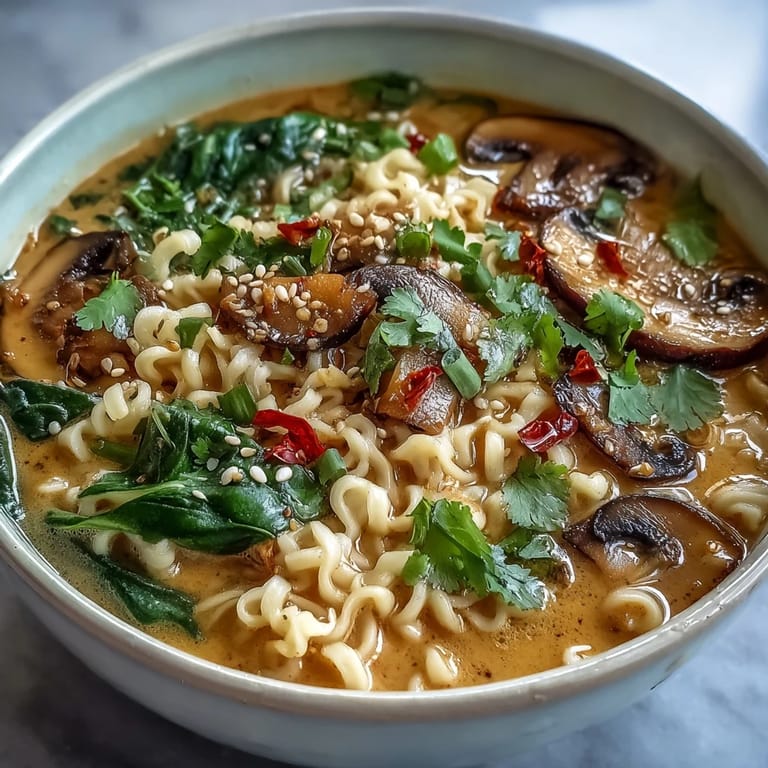
 I served this to someone who said they were too tired to eat anything complicated, and they finished the bowl, then asked what the brown spice was that made everything taste so good. It was the turmeric, this humble little powder that does more work than people realize. Meals like this remind me that comforting food isn't about fancy ingredients or restaurant techniques—it's about balance and care.
The Spice Story
Red curry paste gets all the attention, but the turmeric is what gives this broth its warmth and that almost medicinal comfort you can feel in your body. I learned this the hard way when I forgot it once and the whole bowl felt flat and one-dimensional, like something was missing even though it looked fine. Now I always toast it with the curry paste for that extra layer of depth.
Mushrooms and Umami
The longer mushrooms cook in the broth, the more they release their umami, which is why I usually resist the urge to rush this step. Cremini and shiitake both work beautifully, but shiitake adds something more complex and meaty if you're feeling fancy. The soy sauce brings its own umami too, and together they create this savory depth that makes people think you've been cooking for hours.
Making It Your Own
This recipe is a template that loves adaptations—I've made it with kale, with spinach, with broccoli, with whatever was on sale. One time I stirred in some cooked chickpeas because I needed protein and they absorbed the broth like little flavor sponges. The flexibility is part of why I keep coming back to it.
- If you want it spicier, add fresh Thai chilies or increase the curry paste by a tablespoon—taste as you go because heat builds.
- For extra protein and substance, cube some tofu and simmer it in the broth, or stir in edamame at the end for something fresher.
- Leftovers keep for three days in the fridge and actually taste even better after the flavors have had time to get to know each other.
 Pin it
 This bowl has become my answer to almost any day that needs something warm and good. It's the kind of meal that feels like someone's taking care of you.
Recipe FAQs
- → Can I use other greens instead of bok choy?
Yes, spinach or kale work well as substitutes and add their own unique flavors.
- → How can I make the broth spicier?
Increase the amount of red curry paste or add fresh chili slices to intensify the heat.
- → Are shiitake mushrooms a good alternative?
Definitely, shiitake mushrooms provide a deep umami flavor that complements the broth nicely.
- → What's the best way to cook ramen noodles?
Boil noodles according to package instructions, then drain and add to the bowl just before serving to keep them tender.
- → Can I add protein to this dish?
Yes, cubed tofu or edamame make excellent protein additions, enhancing texture and nutrition.