 Pin it
 I started making this curry on a rainy Tuesday when my fridge was full of random vegetables that needed using. The smell of ginger and garlic hitting hot coconut oil filled the kitchen instantly, and I knew I was onto something good. By the time the coconut milk went in, the whole apartment smelled like a tiny restaurant. My neighbor knocked to ask what I was cooking, and I ended up sharing a bowl with her through the doorway.
The first time I made this for friends, I panicked because I added too much curry paste and thought I ruined it. But after stirring in the lime juice at the end, everything balanced out perfectly. One friend went quiet for a moment, then asked if I could write the recipe down for her. That night, I realized this dish had become my go-to whenever I wanted to feel like I knew what I was doing in the kitchen.
Ingredients
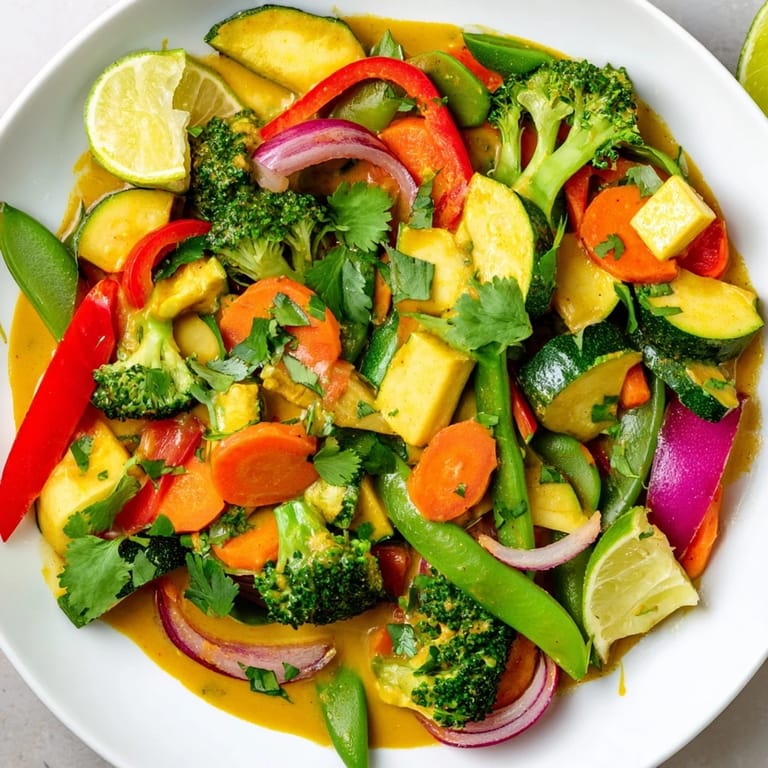
- Red bell pepper: Adds sweetness and a pop of color that makes the whole dish look alive.
- Carrot: Holds its shape beautifully and soaks up the curry flavor without getting mushy.
- Zucchini: Cooks quickly and adds a soft texture that contrasts with the crunchier vegetables.
- Broccoli: The florets catch little pockets of sauce, which makes every bite satisfying.
- Snap peas: I add these toward the end so they stay crisp and sweet.
- Red onion: Softens into the base and adds a gentle sharpness that balances the coconut milk.
- Coconut oil: This is what makes the aromatics bloom properly, use refined if you do not want coconut flavor.
- Garlic and ginger: The foundation of the whole curry, do not skimp or rush this step.
- Red curry paste: Check the label if you are vegan, some brands sneak in shrimp paste.
- Turmeric, cumin, coriander: These warm spices build depth and make your kitchen smell incredible.
- Coconut milk: Full fat is essential for creaminess, light versions just do not compare.
- Vegetable broth: Thins the sauce just enough so it coats the vegetables instead of clumping.
- Soy sauce or tamari: Adds a salty umami backbone that ties everything together.
- Lime juice: Brightens the whole dish at the end, do not skip this.
- Cilantro and lime wedges: Fresh garnishes that make it feel restaurant worthy.
Tired of Takeout? 🥡
Get 10 meals you can make faster than delivery arrives. Seriously.
One email. No spam. Unsubscribe anytime.
Instructions
- Start with the aromatics:
- Heat the coconut oil until it shimmers, then add the red onion and let it soften without browning. The kitchen will start to smell sweet and mellow.
- Build the flavor base:
- Toss in the garlic and ginger, stirring constantly so they do not stick or burn. You will know it is ready when the smell makes you lean closer to the pan.
- Bloom the spices:
- Stir in the curry paste and spices, letting them cook for a full minute. This step releases the oils and makes the curry taste deeper and more complex.
- Add the sturdy vegetables:
- Toss in the bell pepper, carrot, zucchini, and broccoli, stirring them around to coat in the spiced oil. They will start to soften and pick up color from the turmeric.
- Pour in the liquids:
- Add the coconut milk and broth, scraping up any bits stuck to the bottom of the pan. Bring it to a gentle simmer, not a rolling boil.
- Finish with snap peas:
- Stir in the snap peas and soy sauce, then cover and let everything cook together until the vegetables are tender but still bright. The sauce will thicken slightly as it simmers.
- Adjust and serve:
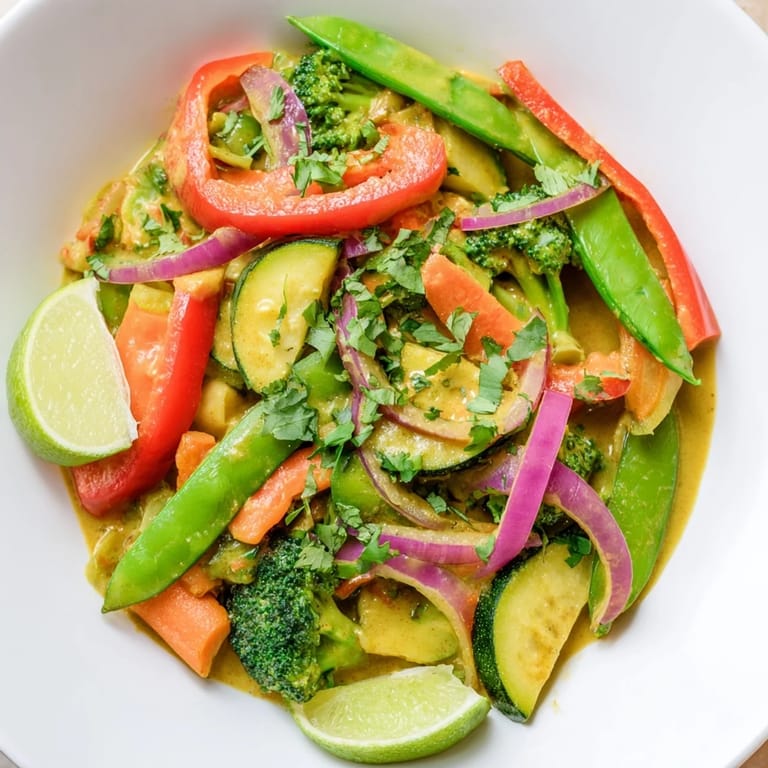
- Remove from heat and stir in the lime juice, then taste and add salt or pepper as needed. Serve it hot with cilantro and lime wedges on top.
 Pin it
 One Sunday, I made a double batch and brought it to a potluck where everyone else had ordered takeout. By the end of the night, my container was empty and three people had texted me asking for the recipe. It was not fancy or complicated, but it tasted like I cared, and somehow that mattered more than I expected.
How to Make It Your Own
You can swap in cauliflower, green beans, or mushrooms depending on what you have around. I have added chickpeas when I wanted more protein, and cubed tofu works beautifully if you pan fry it first. If you like heat, add a diced Thai chili with the garlic, or dial it back by using less curry paste and adding a pinch of sugar to mellow things out.
What to Serve It With
I usually scoop this over jasmine rice because the grains soak up the sauce perfectly. Quinoa works if you want something lighter, and sometimes I tear up warm naan to dip into the curry instead. Leftovers taste even better the next day when the flavors have had time to settle into each other.
Storage and Reheating
This curry keeps in the fridge for up to four days in an airtight container. Reheat it gently on the stove with a splash of broth or coconut milk to loosen the sauce. I do not recommend freezing it because the vegetables get mushy, but the sauce itself freezes well if you want to make a batch just for that.
- Add a squeeze of fresh lime juice when reheating to bring back the brightness.
- If the sauce separates, just stir it back together over low heat.
- Top with fresh cilantro right before serving, not before storing.
 Pin it
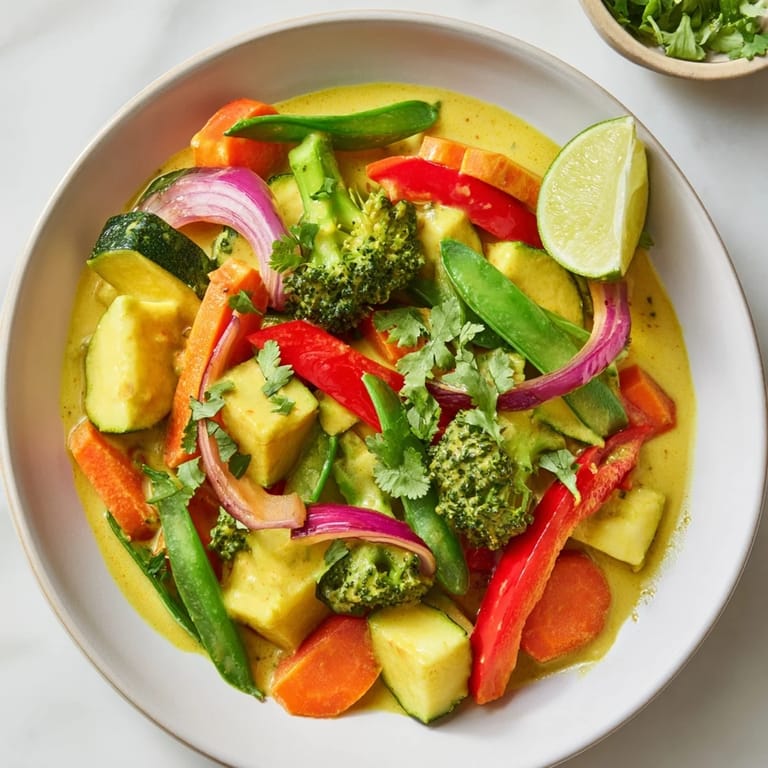
 This curry has saved me on busy weeknights and impressed people on lazy weekends. It is forgiving, flexible, and always makes me feel like I did something right.
Recipe FAQs
- → What vegetables work best in this curry?
Red bell pepper, carrot, zucchini, broccoli, snap peas, and red onion are ideal for texture and flavor, but you can also add cauliflower, green beans, or mushrooms.
- → Can I add protein to this dish?
Yes, chickpeas or tofu can be added during cooking for extra protein without altering the dish’s flavor.
- → How spicy is this curry?
The spice level depends on the red curry paste used. Adjust the quantity to make the curry milder or spicier according to your preference.
- → What can I serve alongside this curry?
It pairs wonderfully with steamed jasmine rice, quinoa, or naan bread to complement the rich coconut milk sauce.
- → Are there any common allergens in the ingredients?
The dish includes soy from soy sauce or tamari and coconut milk, so substitute with coconut aminos if avoiding soy, and avoid if allergic to coconut.