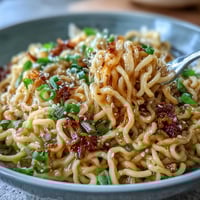
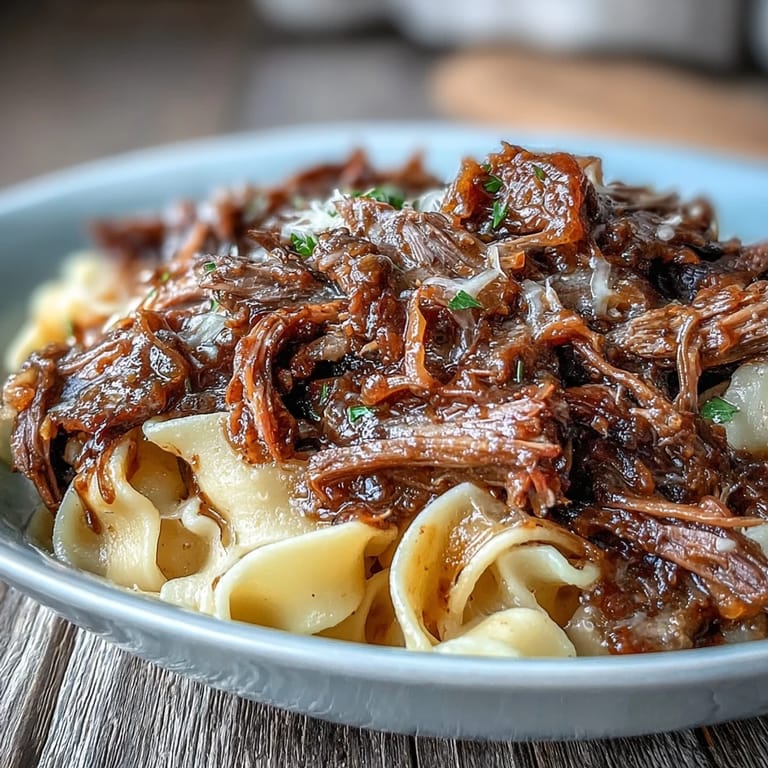
 Pin it
 There's something about the smell of caramelized onions that stops me mid-afternoon, no matter what I'm doing. Years ago, a friend brought over a pot roast that had been simmering all day, and I watched the kitchen transform into this golden, savory dream. That day taught me that the best comfort food doesn't announce itself with flash or technique, it just quietly takes over your home. This crockpot French onion pot roast pasta is my love letter to that moment, combining tender beef with the deep, sweet richness of French onion soup, all poured over buttery noodles. It's the kind of dish that makes people ask for seconds without even realizing they're doing it.
I made this for my sister during a brutal winter week when she was dealing with a lot. She sat at my kitchen table with a bowl steaming in front of her, and I watched her shoulders actually relax. That's when I realized this wasn't just dinner, it was the edible version of giving someone a hug. Now whenever I make it, I think about how food carries intention, not just nutrition.
Ingredients
- Beef chuck roast (3 lbs): Chuck is the workhorse of slow cooking, packed with connective tissue that transforms into silky gelatin during those long hours, giving you that fall-apart tenderness.
- Olive oil (2 tbsp): Just enough to get a proper sear on the beef without making the dish heavy or greasy.
- Yellow onions, thinly sliced (2 large): The foundation of everything, these onions need to be sliced thin so they collapse into the gravy and sweeten as they cook.
- Garlic, minced (4 cloves): Add this after the onions caramelize so it stays fresh and peppery rather than turning bitter from long heat.
- Fresh thyme (1 tbsp) or dried (1 tsp): Thyme is the quiet partner in this dish, adding earthiness without overshadowing the onions and beef.
- Tomato paste (2 tbsp): This deepens the savory notes and adds a subtle umami punch that keeps people from quite being able to name what makes it taste so good.
- Beef broth (1 cup): Use good quality broth here because you're not masking it with cream or heavy spices, it matters.
- Dry white wine (1 cup) or additional broth: The wine adds complexity and brightness that cuts through the richness, though broth works fine if you skip it.
- Worcestershire sauce (2 tbsp): This is the secret ingredient that makes people ask what you did differently, it adds depth without any single flavor being identifiable.
- Kosher salt and black pepper: Season generously at the beginning and taste before serving since the long cooking intensifies all flavors.
- Wide egg noodles (12 oz): Wide noodles hold onto the gravy better than thin ones, making each bite feel substantial.
- Unsalted butter (2 tbsp): Toss the noodles while they're still hot so the butter coats them evenly and creates that luxurious mouthfeel.
- Gruyère or Swiss cheese (1 cup, optional): If you use it, add it at the table so people can control how much they want rather than melting it into the gravy.
- Fresh parsley (2 tbsp, chopped): This is not just decoration, it brightens everything with fresh herbaceous notes that cut through the richness.
Tired of Takeout? 🥡
Get 10 meals you can make faster than delivery arrives. Seriously.
One email. No spam. Unsubscribe anytime.
Instructions
- Season and sear the beef:
- Pat the roast dry with paper towels, then season it aggressively with salt and pepper on all sides. This creates a flavorful crust that locks in juices and builds the foundation of your gravy.
- Brown the meat on all sides:
- Get your skillet hot enough that the meat sizzles loudly when it hits the pan, letting it sit undisturbed for 3-4 minutes per side so it develops that golden crust. You're not cooking it through, just creating texture and flavor.
- Caramelize the onions until golden:
- In that same skillet with all the flavorful bits stuck to the bottom, cook your onions low and slow for 8-10 minutes, stirring every couple minutes. You'll watch them transform from raw and sharp to sweet and glossy, which is when the magic starts happening.
- Build the aromatic base:
- Add your minced garlic, thyme, and tomato paste to the onions and let it cook for exactly 1 minute, just until your kitchen smells like a French bistro. Don't let the garlic brown or it gets bitter.
- Deglaze and simmer:
- Pour the wine into the skillet and use a wooden spoon to scrape up every browned bit from the bottom, those little crusty pieces are pure flavor. Let it bubble gently for 2 minutes so the harsh alcohol mellows out.
- Combine in the crockpot:
- Pour everything from the skillet over your beef, then add the beef broth and Worcestershire sauce. The liquid should come about halfway up the sides of the roast, giving you enough to create a rich gravy without boiling the beef.
- Cook on low for 8 hours:
- Cover it and let time do the work, the beef will become so tender that you can shred it with two forks. Resist the urge to peek constantly, every time you lift that lid you let heat escape.
- Shred and combine:
- Remove the beef carefully using tongs, let it cool just enough to handle, then pull it into bite-sized pieces using two forks. Stir the shredded beef back into the crockpot with all that beautiful onion gravy.
- Cook the pasta while the beef rests:
- While the beef is cooling slightly, get your noodles going according to package directions, drain them, and toss with that butter while they're still hot and steaming.
- Plate it up:
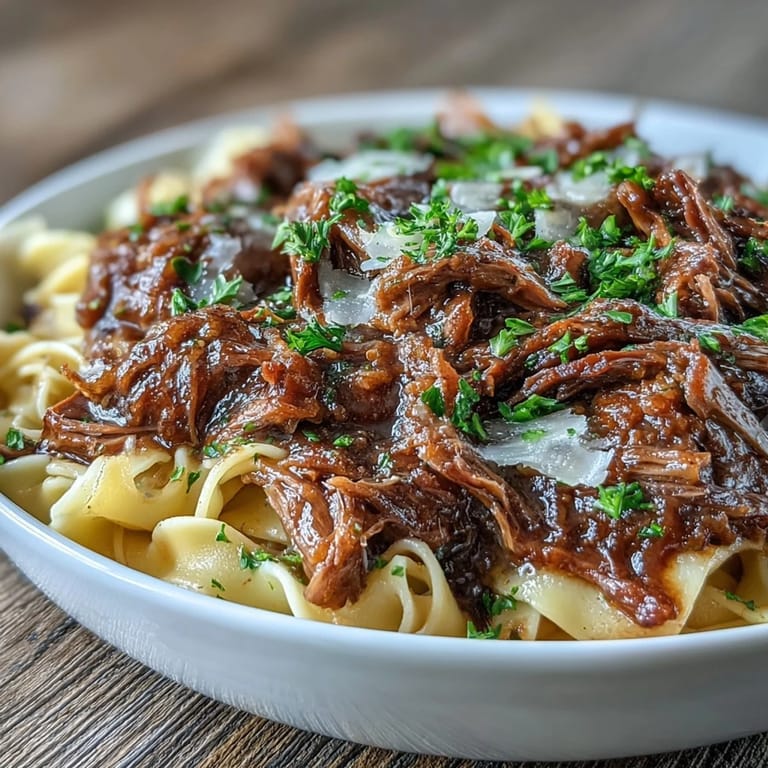
- Create a bed of buttered noodles on each plate, then spoon that gloriously tender beef and onion gravy over the top. Finish with a little cheese and a pinch of parsley for color and freshness.
 Pin it
 My neighbor smelled this cooking through our shared wall and showed up at my door with the most hopeful expression. We ended up eating together at my kitchen counter, and she told me this was the first meal in months that felt like someone was taking care of her. That's when I understood that this dish transcends the ingredients list.
Why the Slow Cooker Method Works So Well
The crockpot's gentle, even heat breaks down the tough collagen in chuck roast into gelatin without drying out the meat like high-heat cooking would. Those 8 hours allow the onions to mellow into the beef, creating one unified flavor rather than separate elements on a plate. The low moisture environment also concentrates the gravy, making it richer than you'd get from a traditional pot roast that releases more steam.
Making This Ahead and Storing Leftovers
This dish actually tastes better the next day after the flavors have gotten to know each other overnight in the refrigerator. You can make it completely up through the shredding step, cool it, store it in an airtight container for up to 3 days, then reheat gently in a pot on the stove with a splash of broth to loosen it up. The noodles are best made fresh, but if you have leftover gravy and beef with no noodles, it becomes an incredible filling for sandwiches or spooned over mashed potatoes.
Customizing to Your Mood
This recipe is flexible enough to bend to what you're craving on any given day. For a creamier version, stir in 1/4 cup heavy cream in the last 30 minutes before serving, it creates a sauce that's almost velvety. If you want to go lighter, skip the butter on the noodles and serve with a sharp green salad on the side to balance all that richness. Some nights I add a teaspoon of Dijon mustard to the gravy for a subtle tang, other times I stick with the pure onion and beef combination.
- Swap the egg noodles for polenta or mashed potatoes if that feels right for the season.
- A splash of brandy instead of wine adds sophistication if you're cooking for people you want to impress.
- The cream addition is optional but changes the entire feel of the dish from rustic to elegant.
 Pin it
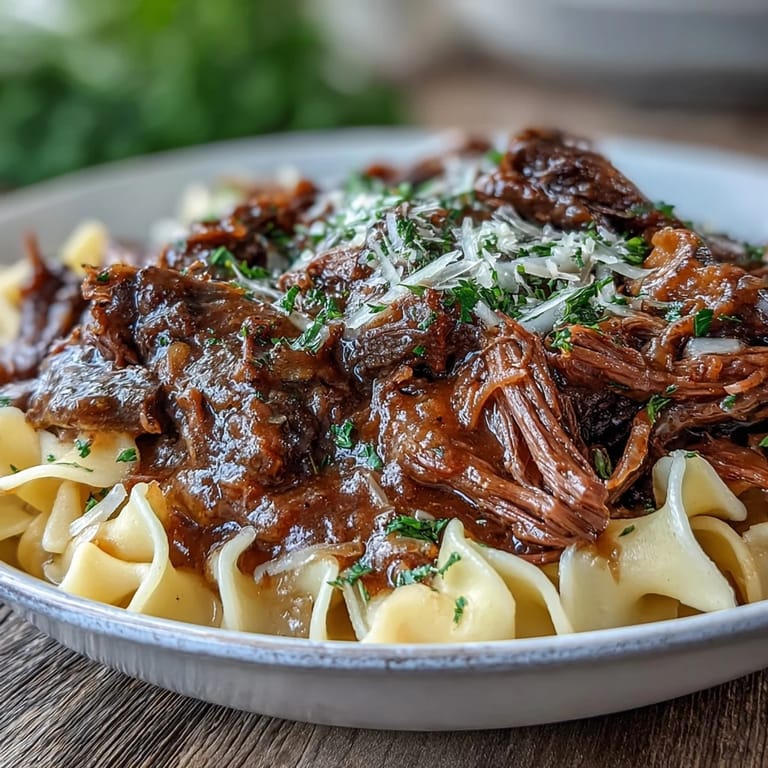
 Every time I make this, I'm reminded that the best recipes are the ones that wrap around you like a warm blanket. This one feeds your body and your soul in equal measure.
Recipe FAQs
- → Can I make this with a different cut of beef?
Chuck roast is ideal due to its marbling and connective tissue that breaks down during slow cooking. You can substitute beef brisket or round roast, though they may require slightly different cooking times to reach optimal tenderness.
- → Do I have to sear the beef first?
While not strictly necessary, searing creates a flavorful crust through the Maillard reaction and adds depth to the final dish. The browned bits left in the pan also enhance the onion gravy when deglazed with wine.
- → Can I cook this on high heat instead of low?
Yes, reduce the cooking time to approximately 4-5 hours on HIGH setting. The beef should still shred easily and reach an internal temperature of at least 145°F for safe consumption.
- → What pasta works best with this dish?
Wide egg noodles are traditional because their flat shape holds the rich onion gravy beautifully. Alternatives include pappardelle, fettuccine, or even mashed potatoes for a lower-carb option.
- → Can I freeze the leftovers?
The beef and onion gravy freeze exceptionally well for up to 3 months. For best results, store pasta separately and reheat both gently on the stovetop, adding a splash of broth if the sauce seems thick.
- → What can I substitute for white wine?
Additional beef broth works perfectly as a non-alcoholic alternative. You can also use balsamic vinegar for a slightly sweeter, more acidic profile that complements the caramelized onions.