 Pin it
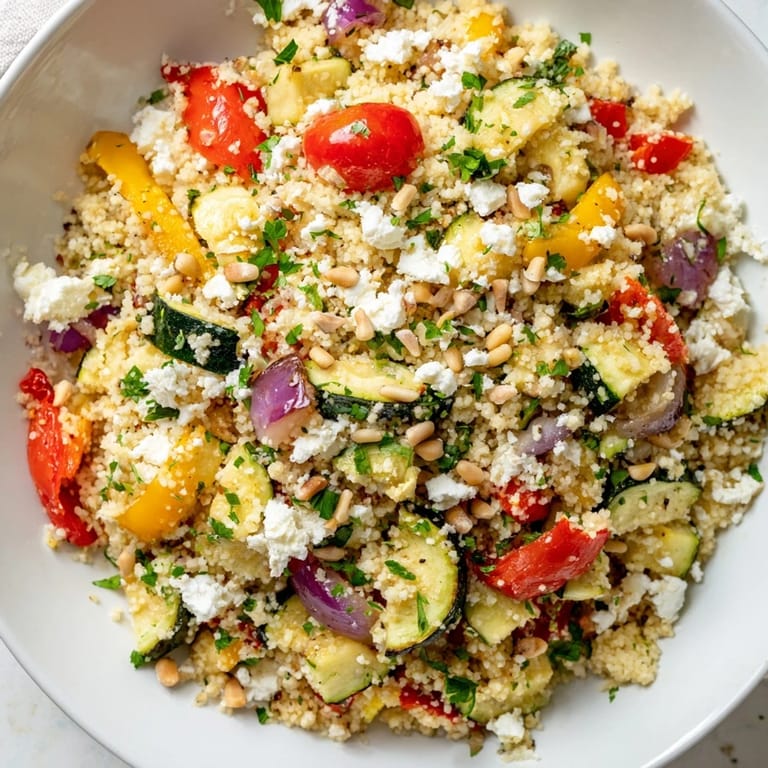
 My neighbor knocked on the door one July afternoon with a bowl full of bell peppers from her garden, more than she knew what to do with. I had couscous in the pantry and a lemon rolling around in the fridge, so I started roasting without a plan. The kitchen filled with that sweet, charred smell, and by the time I tossed everything together, I had a salad that tasted like summer in a bowl. It became my go-to whenever I needed something bright, easy, and impressive without the fuss.
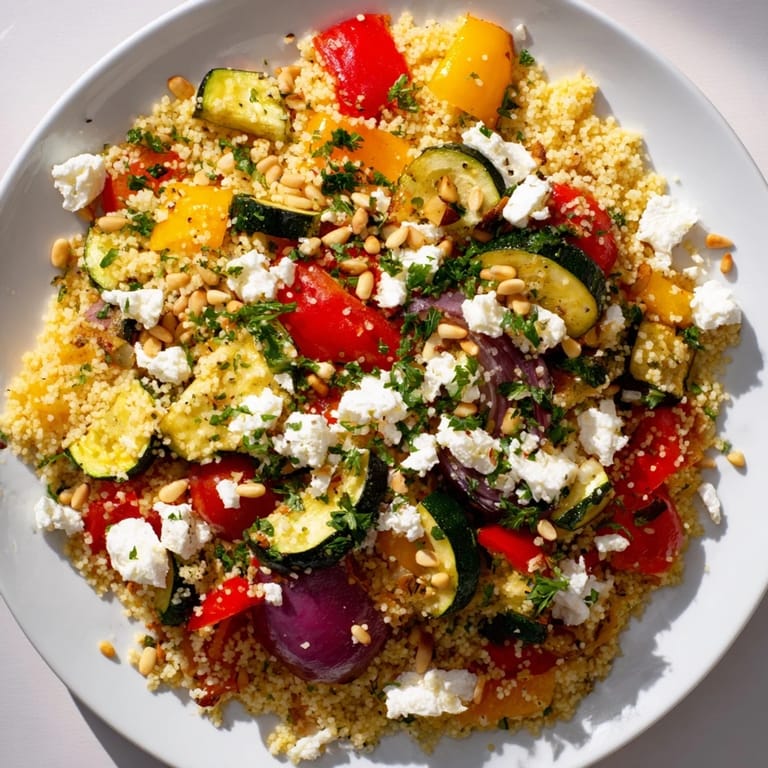
I made this for a backyard dinner once, and someone asked if I had catered it. I laughed because half the vegetables were slightly uneven and the feta was crumbled by hand in a rush. But the colors were so vivid on the platter, and the mint made everything smell like a Mediterranean breeze. People went back for seconds before touching the main course, and I realized sometimes the simplest things steal the show.
Ingredients
- Zucchini: Dice it into bite-sized pieces so it roasts evenly and gets those golden edges without turning mushy.
- Red and yellow bell peppers: The mix of colors makes the salad look alive, and roasting them brings out a natural sweetness that balances the lemon.
- Red onion: Cut into wedges instead of rings so they hold their shape and caramelize beautifully in the oven.
- Cherry tomatoes: Halve them so they release their juices and mingle with the other vegetables as they roast.
- Olive oil for roasting: Do not skimp here, it helps the vegetables brown and keeps them from sticking to the pan.
- Couscous: Use regular couscous, not pearl, and it will fluff up in five minutes with barely any effort.
- Vegetable broth: This adds a layer of flavor that water just cannot match, but water works fine if that is what you have.
- Lemon juice and zest: The zest is where the magic lives, it gives the dressing a bright, aromatic lift that plain juice cannot do alone.
- Dijon mustard: A small spoonful emulsifies the dressing and adds a subtle tang that ties everything together.
- Garlic: Mince it finely so it melts into the dressing without leaving harsh bites.
- Honey or maple syrup: Just a touch balances the acidity and rounds out the flavors.
- Fresh parsley: Chop it coarsely and toss it in at the end for a burst of green and freshness.
- Fresh mint: Optional, but it makes the salad taste like you are eating outside under a pergola somewhere warm.
- Feta cheese: Crumble it by hand for irregular pieces that cling to the couscous, or leave it out for a vegan version.
- Toasted pine nuts or slivered almonds: A handful adds crunch and richness, toast them in a dry pan until golden and fragrant.
Tired of Takeout? 🥡
Get 10 meals you can make faster than delivery arrives. Seriously.
One email. No spam. Unsubscribe anytime.
Instructions
- Get the oven ready:
- Preheat your oven to 425°F and line a baking sheet with parchment paper so cleanup is quick and nothing sticks. This high heat is key for caramelizing the vegetables without steaming them.
- Season and roast the vegetables:
- Toss the zucchini, bell peppers, red onion, and cherry tomatoes with olive oil, salt, and pepper until everything is lightly coated. Spread them out in a single layer and roast for 20 to 25 minutes, stirring halfway through so they brown evenly and get those sweet, charred edges.
- Prepare the couscous:
- While the vegetables roast, bring the vegetable broth to a boil in a saucepan, then stir in the couscous, olive oil, and salt. Remove it from the heat, cover with a lid, and let it sit for five minutes until all the liquid is absorbed, then fluff it gently with a fork.
- Make the lemon dressing:
- In a small bowl, whisk together the lemon juice, zest, olive oil, Dijon mustard, minced garlic, honey or maple syrup, and a pinch of salt and pepper. Taste it and adjust the balance, you want it tangy and bright but not harsh.
- Combine everything:
- In a large bowl, toss the fluffy couscous with the roasted vegetables, parsley, and mint if using. Pour the dressing over and mix gently so every grain and vegetable gets coated.
- Finish and serve:
- Scatter the crumbled feta and toasted nuts over the top just before serving. Serve it warm, at room temperature, or chilled, it shines in every form.
 Pin it
 One evening I packed this salad into a container for a friend who had just moved into a new apartment with no furniture and a half-empty fridge. She texted me a photo of her sitting on the floor with the bowl in her lap, and said it tasted like someone cared. That is when I realized food does not need to be fancy to mean something, it just needs to be made with a little attention and shared at the right time.
Serving Suggestions
This salad works as a light main on its own, but I love pairing it with grilled chicken thighs or a piece of seared fish when I want something more filling. If you are feeding a crowd, double the recipe and serve it on a big platter, it disappears fast. For a heartier version, stir in a can of drained chickpeas or cubes of grilled halloumi, both soak up the dressing and add protein without changing the character of the dish. I have also served it alongside lamb kebabs at a barbecue, and it balanced the richness perfectly.
Storage and Make Ahead
You can roast the vegetables and cook the couscous a day ahead, then store them separately in the fridge until you are ready to assemble. The dressing also keeps well in a jar for up to three days, just give it a good shake before using. Once everything is tossed together, the salad holds up for about two days in the fridge, though the herbs will lose some brightness and the feta will soften a bit. I actually like it cold the next day, the flavors meld and deepen overnight, and it makes a great packed lunch that does not need reheating.
Variations and Swaps
If you want to keep this vegan, skip the feta or use a plant-based crumble, and swap the honey for maple syrup in the dressing. You can also change up the vegetables based on what you have, eggplant, cauliflower, or asparagus all roast beautifully and fit right in. For a different flavor profile, try swapping the mint for basil or cilantro, or add a pinch of smoked paprika to the roasting vegetables for a subtle smokiness. I have even stirred in a handful of dried cranberries or pomegranate seeds for a sweet-tart contrast that makes the salad feel more festive.
- Try adding a handful of arugula or baby spinach just before serving for extra greens and a peppery bite.
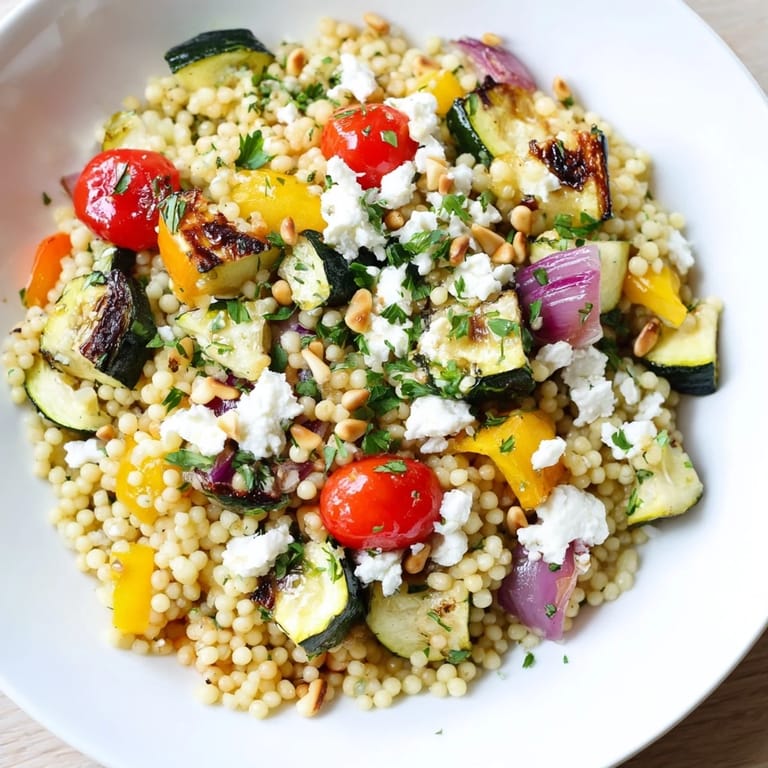
- Use pearl couscous or quinoa instead of regular couscous if you want a chewier texture or a gluten-free option.
- Toss in some Kalamata olives or sun-dried tomatoes for a briny, Mediterranean twist that amps up the flavor.
 Pin it
 This salad has become one of those recipes I return to when I need something reliable, colorful, and full of life without spending hours in the kitchen. It reminds me that good food does not have to be complicated, just honest and made with ingredients that taste like themselves.
Recipe FAQs
- → Can I prepare this dish ahead of time?
Yes! This salad actually tastes great at room temperature and keeps well refrigerated for up to 2 days. Prepare the components separately and toss together just before serving for the best texture and flavor.
- → How can I make this vegan?
Simply omit the feta cheese or substitute it with a plant-based alternative. The dish remains delicious and nutrient-rich with the roasted vegetables, couscous, and lemon dressing as the base.
- → What vegetables can I substitute?
This dish is very flexible! Try eggplant, asparagus, mushrooms, or summer squash. The key is choosing vegetables that roast well and develop caramelized edges. Adjust cooking time based on the size of your pieces.
- → How do I add more protein to this dish?
Stir in cooked chickpeas or white beans for a hearty vegetarian option. You can also serve alongside grilled chicken breast, seared fish, or halloumi for additional protein.
- → Can I make the dressing in advance?
Absolutely! Prepare the lemon dressing up to 24 hours ahead and store in a jar in your refrigerator. Whisk or shake it well before using to re-emulsify the ingredients.
- → Is couscous gluten-free?
Traditional couscous contains gluten as it's made from durum wheat semolina. If you need a gluten-free version, look for certified gluten-free couscous or substitute with quinoa or millet, adjusting liquid ratios accordingly.