 Pin it
 I was arranging cheese on a board for an impromptu dinner party when my friend walked into the kitchen and stopped mid-step. She was staring at the Brie wedges I'd lined up, standing like little peaks, and said, "It looks like mountains." That's when it clicked—a simple presentation became something magical, something that made people actually pause before eating. The Snowcapped Range was born from that moment, and it's been my go-to when I want to impress without spending hours in the kitchen.
Last winter, I made this for a holiday gathering where half the guests had spent the day hiking. They came in tired and hungry, and when they saw the platter arranged like a snowy alpine landscape, something shifted in the room. People actually talked about the cheese for months afterward, not because it was complicated, but because it felt thoughtful. That's when I realized this dish isn't just about taste—it's about making people feel seen.
Ingredients
- Brie cheese, well chilled (400 g): The foundation of everything—cold cheese cuts cleanly and cleanly cuts make the mountain peaks look intentional, not jagged.
- Parmesan cheese, finely grated (40 g): This is your snow, your finishing touch that transforms wedges into a landscape.
- Fresh thyme sprigs (optional): A whisper of greenery that breaks the white monotony and hints at alpine meadows.
Tired of Takeout? 🥡
Get 10 meals you can make faster than delivery arrives. Seriously.
One email. No spam. Unsubscribe anytime.
Instructions
- Chill and prepare your knife:
- Pull the Brie straight from the fridge—cold cheese is your friend here, it won't smear or crumble. A truly sharp knife makes the difference between clean triangular wedges and frustration.
- Cut into triangular peaks:
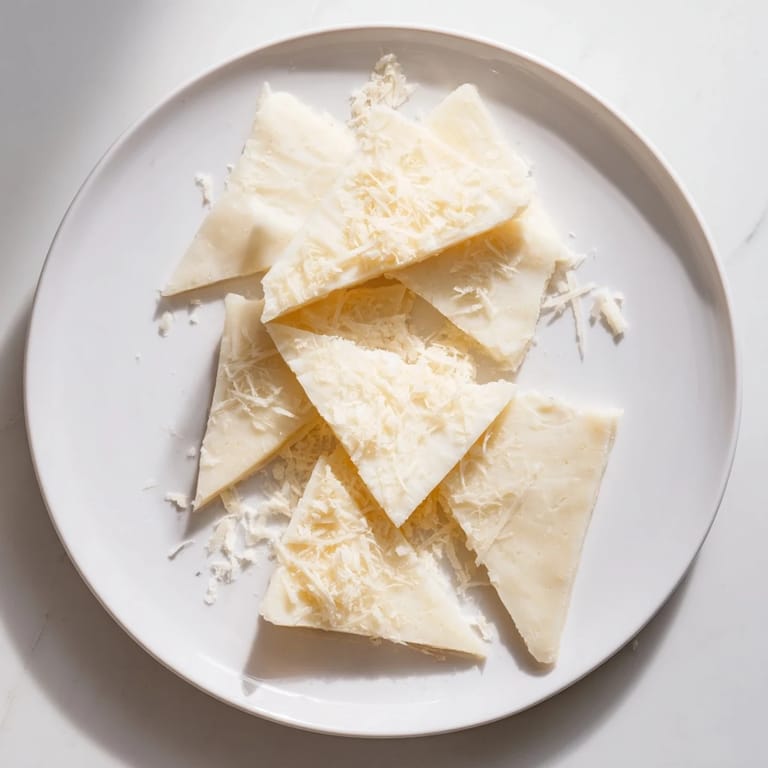
- Slice the Brie into 16 wedges, aiming for about 25 g each, keeping the wedges fairly uniform so they stand at the same height. The sharper your knife, the more confident your cuts become.
- Arrange your range:
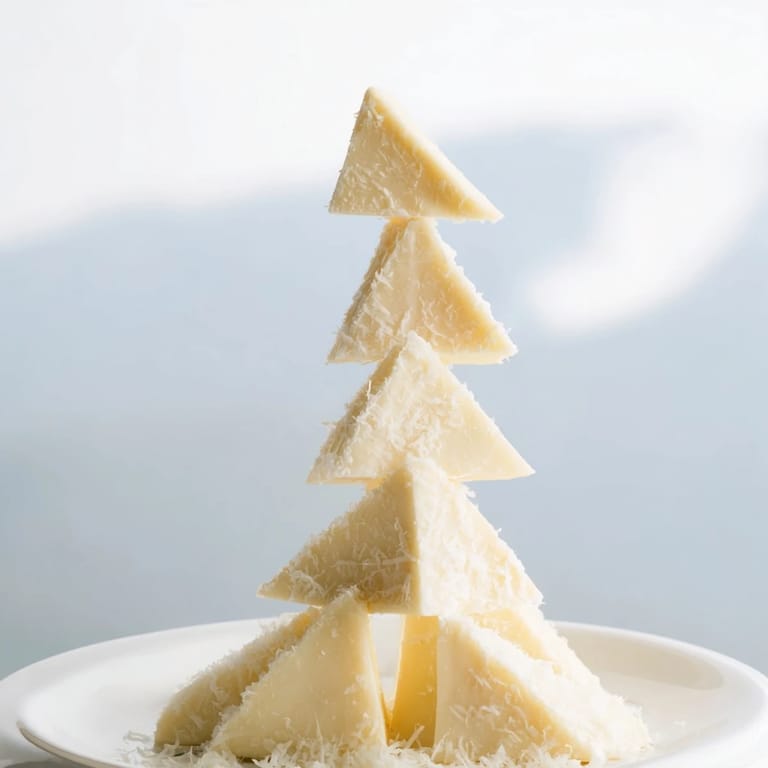
- Stand the wedges upright on your serving platter with pointed ends facing upward, leaving just enough space between them so they catch light and cast tiny shadows. This isn't about cramming them together—it's about creating a landscape.
- Add the snow:
- Dust the tops generously with grated Parmesan, letting some drift down the sides like wind has scattered it. The generosity here matters—thin layers look accidental, while a good coating says you meant it.
- Garnish and serve:
- Tuck fresh thyme sprigs around the base or between peaks if you're using them, then set it out immediately with crackers or toasted baguette slices nearby. This dish doesn't improve with sitting—serve it while the Brie is still cool and composed.
 Pin it
 My partner once said this was the only appetizer they'd eaten where they actually sat with it for a minute before taking a bite, just looking. That pause, that moment of appreciation before consumption, felt like proof that the simplest ideas sometimes land the deepest.
Variations Worth Trying
Camembert works beautifully if you want something slightly earthier, and triple-cream cheese gives you a richer, almost decadent wedge that melts differently on the tongue. I've also experimented with crème fraîche mixed with honey drizzled between peaks—it's not snowy anymore, but it becomes something like an alpine landscape after a thaw. The foundation stays the same, but the details shift based on what you're feeling and what your guests respond to.
Pairing and Presentation
A chilled Chardonnay or sparkling wine feels obvious, but it's obvious because it works—the crisp acidity cuts through the richness of the cheese without competing. I've learned that the platter itself matters as much as what's on it; a slate board or a long white ceramic dish makes the contrast sing. Arrange it on the table before people arrive so they see it first, before hunger makes them reasonable.
The Small Details That Matter
This is the kind of recipe where precision is your friend, but it's also forgiving enough that small imperfections add character rather than ruin things. The real secret is treating the presentation as seriously as you treat the ingredients—because your eyes eat first, and a beautiful plate makes everything taste better.
- If your knife feels dull, quickly pass it through a honing steel before cutting—you'll feel the difference immediately.
- Have your serving platter at room temperature so condensation doesn't make the Parmesan weep into the cheese.
- Make this no more than 30 minutes before serving to keep everything crisp and composed.
 Pin it
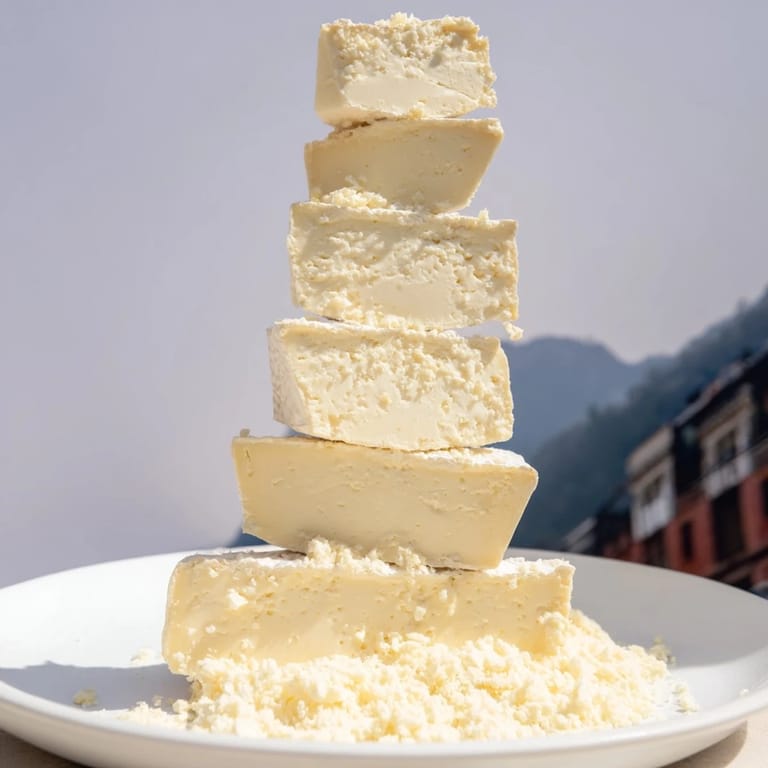
 This appetizer taught me that impressive food doesn't require complexity, just intention and a willingness to slow down. Serve it with confidence and watch people forget they're at an appetizer and start having a moment instead.
Recipe FAQs
- → How should the Brie be prepared for clean cuts?
The Brie should be well chilled before slicing into triangular wedges to ensure clean, precise cuts.
- → Can I use other cheeses instead of Brie?
Yes, Camembert or triple-cream cheese can substitute for Brie to provide a richer flavor and similar texture.
- → What is the purpose of dusting Parmesan on the Brie wedges?
Grated Parmesan dusted on the Brie mimics fresh snow covering mountain peaks, adding a subtle salty and nutty flavor.
- → Is there a way to enhance the Parmesan flavor?
Gently toasting the Parmesan in a dry pan before dusting intensifies its nuttiness and adds depth.
- → What garnishes complement this appetizer?
Fresh thyme sprigs add a touch of greenery and a mild herbal aroma that pairs well with the creamy cheeses.