 Pin it
 The first time I watched a street vendor in Tunis fold a brik into a perfect triangle, I was mesmerized—the way the phyllo crackled under their hands, how they cracked an egg directly into the filling without hesitation, the confidence of someone who'd done this a thousand times. I stood there with my coffee getting cold, asking questions until they finally invited me behind the cart to learn. That moment changed how I cook.
I made these for my roommate after she had the worst day at work, served them straight from the pan with nothing but lemon wedges and salt. She took one bite and actually closed her eyes. Sometimes the simplest food says everything you need to say.
Ingredients
- Ground beef or lamb (120 g): Choose whichever smells better at your market—lamb gives you earthier warmth, beef lets the spices shine.
- Small onion, finely chopped: This softens down to almost nothing and becomes the flavor foundation.
- Fresh parsley: A tablespoon sounds small but it's what stops the filling from tasting one-note.
- Ground cumin and coriander: A teaspoon and half-teaspoon respectively—these are what make it taste like North Africa and not just anywhere.
- Salt and black pepper: Season the filling generously; you're seasoning meat, not a side dish.
- Phyllo pastry sheets: Handle them like they're more delicate than they actually are—they'll forgive minor tears, but confidence helps.
- Large eggs: Room temperature ones crack more smoothly into the filling.
- Gruyère or mozzarella cheese: Optional but traditional in some versions; it adds a quiet richness that doesn't fight the egg.
- Sunflower or vegetable oil for frying: You need enough to create a shallow bath, about 3–4 centimeters deep.
Tired of Takeout? 🥡
Get 10 meals you can make faster than delivery arrives. Seriously.
One email. No spam. Unsubscribe anytime.
Instructions
- Build the meat base:
- Sauté the onion in a skillet until it softens and turns translucent, then add the ground meat with cumin, coriander, salt, and pepper. Let it brown properly—this takes about 5 minutes and is where all the flavor gets locked in. Stir in the parsley at the very end and let it cool while you prep everything else.
- Layer the phyllo:
- Place one sheet on your work surface and don't overthink it; if it tears slightly, nobody will know once it's fried. Spread 2–3 tablespoons of the cooled meat mixture in the center, leaving room around the edges.
- Nestle the egg:
- Make a small well in the meat with the back of a spoon and crack an egg directly into it. The yolk will stay put if you're gentle, and it will fry perfectly in about 3 minutes. Add cheese now if you want it.
- Seal the pastry:
- Fold the phyllo edges up and over the filling—triangle, rectangle, whatever feels natural—and use a tiny brush or your fingertip dipped in water to seal the seams so they don't open during frying.
- Get the oil ready:
- Heat 3–4 centimeters of oil in a large frying pan over medium-high heat until it shimmers and a tiny piece of phyllo sizzles immediately when it touches the surface. This is the sweet spot where pastry gets golden, not burnt.
- Fry until golden:
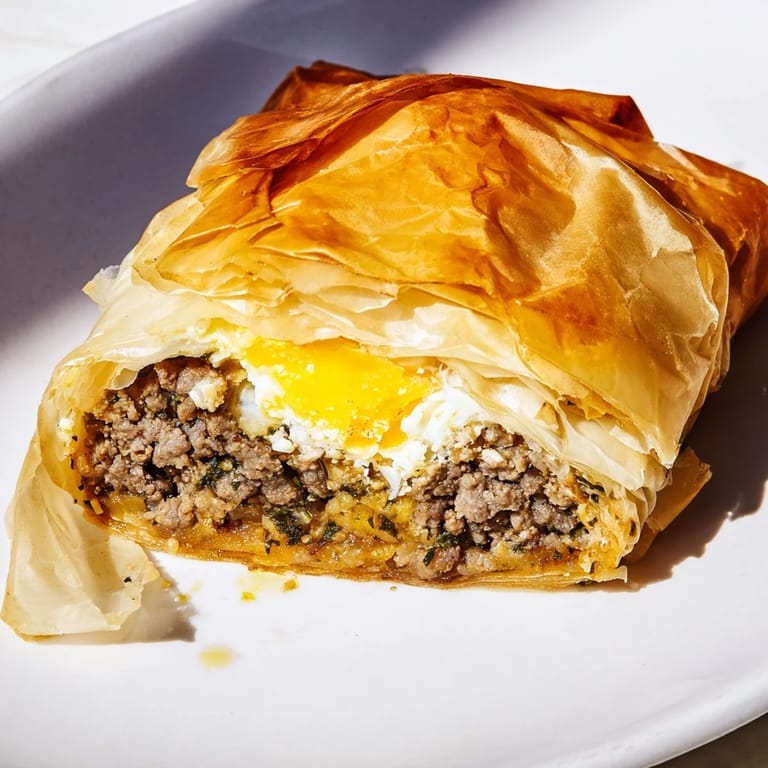
- Carefully slide the brik in and let it fry for about 2–3 minutes per side, using a slotted spoon to help flip it gently. You'll see the pastry darken to a beautiful amber color and hear it crackle.
- Drain and serve immediately:
- Remove it to a plate lined with paper towels and eat it while it's still warm and crispy, which means right now, not in five minutes.
 Pin it
 I remember my mother-in-law teaching me that these aren't meant to be perfect—they're meant to be eaten with your hands, with people you love, probably while standing in a kitchen at an hour that doesn't have a name anymore. That shifted something in how I approach cooking them.
The Oil Temperature Secret
The oil is everything here, and I learned this the hard way after making pale, greasy briouats that tasted like sadness. If the oil isn't hot enough, phyllo absorbs it instead of crisping. If it's too hot, the outside burns before the inside cooks. Medium-high heat and patience are the answer; the pastry should turn golden in those 2–3 minutes, not in 30 seconds.
Why the Egg Stays Runny
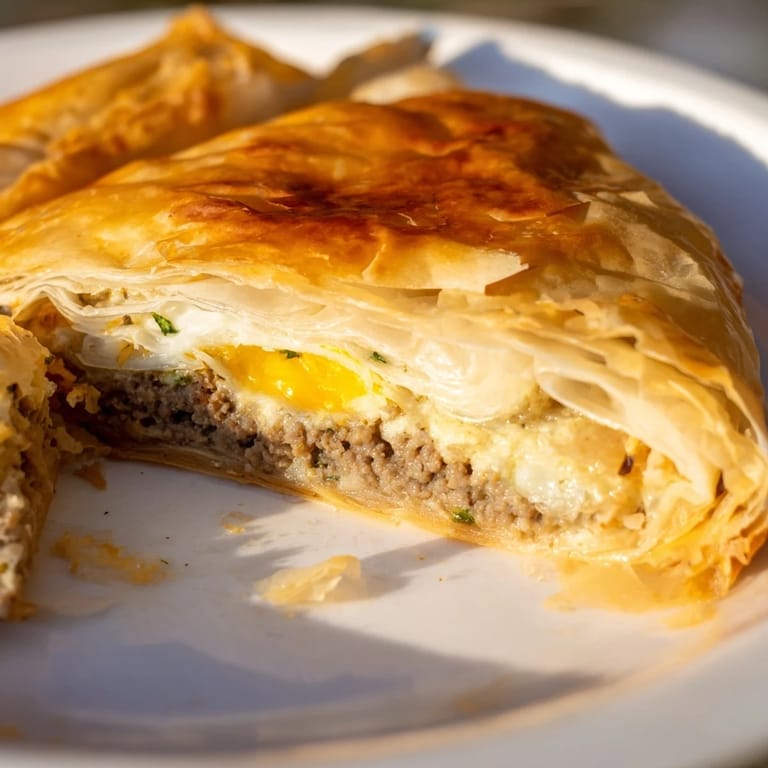
The phyllo crisps up so fast that it actually insulates the filling, which means that egg yolk cooks slowly and stays creamy even though the pastry is already crunchy. It's the opposite of what your brain expects, and it's exactly why this works. The moment that yolk breaks open and mixes with the meat and cheese is the whole reason we make this.
Serving and Variations
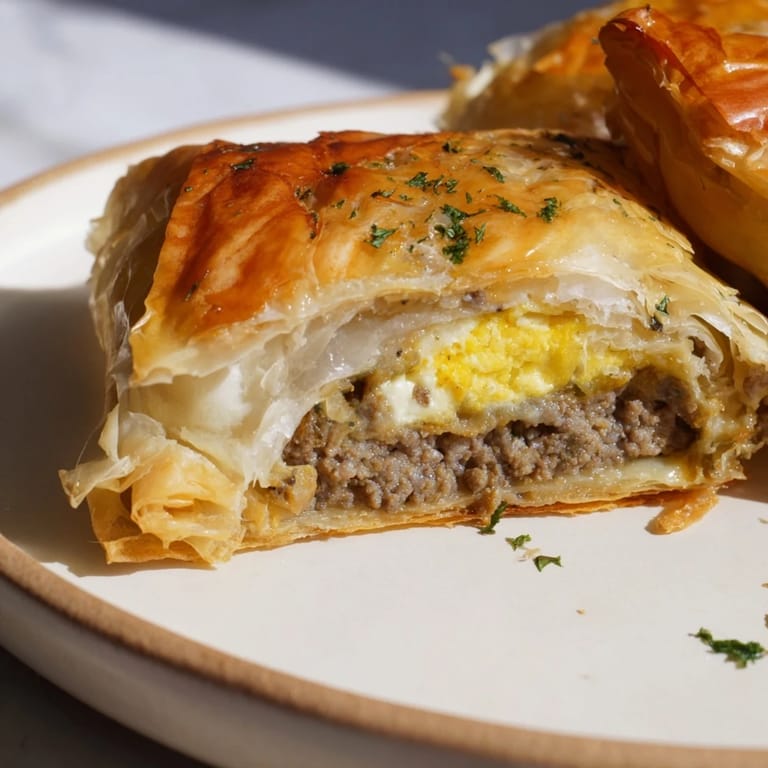
Serve these hot with lemon wedges squeezed over top and maybe a small green salad on the side to cut through the richness, though honestly they're good enough to eat alone. Some cooks add a pinch of harissa to the meat for heat, and some versions swap in tuna or potato instead of meat—all of these are equally valid and equally delicious.
- A squeeze of lemon right before eating brightens everything and makes the yolk taste even richer by contrast.
- These don't keep well, so make them and serve them within minutes; leftovers are never the same.
- If you're nervous about the egg yolk, remember that it's going to cook some while frying—it won't stay completely raw, just creamy and soft.
 Pin it
 This is the kind of food that reminds you why cooking matters—it's humble, it's fast, and it tastes like someone cared. Make these and share them.
Recipe FAQs
- → What type of meat is best for the filling?
Ground beef or lamb works well, providing a rich and savory base that complements the spices.
- → Can I use a different type of pastry?
Phyllo pastry is traditional due to its thin and crisp qualities, but you can try similar thin doughs cautiously.
- → How do I prevent the phyllo from tearing?
Handle phyllo gently and keep sheets covered with a damp cloth to maintain moisture while assembling.
- → What oil is recommended for frying?
Use sunflower or vegetable oil with a high smoke point to achieve an even, golden crisp.
- → Is the egg fully cooked inside the pastry?
The egg cooks gently inside during frying, resulting in a soft, creamy yolk that adds richness.
- → Can I add extra spice to the filling?
Adding harissa or chili flakes to the meat mixture enhances heat and depth without overpowering the flavors.