 Pin it
 There's something about the smell of gochujang hitting a hot pan that makes me pause whatever I'm doing. Years ago, I was standing in a tiny Seoul kitchen, watching a chef brush this exact orange-gochujang glaze onto salmon like she was painting, not cooking. The glaze bubbled and caramelized under the broiler, and I realized then that some dishes aren't just recipes—they're moments that stick with you. This one has lived in my kitchen ever since.
I made this for my partner on a random Wednesday when we both needed something that felt intentional but wasn't fussy. There was music playing, the rice was steaming, and when that first bite of the sticky, caramelized salmon hit with the brightness of orange—they just went quiet. That's when I knew this recipe belonged in regular rotation, not saved for special occasions.
Ingredients
- Skin-on salmon fillets (4, about 150 g each): Skin-on means the fish stays moist while broiling, and you get those crispy, salty edges if you're paying attention.
- Gochujang (2 tablespoons): This Korean chili paste is the backbone—sweet, spicy, funky in the best way. Find it in the Asian aisle or online; it's worth seeking out.
- Fresh orange juice (1/4 cup): Freshly squeezed tastes cleaner and brighter than anything bottled; don't skip this one.
- Soy sauce (2 tablespoons): Use regular soy sauce, not low-sodium, so the glaze actually tastes like something.
- Honey (2 tablespoons): This balances the heat and helps the glaze caramelize into sticky gold.
- Rice vinegar (1 tablespoon): The quiet note that ties everything together; regular vinegar will taste harsh by comparison.
- Fresh ginger (1 teaspoon grated): Grate it right before you use it—pre-minced loses that sharp, alive quality.
- Garlic (1 clove, minced): Just one keeps it subtle; if you go heavy-handed, it overpowers the orange.
- Sesame oil (1 teaspoon): A little goes a long way—it's concentrated, almost floral.
- Jasmine rice (1 1/2 cups): Jasmine's naturally fragrant and buttery; it pairs perfectly with the glaze without competing for attention.
- Water (3 cups): This ratio works every time if you measure properly.
- Unsalted butter (2 tablespoons): Finish the rice with this—it's what makes it feel like comfort.
- Salt (1/2 teaspoon): Taste the rice before serving; you might need a pinch more.
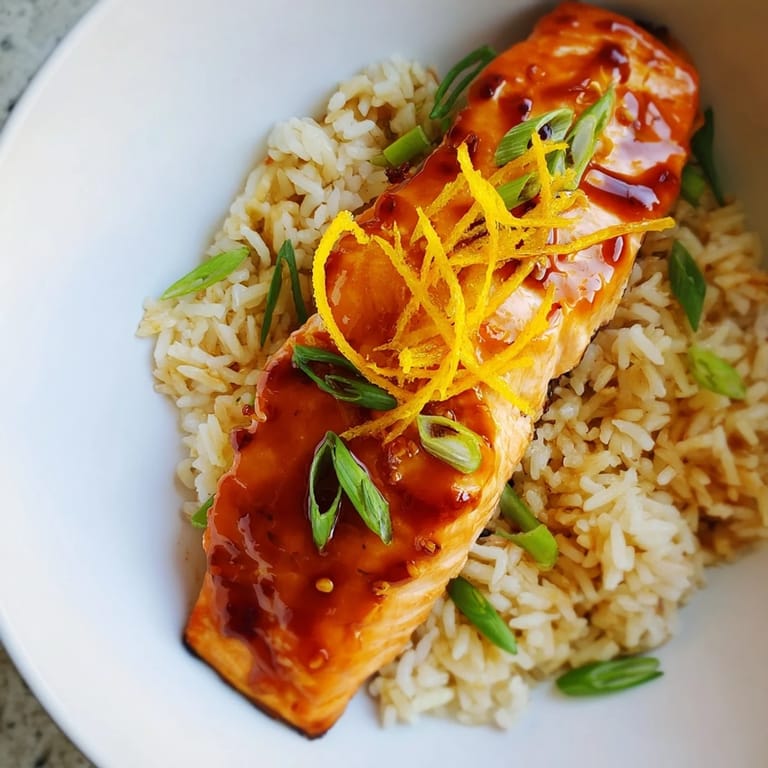
- Scallions (3, thinly sliced): These are your last-minute brightness; don't prep them until the moment you plate.
- Toasted sesame seeds (1 teaspoon, optional): Toast them yourself in a dry pan for 90 seconds if you can—the difference is real.
- Orange zest (optional): A final shower of zest makes this feel finished and intentional.
Tired of Takeout? 🥡
Get 10 meals you can make faster than delivery arrives. Seriously.
One email. No spam. Unsubscribe anytime.
Instructions
- Build your glaze while everything's calm:
- In a medium bowl, whisk together gochujang, orange juice, soy sauce, honey, rice vinegar, ginger, garlic, and sesame oil. The mixture should look thick and glossy, almost like a curry base.
- Pat and marinate your salmon:
- Dry the salmon fillets thoroughly—moisture is the enemy of a good crust. Place them skin-side up in a shallow dish, spoon 2 tablespoons of glaze over each fillet, turn to coat, then let them sit for 10 minutes while you handle the rice.
- Prepare rice the right way:
- Rinse jasmine rice under cold water, stirring gently, until the water runs almost clear—this removes excess starch so grains stay separate. In a medium saucepan, combine the rinsed rice, 3 cups water, butter, and salt. Bring to a boil, immediately reduce heat to low, cover, and simmer for 15 minutes without lifting the lid.
- Rest your rice:
- Turn off the heat, keep the lid on, and let the rice sit undisturbed for 5 minutes. This final steaming makes each grain tender but distinct. Fluff gently with a fork, using the tines to separate grains without crushing them.
- Heat and oil your broiler station:
- Preheat your oven broiler to high. Line a baking sheet with foil and give it a light coating of oil—this prevents sticking and helps the skin crisp.
- Arrange and glaze the salmon:
- Place the marinated salmon fillets skin-side down on the prepared baking sheet. Brush generously with more of the remaining glaze, making sure to coat the top and sides.
- Broil with intention:
- Position the baking sheet 5–7 inches from the heat source and broil for 6–8 minutes. About halfway through, brush with more glaze again—this is what creates that sticky, caramelized exterior. The salmon is done when the flesh is opaque and flakes gently, or when an instant-read thermometer registers 52–54°C/125–130°F for medium (it will continue cooking after it leaves the oven).
- Finish your glaze:
- While the salmon cooks, pour any remaining glaze into a small saucepan and simmer over medium heat for 2–3 minutes, stirring occasionally, until it's slightly thickened and glossy. This concentrate becomes your finishing sauce.
- Plate with care:
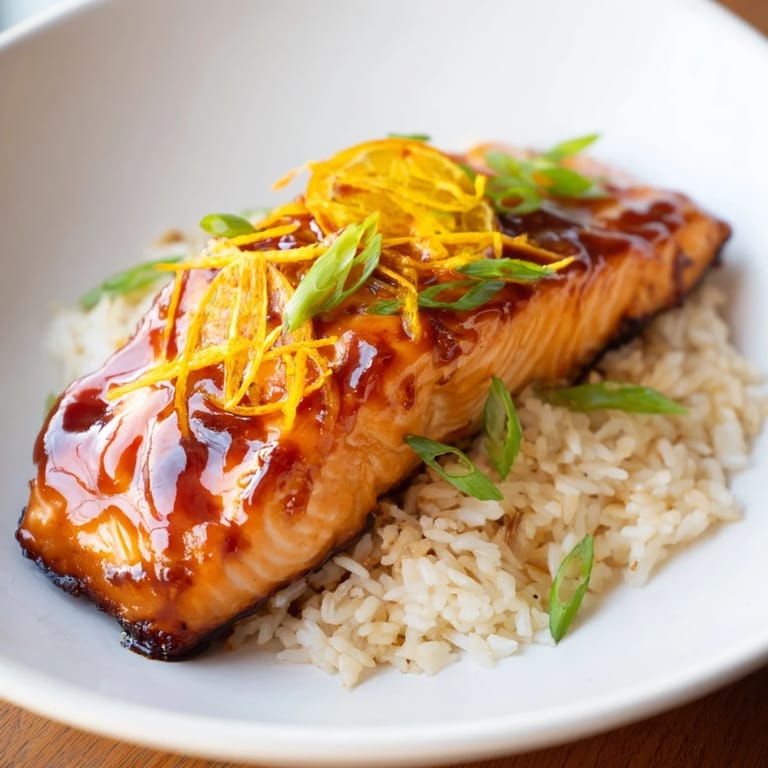
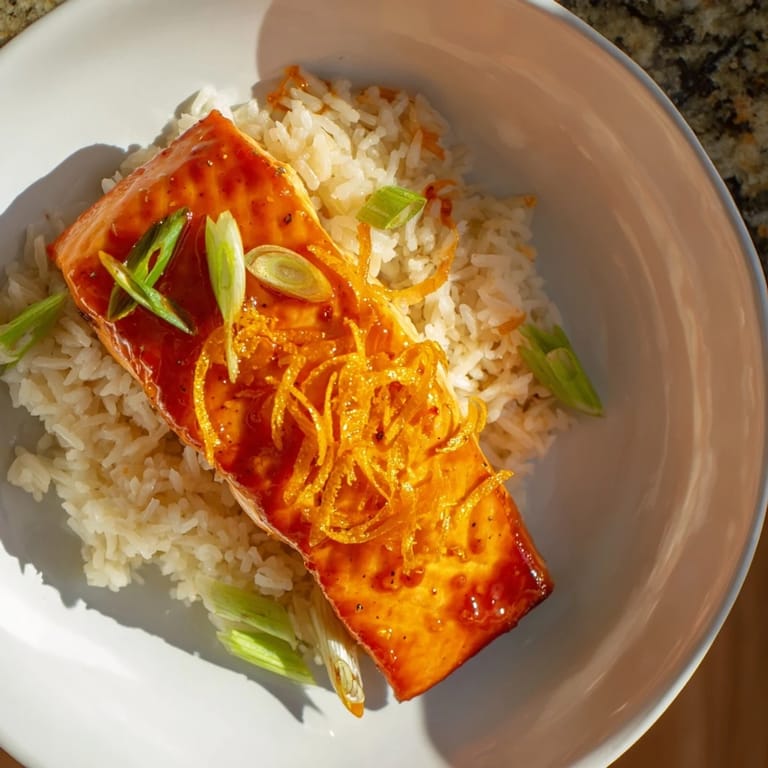
- Divide the fluffy rice among bowls, top each portion with a glazed salmon fillet, drizzle with the thickened sauce, and scatter scallions over the top. Finish with sesame seeds and a light shower of orange zest if you're feeling it.
 Pin it
 I served this to someone I was trying to impress, and honestly, I was nervous—salmon can be unforgiving if you're not paying attention. But the kitchen filled with the smell of caramelizing glaze, and when we finally sat down, there was this moment of quiet where the only sound was the clink of forks. That's when I stopped worrying and started tasting the food myself.
The Science Behind the Sticky Glaze
Gochujang contains fermented soybeans and chili peppers, which means it brings depth and complexity that raw chili flakes never could. When you brush it onto salmon under a hot broiler, the sugars in the honey caramelize while the acid in the orange juice brightens everything—it's chemistry that tastes like intention. The sesame oil adds a nutty finish that makes your brain register this as something special, even if you can't quite name why.
Why Jasmine Rice Matters Here
Most people think rice is rice, and then they taste jasmine cooked in butter and realize they've been missing something their whole lives. Jasmine has a subtle floral note and a naturally higher starch content, which means it becomes creamy and almost luxurious when you cook it with butter and water. It never fights for attention with your salmon—it supports it, sits beside it, and asks your palate to notice both.
Making It Your Own
This recipe is flexible once you understand what's happening. If you like heat, add a pinch of chili flakes to the glaze—you can go milder or spicier depending on your tolerance and mood. Brown rice or quinoa work if jasmine feels too simple, though the texture will be earthier and less silky. For a lighter version, you can poach the salmon instead of broiling it, though you'll lose that caramelized edge, which is honestly the whole point.
- Pair this with a crisp white wine like Sauvignon Blanc or a citrusy IPA if you're drinking something.
- Leftover salmon tastes incredible cold in a bowl with extra rice and a squeeze of orange, so make extra if you're feeling it.
- The glaze keeps in the fridge for a week, and you can brush it onto chicken, vegetables, or tofu whenever you want that sticky-sweet-spicy moment.
 Pin it
 This dish has become my go-to when I want to feel like I'm cooking something impressive without the stress that usually comes with it. Every time I make it, I remember that tiny Seoul kitchen and that moment under the broiler when everything came together, and I'm grateful that some meals stay with you.
Recipe FAQs
- → What type of rice works best with this dish?
Jasmine rice provides a light, fragrant base that complements the rich glaze, but brown rice or quinoa can be used for a nuttier, heartier option.
- → Can the glaze be adjusted for heat levels?
Yes, adding chili flakes to the glaze increases spiciness, while reducing gochujang will soften the heat for milder tastes.
- → How can I tell when the salmon is perfectly cooked?
The salmon is done when it flakes easily with a fork and the glaze is caramelized; an internal temperature around 52–54°C (125–130°F) indicates medium doneness.
- → Is it important to marinate the salmon before cooking?
Marinating allows the glaze flavors to penetrate the fish, enhancing taste and creating a sticky, flavorful coating when broiled.
- → What garnishes enhance the overall flavor and presentation?
Thinly sliced scallions, toasted sesame seeds, and a sprinkle of orange zest add freshness, crunch, and vibrant color to the dish.