 Pin it
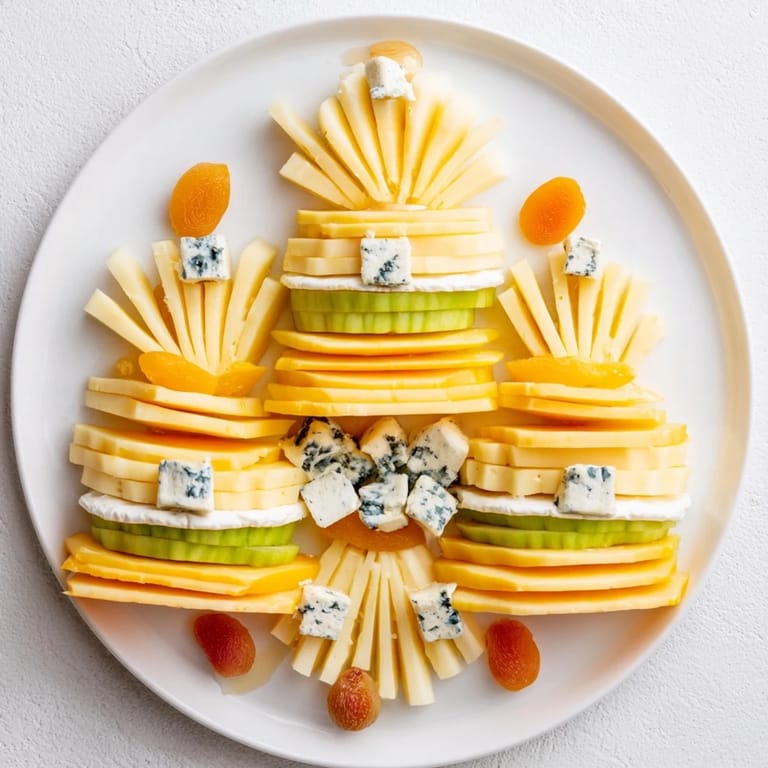
 I discovered the magic of architectural plating by accident at a gallery opening where a photographer friend served one of these geometric cheese boards. She'd arranged the slices in these perfect tiered arches that somehow made aged cheddar look like an art installation. We stood there eating brie wedges off toothpicks, and I realized that food could be beautiful without trying too hard. That night, I went home and started experimenting with my own version, learning that sometimes the most sophisticated presentations come from playing with simple shapes.
The first time I made this for my partner's work dinner, I was nervous about the geometry failing mid-party. But something wonderful happened when the platter came out—people actually paused their conversations. Someone asked if it was edible, as if the presentation had transcended its purpose. That's when I learned that a cheese board can be a conversation starter, a centerpiece, and the most delicious thing on the table all at once.
Ingredients
- Aged cheddar, sliced thin (150 g): The sharpness cuts through the richness of brie and holds its structure in those fan arrangements, becoming almost glass-like when you slice it with a good wire slicer.
- Gruyère, sliced thin (150 g): This cheese has enough body to maintain clean lines while melting just slightly on the tongue, and it photographs beautifully because of its golden color.
- Manchego, sliced thin (150 g): The nutty undertone adds complexity and creates visual contrast with the other yellows on the board.
- Creamy brie, sliced into wedges (120 g): These wedges anchor each arch and soften as guests graze, turning creamy and inviting.
- Blue cheese, cut into small triangles (100 g): The sharp punch and dense crumble make perfect peaks for the tops of your arches, and they won't slide around.
- Seedless green grapes (1 small bunch): They nestle into the gaps and add a cool burst that contrasts with the salty, aged cheeses.
- Red grapes (1 small bunch): Color and sweetness in the same tiny package, essential for breaking up the cheese-heavy palette.
- Pear, thinly sliced (1 small): Slice just before serving so it doesn't brown, and it becomes a delicate bridge between cheese and fruit.
- Apple, thinly sliced (1 small): The crispness is a welcome textural contrast, though choose tart varieties so sweetness doesn't dominate.
- Roasted almonds (40 g): Scattered between the arches, they add crunch and visual weight to anchor the design.
- Dried apricots, halved (40 g): Their chewy sweetness plays beautifully against blue cheese, and they're easier to position than fresh fruit.
- Honeycomb or good quality honey (40 g): Drizzle it near the brie where it melts into golden puddles, inviting people to scoop it up with a cracker.
- Baguette, sliced (1 baguette): Cut into thin rounds so they don't overpower the cheese, and arrange them casually along the sides so nobody feels rushed to grab them.
- Assorted crackers (100 g): Mix shapes and textures—some delicate, some sturdy—so every pairing feels intentional.
Tired of Takeout? 🥡
Get 10 meals you can make faster than delivery arrives. Seriously.
One email. No spam. Unsubscribe anytime.
Instructions
- Gather your tools and prep the space:
- Pull out your largest platter and let it sit at room temperature so the board itself becomes part of the presentation. Lay out your cheese slicer and knife so everything is within arm's reach, because once you start building, you'll want to work in flow state.
- Slice your firm cheeses with intention:
- Use a wire slicer to create thin, uniform slices of cheddar, Gruyère, and Manchego—they should be almost see-through so they catch light and bend gracefully. Pat them dry with a paper towel so they hold their shape without any moisture making them stick.
- Build your first arch:
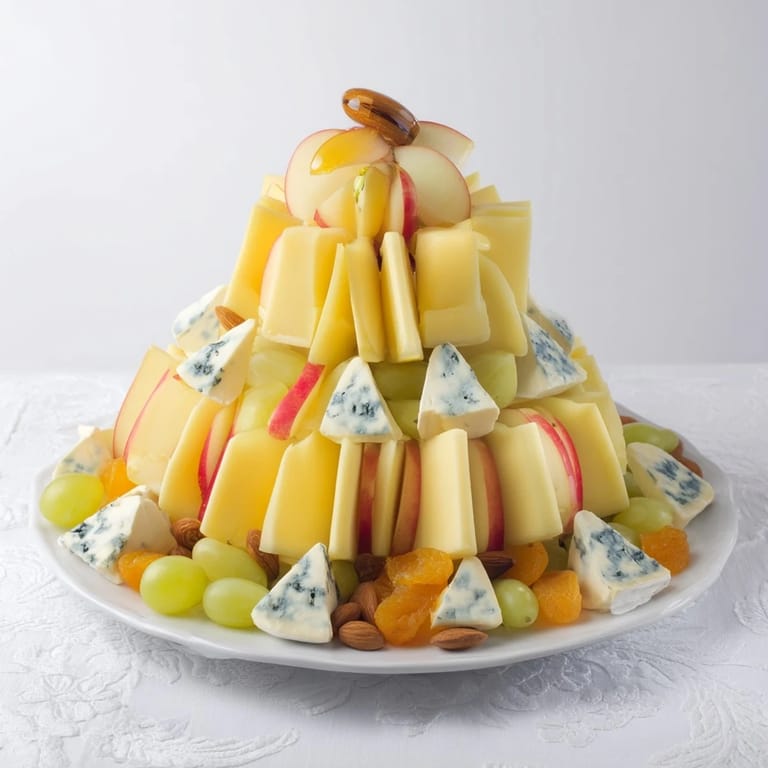
- Start at the bottom of your platter and overlap the first cheese slices in a gentle arc, each slice slightly offset so you see the edges creating that Art Deco fan effect. You're not looking for perfect symmetry—just confident, flowing lines.
- Create the tiered effect:
- Build a second tier of the same cheese slightly higher up, then a third, so each arch rises like a building. The overlapping creates depth and catches shadows, making the whole thing feel architectural.
- Anchor with brie wedges:
- Place creamy brie wedges at the base of each arch where they look like solid foundations, nestled into the curve so they feel like part of the structure.
- Crown each arch:
- Place a small triangle of blue cheese at the center-top of each arch like it's reaching toward the sky, its sharp blue providing a striking contrast to the golden cheeses below.
- Fill the negative space with color:
- Tuck grape bunches into the gaps between arches, letting them tumble naturally so it feels organic rather than forced. Arrange your apple and pear slices in gentle curves that echo the architecture you've built.
- Scatter the supporting cast:
- Scatter roasted almonds and halved apricots artistically around the platter—these aren't decoration, they're working in harmony with the cheeses to create visual rhythm and add contrast.
- Add the liquid gold:
- Drizzle honeycomb or honey near the brie in small puddles where it will catch light and invite people to explore, then arrange your baguette slices and crackers along the edges where they're easy to grab without disrupting the design.
- Final check and chill:
- Step back and look at your board from above—the eye should travel smoothly from arch to arch. Cover loosely with plastic wrap and refrigerate for up to an hour if you're not serving immediately, which keeps the cheeses from getting too soft while the board stays visually stunning.
 Pin it
 I remember my grandmother watching me fuss over the angles of the slices and saying, 'It's fancy because you made it matter,' and I realized she was right—the geometry wasn't about impressing anyone, it was about respecting the ingredients enough to give them form. That's when cheese platters stopped being just food and became small acts of love.
The Psychology of Geometric Presentation
There's something about repetition and symmetry that makes food feel intentional and special, even when it's just arranged cheese. The Art Deco influence taps into a part of our brain that loves order and pattern—it signals care, planning, and respect for the people you're serving. Once you understand this principle, you can apply it to any board or platter, and suddenly everything looks gallery-worthy.
Pairing Cheese with Architecture
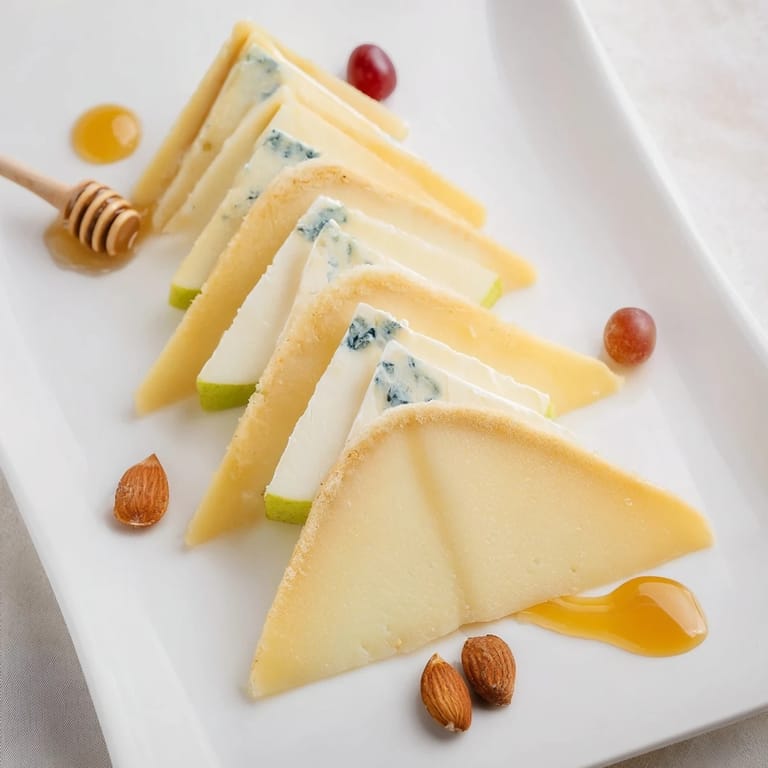
The best boards tell a story through texture and flavor, not just by looking good. Each cheese in this arrangement has a different melting point and taste intensity, so as guests move from the brie at the base to the blue cheese at the peak, they're actually experiencing a flavor journey. Mix soft with hard, sharp with mild, and bright with earthy—this creates natural rhythm that feels intentional and tastes balanced.
Making It Your Own
This formula works with any cheeses you love or can find—Comté brings a slightly sweeter note than Gruyère, aged Gouda adds a caramel undertone, and Emmental creates different shadows in the fan slices. The point isn't to follow the recipe exactly but to understand the principles: contrast in color, variety in texture, and balance between rich and bright elements. Once you see the board as an artistic composition rather than a list of ingredients, you'll know exactly how to swap things out.
- Swap any hard cheese for another as long as it slices cleanly and has visual contrast.
- Nuts can be candied, spiced, or raw depending on what energy you want to bring to the board.
- Fresh figs, berries, or stone fruit work beautifully depending on the season, so think about what's at peak ripeness.
 Pin it
 A good cheese board is an invitation to slow down and pay attention, to taste instead of just eat. This one does that while looking like it belongs in a design museum.
Recipe FAQs
- → How do you achieve the tiered fan effect with cheese?
Slice semi-firm cheeses thinly and overlap slices in symmetrical layers to create distinct arches with a fanned appearance.
- → What cheeses work best for this arrangement?
Aged cheddar, Gruyère, Manchego, creamy brie, and blue cheese provide varied textures and flavors that complement the geometric design.
- → Can the accompaniments be customized?
Yes, fresh fruits like grapes, pears, and apples add balance, while roasted nuts and honeycomb bring sweetness and crunch.
- → How should this platter be served for best results?
Arrange all components on a large board and serve immediately or chilled for up to one hour to maintain freshness.
- → Are there vegan alternatives for this presentation?
Plant-based cheeses can replace dairy, and honey can be omitted or substituted with agave syrup for a vegan-friendly version.