 Pin it
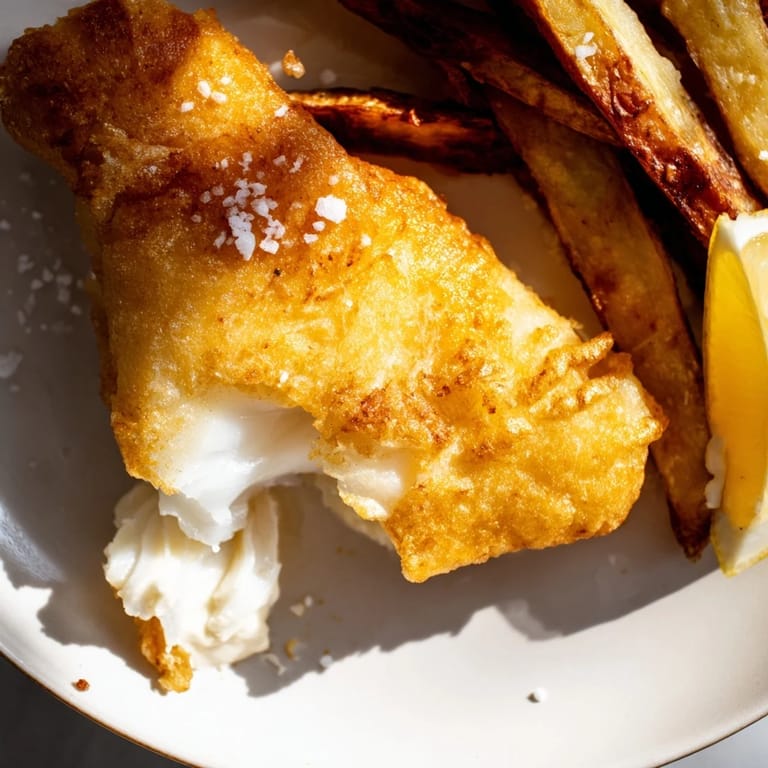
 The first time I bit into proper fish and chips wasn't at some fancy restaurant—it was standing outside a small chippy in coastal Wales on a grey afternoon, vinegar-soaked paper crackling in my hands. The fish was impossibly light inside its golden shell, the chips warm and fluffy, nothing like the frozen versions I'd tried before. That moment taught me that great fish and chips isn't about fancy techniques; it's about respecting simple ingredients and knowing exactly when to stop.
I made this for a dinner party where I'd promised something casual and unpretentious, and watching my friends abandon conversation to focus on eating told me everything I needed to know. One friend actually asked if I'd brought it from a proper chippy until I sheepishly admitted the truth—and the pride I felt was disproportionate and completely earned.
Ingredients
- White fish fillets (cod or haddock): Thick, meaty fillets absorb less oil and stay tender; ask your fishmonger for ones around 150g each for even cooking.
- All-purpose flour and cornstarch: The cornstarch is the secret—it creates that impossibly crispy, almost crackling exterior while flour gives structure.
- Baking powder: This small addition aerates the batter, making it lighter and crunchier than you'd expect.
- Cold sparkling water or beer: Cold liquid keeps the batter light and crispy; the bubbles add extra lift, and beer adds subtle depth if you're feeling adventurous.
- Russet or Maris Piper potatoes: Starchy varieties break down less and hold their shape, essential for that fluffy interior.
- Sea salt and malt vinegar: The acidity of vinegar cuts through richness perfectly, and sea salt brings brightness rather than just saltiness.
Tired of Takeout? 🥡
Get 10 meals you can make faster than delivery arrives. Seriously.
One email. No spam. Unsubscribe anytime.
Instructions
- Soak and prepare the chips first:
- Cut potatoes into thick batons and soak them in cold water for at least 15 minutes—this removes excess starch so they fry up light instead of turning gluey. Pat them completely dry afterward; any moisture will cause sputtering oil.
- First fry at low temperature:
- Heat your oil to 150°C and fry the chips for 4-5 minutes until tender but pale, almost translucent looking. This step cooks them through gently so the second fry just crisps the outside.
- Mix the batter while chips rest:
- Whisk flour, cornstarch, baking powder, salt, and pepper together, then slowly add cold sparkling water—the batter should coat a spoon thickly but flow smoothly off it. If it feels too thick, add water a tablespoon at a time.
- Raise heat and second-fry the chips:
- Crank the oil temperature up to 190°C and fry the chips again in batches for just 2-3 minutes until deeply golden and crispy. They'll finish cooking and develop that shattering crust you're after.
 Pin it
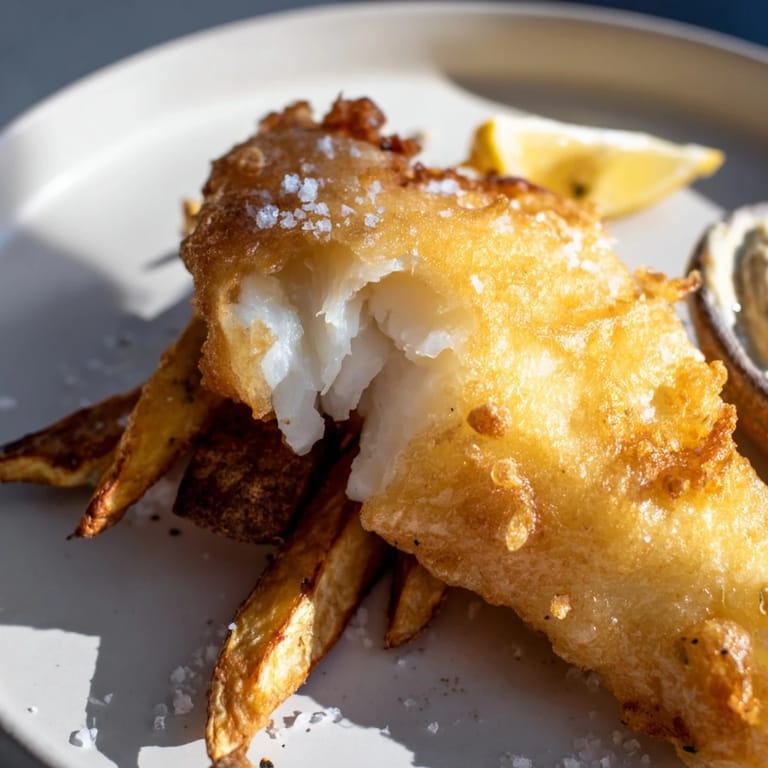
 There's something almost meditative about standing over a pot of hot oil, watching fish transform from pale flesh to golden treasure in minutes. It's one of those rare dishes where timing and temperature matter more than complexity, and that simplicity is exactly what makes it feel like home cooking at its best.
The Art of the Batter
The batter is where the magic lives, and I learned this the hard way after making it with warm water once and getting a dense, heavy crust that clung to the fish like a damp sweater. Cold sparkling water or beer keeps everything light and airy—the bubbles stay suspended in the batter, creating tiny pockets that turn crispy and crackly during frying. Some people swear by beer for depth of flavor, and honestly, a pale ale adds something subtle and grown-up to the dish.
Getting Your Oil Right
I used to guess at oil temperature like some kind of amateur, dipping in wooden spoons and hoping for the best, until I finally invested in a simple cooking thermometer—it changed everything. The two-temperature fry isn't just British tradition, it's physics: the gentle first fry at 150°C cooks the potato through while keeping it pale, and the hot second fry at 190°C creates the crispy exterior in seconds. If you don't have a thermometer, you can test a cube of bread—it should turn golden in about 60 seconds at the right temperature, but honestly, just get the thermometer.
Why This Works, and What You Can Play With
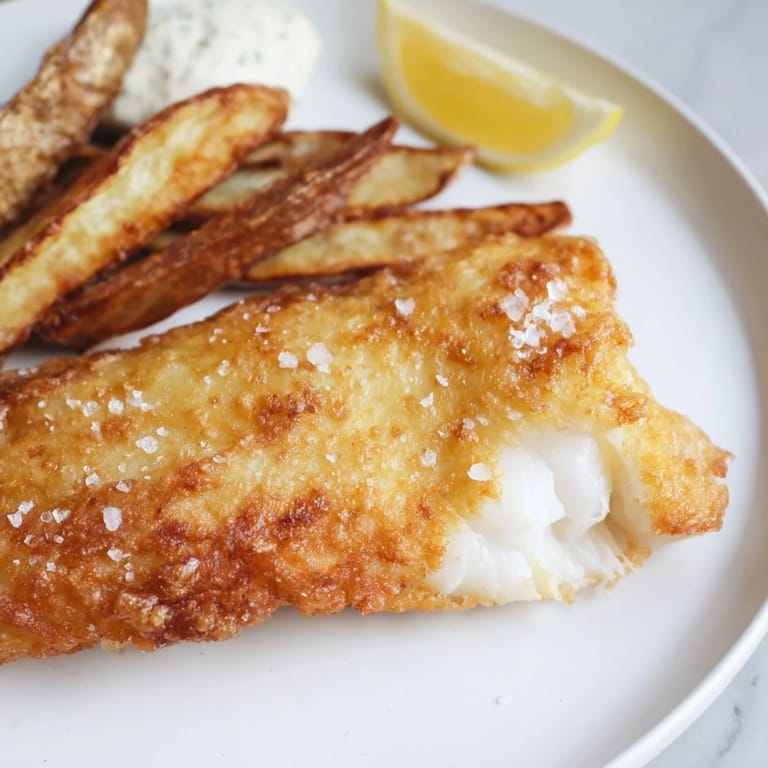
The magic of fish and chips is in its clarity—simple ingredients treated with respect rather than fussed over. Fish stays tender because you're not overcooking it, chips stay fluffy because you're not skipping steps, and the batter stays crispy because you're using the right ratios and temperatures. Everything here is intentional, tested, and worth doing exactly as written the first time.
- Malt vinegar is traditional, but fresh lemon brings brightness if you prefer citrus—some people do both.
- Add mushy peas on the side if you want that authentic pub experience, even though they're optional.
- Serve with tartare sauce or just salt and vinegar, depending on your mood and what's in your kitchen.
 Pin it
 Fish and chips is one of those dishes that tastes better when shared, maybe because eating something this good makes you want to celebrate it with someone else. Make this when you want to feel capable and generous in the kitchen, not because it's difficult, but because it's deeply, unapologetically good.
Recipe FAQs
- → What type of fish works best for this dish?
White fish such as cod or haddock, skinless and boneless, are ideal for their mild flavor and flaky texture.
- → Why is the batter made with sparkling water or beer?
Using sparkling water or beer adds lightness and crispiness to the batter, resulting in a crunchy coating.
- → How do double-fried chips improve the texture?
Frying chips twice ensures a fluffy interior and a crispy, golden exterior, enhancing their crunchiness.
- → What oil is best for deep frying?
Sunflower or vegetable oil with a high smoke point is recommended for frying to achieve even cooking and crispiness.
- → How can I keep the fish crispy after frying?
Drain the fried fish on a wire rack or paper towels to remove excess oil and maintain crispness.
- → What are traditional accompaniments for this dish?
Malt vinegar, lemon wedges, tartar sauce, or mushy peas are classic sides that complement the flavors well.