 Pin it
 The first time I tasted koshari, I was standing at a crowded street cart in Cairo, watching the vendor move with practiced rhythm—rice tumbling into a cone, lentils layering underneath, pasta on top. The chaos of flavors hit all at once: earthy legumes, tender rice, the bright punch of tomato sauce, and those impossibly crispy onions that crackled between my teeth. I knew then that I had to learn how to make it, not to recreate that exact moment, but to capture that feeling of comfort and abundance in my own kitchen.
I made this for friends on a Thursday night when we were all too tired to think about cooking, and watching them dissect the layers—hunting for those golden onions, fishing for tender lentils—reminded me why I love feeding people. Someone asked if this was actually difficult, and I realized it isn't complicated at all, just requires patience and a few pots going at once.
Ingredients
- Medium-grain rice, 1 cup: It holds its shape better than short-grain and gives you distinct grains rather than a mushy base.
- Brown or green lentils, 1 cup: They stay firm and earthy after cooking, creating a lovely contrast to the soft rice.
- Elbow macaroni or ditalini, 1 cup: Small pasta shapes work best so they don't overshadow the other layers.
- Crushed tomatoes, 15 oz can: Fresh tomatoes work, but canned are more reliable and actually taste brighter when simmered with spices.
- Olive oil, 2 tablespoons: Good quality makes a difference in the sauce's final richness.
- Ground cumin and coriander: These spices are what make koshari taste like itself—don't skip them or substitute.
- Vegetable oil for frying: Keep it separate from the olive oil; you need the heat stability for crispy onions.
Tired of Takeout? 🥡
Get 10 meals you can make faster than delivery arrives. Seriously.
One email. No spam. Unsubscribe anytime.
Instructions
- Cook the lentils first:
- In a saucepan, cover lentils with 3 cups water and bring to a boil. Reduce heat and simmer for 20–25 minutes—you want them tender but still holding their shape, not collapsing into mush. Drain and set aside.
- Prepare the rice while lentils cook:
- Rinse your rice until the water runs mostly clear, then combine with 2 cups fresh water and 1/4 teaspoon salt in a separate pot. Bring to a boil, cover, reduce heat to low, and simmer for 15–18 minutes. When it's done, fluff it gently with a fork and let it sit in the covered pot for a few minutes.
- Get the pasta to al dente:
- In a large pot of salted boiling water, cook the macaroni until it has just a slight firmness when you bite it. Drain and set aside—this is important because it will absorb some sauce as everything sits.
- Build the tomato sauce with intention:
- Heat olive oil over medium heat and sauté your finely chopped onion until it turns translucent and soft, about 5 minutes. Add garlic and cook just until fragrant, then add crushed tomatoes, tomato paste, cumin, coriander, optional chili flakes, and a teaspoon of sugar. The sugar balances acidity without making it sweet. Simmer uncovered for 15–20 minutes, stirring now and then, until it's thick and the spices have deepened the color. Taste and adjust salt and pepper.
- Fry the onions until they're golden and crispy:
- Toss your thinly sliced onions with flour and salt to coat evenly, then work in batches in hot vegetable oil over medium-high heat. You'll hear them sizzle and smell that distinctive fried aroma after a minute or two. Fry for 5–7 minutes per batch until deep golden, then drain on paper towels immediately so they crisp up. These are non-negotiable—they're the textural soul of the dish.
- Make optional garlic vinegar if you want that sharp brightness:
- Combine vinegar, minced garlic, and optional chili flakes in a small bowl and let them sit together for 10 minutes so the flavors marry.
- Assemble in layers:
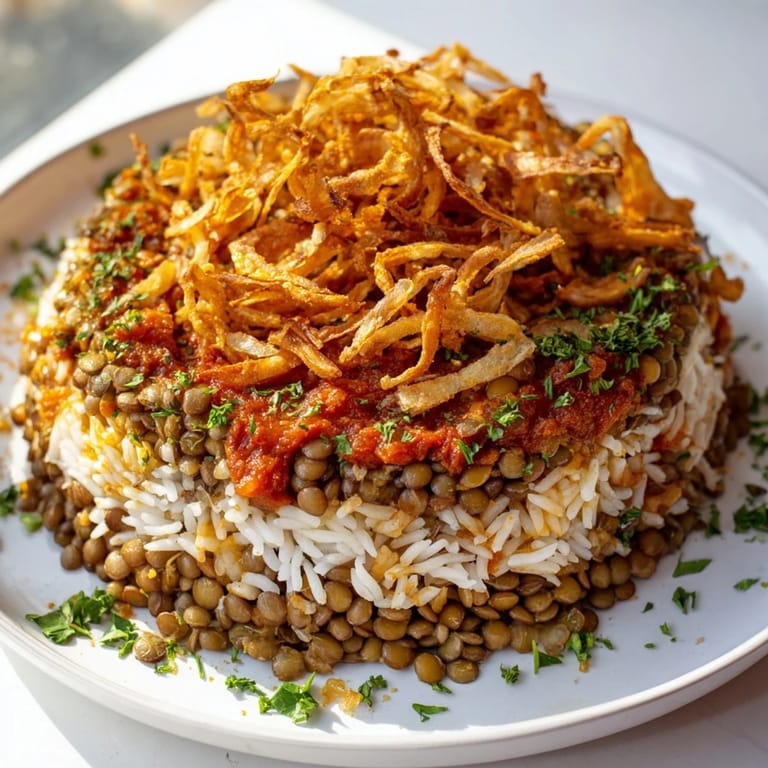
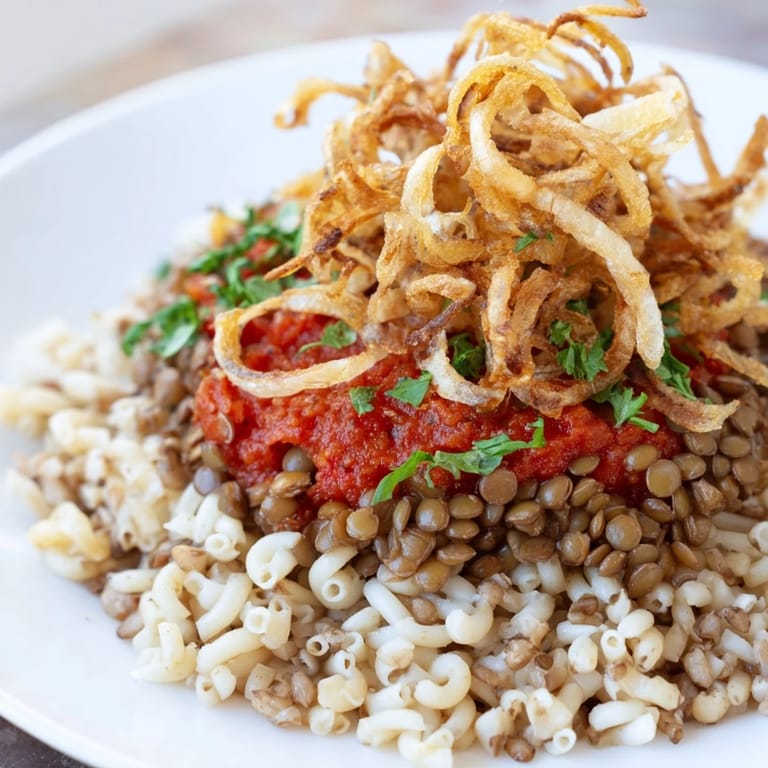
- In individual bowls or one large platter, layer rice on the bottom, then lentils, then pasta. Top generously with tomato sauce, scatter crispy onions over everything, and drizzle with garlic vinegar if using. Fresh parsley adds color and a fresh note if you have it. Serve while everything is still warm.
 Pin it
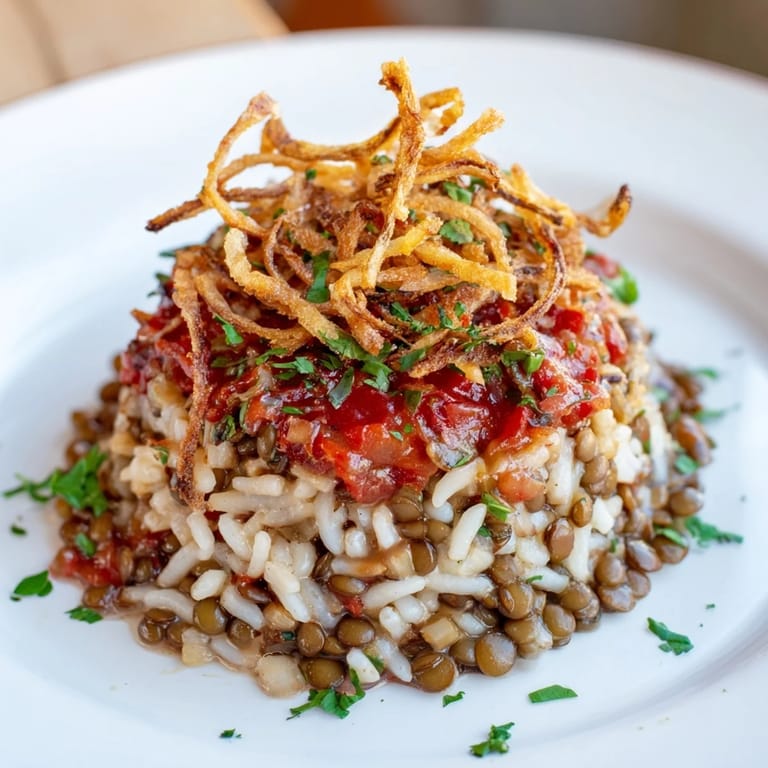
 There's a moment when you're plating koshari and you pause, looking at the way the sauce pools between the layers, how the onions catch the light with a burnished shine. That's when you realize it's more than the sum of its parts—it's become something almost alive, a dish that brings people together the way street food does best.
Building Flavor Through Layering
The genius of koshari isn't in any single ingredient—it's in how they stack. Each layer has its own texture and taste, and they speak to each other when you take a spoonful. The soft rice catches and holds the sauce, the lentils add earthiness and protein, the pasta provides slight chew, and the crispy onions cut through everything with textural contrast. It's why you can't just dump it all together; the architecture matters.
Adjusting Heat and Spice
Koshari doesn't need to be fiery, but it should have personality. The chili flakes are optional not because the dish is delicate, but because heat preference is personal. Start with a pinch, taste the sauce, and add more if you want it to speak louder. You can always hand extra chili flakes or hot sauce to guests, letting them control their own experience.
Making It Your Own
Once you've made koshari a few times and understand how the pieces work together, you can play with it. Try vegetable broth instead of water for cooking the rice or lentils for deeper flavor. Swap the macaroni for orzo or vermicelli if you like. Some people add chickpeas for extra protein, others use long-grain rice if that's what they have. The framework is solid enough to hold your adjustments.
- Consider making a double batch of crispy onions because they disappear faster than anything else on the plate.
- Prepare the tomato sauce and crispy onions ahead of time; only cook the grains and pasta shortly before serving.
- If you're cooking for dietary restrictions, this recipe is naturally vegan and easily becomes gluten-free with the right pasta substitution.
 Pin it
 Koshari is the kind of dish that rewards you for showing up and paying attention without demanding perfection. Make it once and you'll understand why it's been sustaining people on Cairo streets for generations.
Recipe FAQs
- → What grains are used in Egyptian Koshari?
It combines medium-grain rice, brown or green lentils, and small elbow macaroni or ditalini pasta to create a fulfilling texture and flavor.
- → How is the tomato sauce prepared?
The sauce is made by sautéing onions and garlic, then simmering crushed tomatoes with cumin, coriander, chili flakes, and tomato paste until thick and fragrant.
- → What gives Koshari its crispy texture?
Thinly sliced onions are coated lightly in flour and fried until golden for a crunchy topping that contrasts the soft layers beneath.
- → Can this dish be made vegan?
Yes, the entire dish is naturally vegan, using plant-based ingredients and oil for frying crispy onions without animal products.
- → Are there any optional garnishes to enhance flavor?
Garlic vinegar with chili flakes and fresh parsley provide fresh, tangy notes that complement the richness of the layers.
- → How long does the full preparation take?
Typically around 1 hour and 10 minutes, including preparation and cooking times for grains, sauce, and crispy onions.