 Pin it
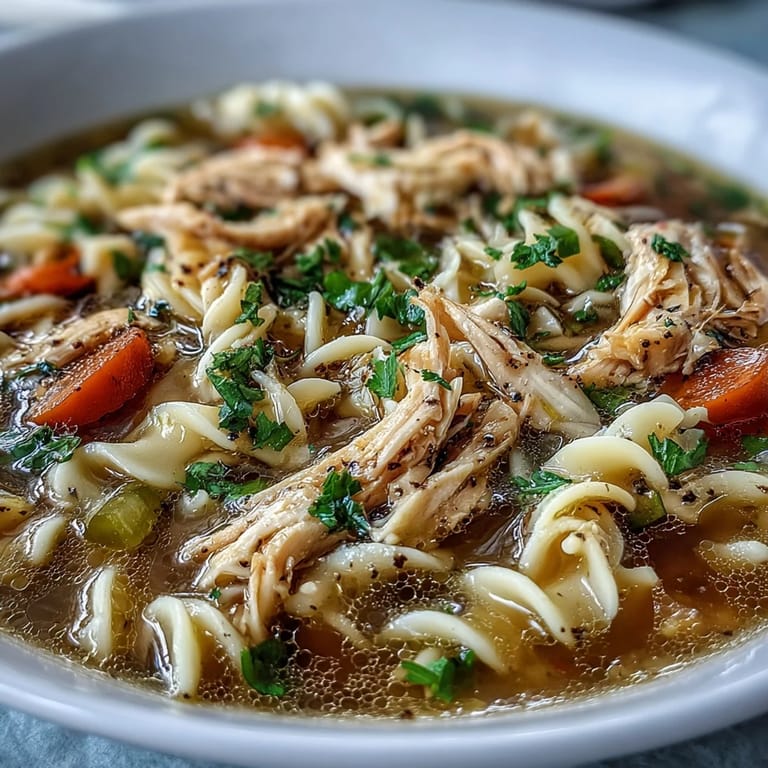
 My Instant Pot has become the MVP of weeknight dinners, and this chicken noodle soup is exactly why. There's something almost magical about throwing ingredients into that stainless steel pot and walking away, only to return to a kitchen filled with the smell of simmered broth and tender chicken. My kids still ask for this more than any restaurant takeout, which says everything about how satisfying a homemade bowl can be. The best part? From start to finish, it takes less time than ordering delivery.
I made this on a particularly rough Tuesday when my neighbor stopped by unexpectedly at 5:45 PM with her two kids. Instead of panicking, I walked straight to the kitchen, and thirty minutes later we were all sitting down with steaming bowls. She still talks about how that soup saved her evening, and honestly, it became our standing tradition. Now whenever she texts "soup night," I know exactly what she means.
Ingredients
- Boneless, skinless chicken breasts or thighs (1 lb): Thighs stay juicier during pressure cooking, but breasts are leaner if that's your preference, so choose based on what you have on hand.
- Medium onion, diced (1): This builds the flavor foundation, and dicing it smaller helps it soften faster in the sauté phase.
- Medium carrots, sliced (3): They add natural sweetness and stay tender without turning mushy, which is the magic of pressure cooking.
- Celery stalks, sliced (3): The holy trinity wouldn't be complete without it, and celery adds a subtle depth that makes people ask what your secret ingredient is.
- Garlic cloves, minced (3): Thirty seconds in the hot pot transforms raw garlic into something warm and mellow that rounds out the entire soup.
- Low-sodium chicken broth (8 cups): This is your canvas, so use quality broth you'd actually drink straight, not the overly salty stuff that tastes like regret.
- Dried thyme (1 tsp): It's subtle but essential, giving the soup that herbal backbone without overpowering anything.
- Dried parsley (1 tsp): A gentle herbal note that bridges the gap between savory and fresh.
- Bay leaf (1): Remove it before serving, but it quietly transforms the broth into something more refined.
- Black pepper and salt (1/2 tsp and 1 tsp): Season conservatively at first since broth is already salted, then taste and adjust once everything comes together.
- Egg noodles (6 oz): These absorb flavor beautifully and have a tender bite that holds up without disintegrating.
- Fresh parsley, chopped (2 tbsp): A handful at the end brings brightness and makes the soup look like someone actually cared about presentation.
- Olive oil (1 tbsp): This bit of fat is crucial for sautéing vegetables and building flavor before the pressure cooking begins.
Tired of Takeout? 🥡
Get 10 meals you can make faster than delivery arrives. Seriously.
One email. No spam. Unsubscribe anytime.
Instructions
- Sauté your foundation:
- Turn the Instant Pot to Sauté mode and let it heat for a minute before adding olive oil. Once it's shimmering, add onion, carrots, and celery, listening for that gentle sizzle that tells you the vegetables are softening. Stir occasionally for about three to four minutes until the onions turn translucent and the kitchen smells like something good is happening.
- Wake up the garlic:
- Add minced garlic and cook for just thirty seconds, stirring constantly so it doesn't brown and turn bitter. You'll know it's ready when your nose catches that pungent, garlicky aroma that means flavor is developing.
- Layer in the chicken:
- Nestle the chicken breasts or thighs right on top of the vegetables, arranging them so they're mostly submerged in what's about to become broth. Don't worry about them being cooked yet; the pressure will handle that.
- Build your broth base:
- Pour in the chicken broth slowly, then sprinkle in thyme, parsley, the bay leaf, pepper, and salt. Give it a gentle stir, being careful not to move the chicken around too much, then press Cancel to stop the Sauté function.
- Seal and pressurize:
- Lock the lid carefully, double-check that the valve is set to Sealing, and hit High Pressure for ten minutes. The waiting is the hardest part, but try not to open it and peek—the pressure needs to stay steady.
- Release with patience:
- When the timer beeps, let the pressure release naturally for five minutes without touching anything. After that, carefully turn the valve to Venting to release any remaining pressure, standing back so the steam doesn't surprise you.
- Shred and rescue the chicken:
- Carefully remove the chicken to a plate and let it cool for a minute before shredding it with two forks, pulling it apart into bite-sized pieces. The meat should be so tender it falls apart without resistance.
- Cook the pasta:
- Switch the Instant Pot back to Sauté mode, add the egg noodles directly into the broth, and let them simmer for five to six minutes, stirring occasionally so they don't stick together. Taste one to make sure it's tender but not mushy.
- Bring it all together:
- Return the shredded chicken to the pot, stir gently to combine everything, and taste for seasoning. If it needs salt or pepper, add it now while you can still adjust.
- Finish and serve:
- Remove the bay leaf, ladle the soup into bowls, and top with fresh parsley if you have it. A squeeze of lemon juice right before eating brightens everything up, but that's optional.
 Pin it
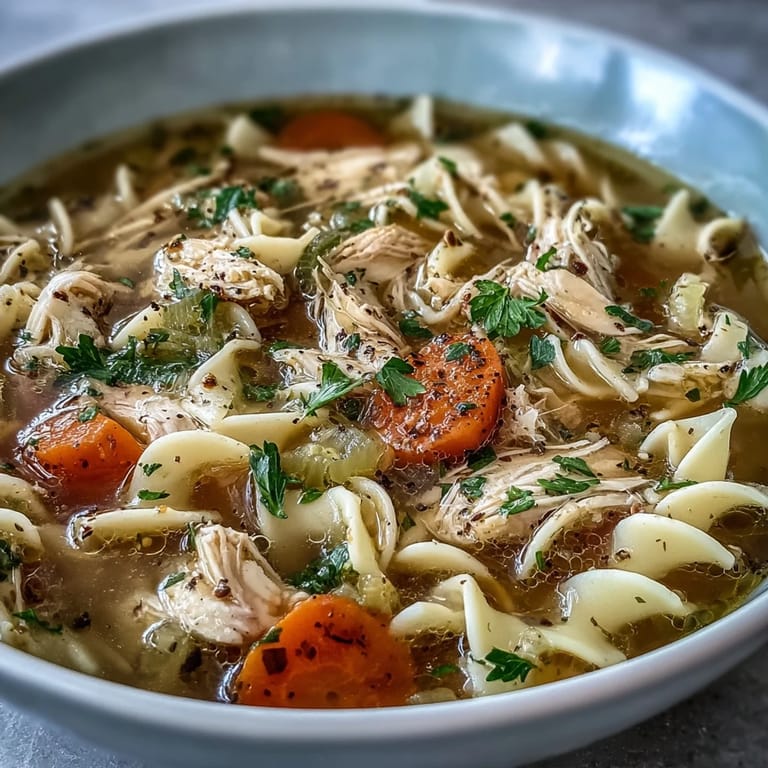
 This soup became the meal I reach for when someone's feeling under the weather or when life feels a little too chaotic to cook anything fancy. There's something about a warm bowl that says "I'm here for you" louder than words ever could.
The Beauty of the Instant Pot for Soups
The Instant Pot's pressure cooking method extracts flavor from bones and aromatics in a fraction of the time traditional simmering takes, which means you get a deeply flavored broth in minutes instead of hours. I used to think good soup required patience and planning, but this pot changed my entire approach to weeknight cooking. The sealed environment keeps all those wonderful smells and flavors concentrated, so nothing evaporates into your kitchen and gets wasted.
Customizing Your Bowl
Once you understand the basic structure of this soup, you can play with it endlessly without breaking it. I've swapped chicken for turkey, added extra vegetables like zucchini or spinach right at the end, and even thrown in a can of diced tomatoes for a different mood. The key is respecting the cooking time for the broth and chicken, then treating everything else as flexible depending on what's in your fridge.
Make-Ahead and Storage Wisdom
This soup actually tastes better the next day after the flavors have had time to meld and settle, so making a double batch on Sunday pays dividends through the week. Store it in the fridge for up to four days in an airtight container, or freeze it for up to three months if you skip the pasta and add fresh noodles when you reheat it. I learned the hard way that pasta soaks up all the broth if left together too long, turning your soup into more of a stew situation.
- If reheating from frozen, thaw it overnight in the fridge first, then warm gently on the stovetop with a splash of extra broth.
- For meal prep, store the broth and chicken separately from noodles, then combine just before eating for the best texture.
- Fresh parsley should always be added fresh right before serving, never stored with the soup.
 Pin it
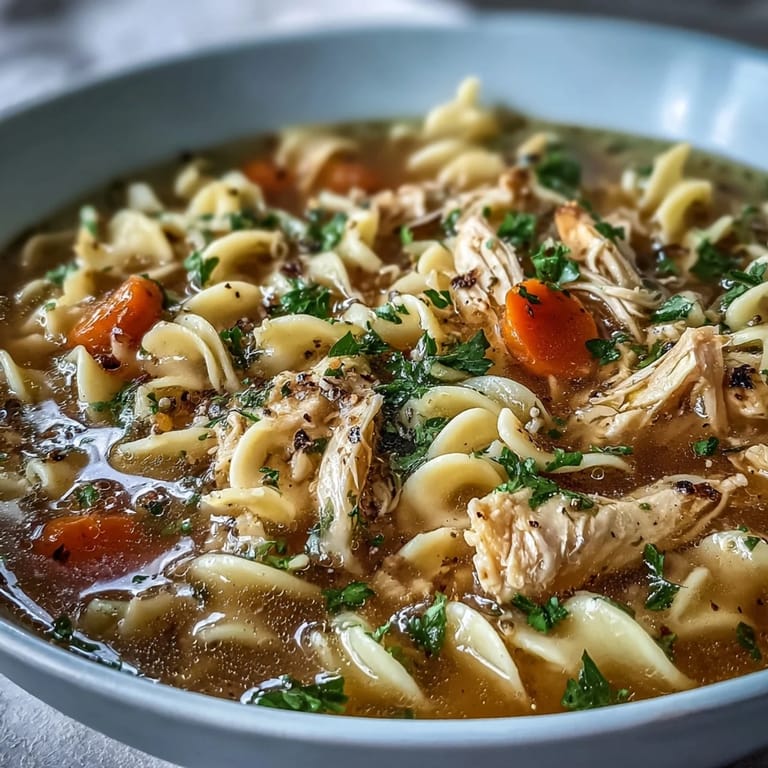
 This soup reminds me why I love cooking in the first place—it's about creating something nourishing that brings people together without fuss or pretense. A good bowl of chicken noodle soup never goes out of style.
Recipe FAQs
- → Can I use frozen chicken breasts?
Yes, you can use frozen chicken breasts. Increase the pressure cooking time to 12-15 minutes to ensure the chicken cooks through completely. Allow natural release for 10 minutes before quick-releasing remaining pressure.
- → How do I prevent the noodles from getting mushy?
Add the noodles during the final step using the Sauté function, not during pressure cooking. Simmer for 5-6 minutes until tender but still firm. The residual heat will continue softening them slightly, so remove from heat immediately when done.
- → Can I make this dairy-free?
This version is already dairy-free as written. No butter or cream is used in the base. The richness comes from the chicken broth and tender chicken meat. For extra creaminess without dairy, you can add a splash of coconut milk at the end.
- → What pasta works best as a gluten-free substitute?
Brown rice pasta, quinoa pasta, or gluten-free oat noodles work well. These tend to cook faster than wheat noodles, so check for doneness after 4 minutes of simmering. Avoid corn-based pasta as it can become gummy in soup.
- → Can I freeze leftovers?
The soup freezes well for up to 3 months, but freeze it without the noodles for best texture. Add fresh noodles when reheating. If freezing with noodles, they may become softer but the soup remains delicious and comforting.
- → How can I add more vegetables?
Feel free to add diced potatoes, green beans, or peas during the initial pressure cooking step. For delicate vegetables like spinach or kale, stir them in during the last 2 minutes of noodle simmering so they wilt perfectly without overcooking.