 Pin it
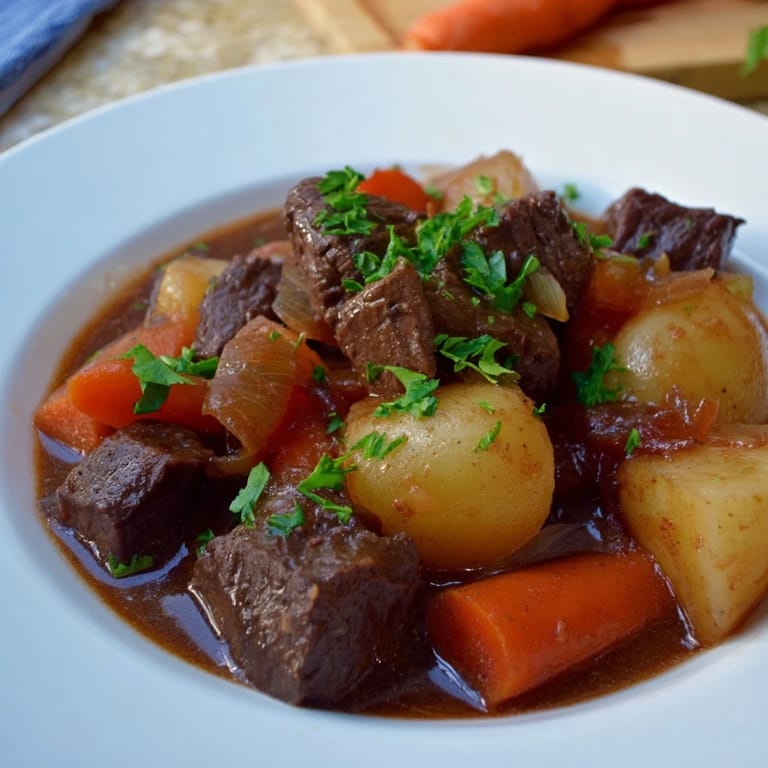
 My first real Irish stew came not in Ireland, but in a cramped London flat on a November evening when my roommate's mum sent over her family recipe with a note that said, "This fixes everything." I was skeptical about such a simple dish—beef, potatoes, a long braise—until the kitchen filled with that deep, savory steam and I understood what she meant. Some meals are meals; this one feels like a conversation about home.
I made this for a dinner party once where everything that could go wrong did—the oven broke, a guest arrived two hours early, my partner spilled red wine on the tablecloth—and yet the moment I ladled that stew into bowls, people just... quieted down and ate. There's something about a bowl of hot beef and potato that tells everyone else's chaos to wait its turn.
Ingredients
- Beef chuck, cut into 2-inch cubes (1.5 kg): Chuck is the secret here—it has enough marbling to stay tender through hours of simmering, not stringy like leaner cuts.
- Potatoes, peeled and chunked (4 large): Leave them a bit large; they soften gradually and help thicken the broth naturally as they break down.
- Carrots, sliced (4 large): Cut them on the bias so they look intentional and cook at the same pace as everything else.
- Onions and celery, chopped (2 large onions, 2 stalks): These build the flavor base—don't skip the celery, even if it seems invisible by the end.
- Garlic, minced (3 cloves): Add it after softer aromatics so it doesn't burn and turn bitter.
- Beef stock (1.2 liters): Homemade is lovely if you have it, but good store-bought works perfectly; taste it first, though, to gauge saltiness.
- Guinness or dark beer, optional (330 ml): If you use it, taste the stew first because you can't un-add it; if not, add a touch more stock instead.
- Tomato paste (2 tbsp): This concentrates into deep umami and bridges the flavors—cook it for a full minute to remove raw taste.
- Worcestershire sauce (2 tbsp): Check the label for gluten if that matters to you; it adds a quiet savory note that people can't quite name.
- Bay leaves, thyme, and rosemary (2 bay, 1 tsp each): Dried herbs are fine here; the long cooking time releases their oils fully.
- Salt, pepper, vegetable oil, and fresh parsley: Season at the end when you can taste the full picture, and parsley is your final bright note.
Tired of Takeout? 🥡
Get 10 meals you can make faster than delivery arrives. Seriously.
One email. No spam. Unsubscribe anytime.
Instructions
- Dry and Season Your Beef:
- Pat the cubes completely dry with paper towels—this is the only step that actually matters for browning. A damp cube will steam instead of sear, and you'll know the difference immediately.
- Build a Golden Crust:
- Heat oil until it shimmers, then brown the beef in batches, about 3 minutes per side. Don't crowd the pan; empty pot space is your friend here. Let each piece develop that mahogany surface before moving it to a plate.
- Soften the Aromatics:
- Add onions and celery to the same pot—all those browned bits are liquid gold—and cook until they collapse into softness, maybe 5 minutes. You'll know it's right when the kitchen smells sweet and savory at once.
- Wake Up the Tomato Paste:
- Stir it in and let it cook for a full minute, coating the pot. This deepens the color and removes any tinny taste it might have.
- Deglaze with Guinness (If Using):
- Pour it in and scrape the pot bottom with a wooden spoon, listening for the sound of caramelized bits coming loose. Let it bubble for 2 minutes—you'll smell the alcohol starting to cook off.
- Return Beef and Add Everything Else:
- The beef goes back, then carrots, potatoes, bay leaves, herbs, stock, and Worcestershire. Stir once to combine, and you'll notice how the beef is already tender from that first browning—the long simmer just finishes the job.
- Simmer Low and Slow:
- Bring to a gentle boil, then drop the heat to low, cover, and let it sit for 2 to 2.5 hours. Stir occasionally—not obsessively, just a couple times. You know it's done when a fork slides through beef like it's made of butter and the broth has gone silky.
- Taste and Finish:
- Remove bay leaves, taste, adjust salt and pepper. Sometimes the stew needs a tiny pinch more salt to bring everything into focus—trust your palate over the recipe.
 Pin it
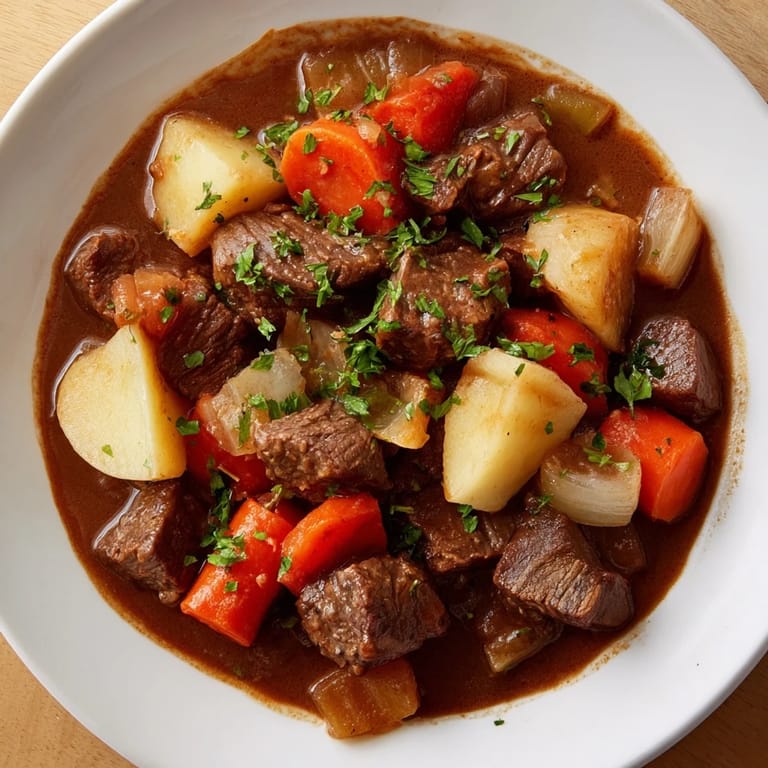
 The night my dad tried this version, he ate two bowls in silence and then said, "This is how I know you're becoming an adult"—not because of technique, but because I'd learned that comfort food is a form of listening. That moment changed how I cook this stew; now it's not about impressing anyone, it's about saying something kind in a bowl.
The Art of Browning
Browning beef isn't complicated, but it's where most home cooks lose confidence. The key is patience and heat—your oil should shimmer and move easily in the pan, and when you add beef, you should hear a sharp sizzle immediately. If it's quiet, your pan isn't hot enough and you'll steam the meat instead of searing it. I learned this the hard way by watching my first batch of beef turn grey and sad, and I've never made that mistake since. The difference between a stew that tastes flat and one that tastes deep and savory lives in those 3 minutes of browning per batch.
Why Low and Slow Works
Beef chuck is full of collagen—the connective tissue that makes it tough at first. Heat and time convert collagen into gelatin, which is what gives this stew its silky mouthfeel and rich broth. If you rush the cooking on high heat, the proteins contract and squeeze out moisture, leaving you with tough meat and thin liquid. Gentle simmering for 2 to 2.5 hours lets the transformation happen gradually and completely. It's worth setting a timer and resisting the urge to peek constantly; the stew doesn't need your hovering, just your trust.
Serving and Storage
Serve this hot with crusty bread to soak up the broth, or over creamy mashed potatoes if you want to lean into indulgence. The stew keeps beautifully in the fridge for up to 4 days and actually deepens in flavor as it sits, which means you can make it ahead and reheat gently on the stove without any fuss.
- For a thicker stew, mash a few potato pieces against the side of the pot and stir them back in once it's done cooking.
- You can substitute lamb for beef and follow the same method—Irish lamb stew is just as classic and equally forgiving.
- If someone at your table is gluten-free, check your Worcestershire and broth labels, skip the Guinness, and otherwise this recipe doesn't need to change at all.
 Pin it
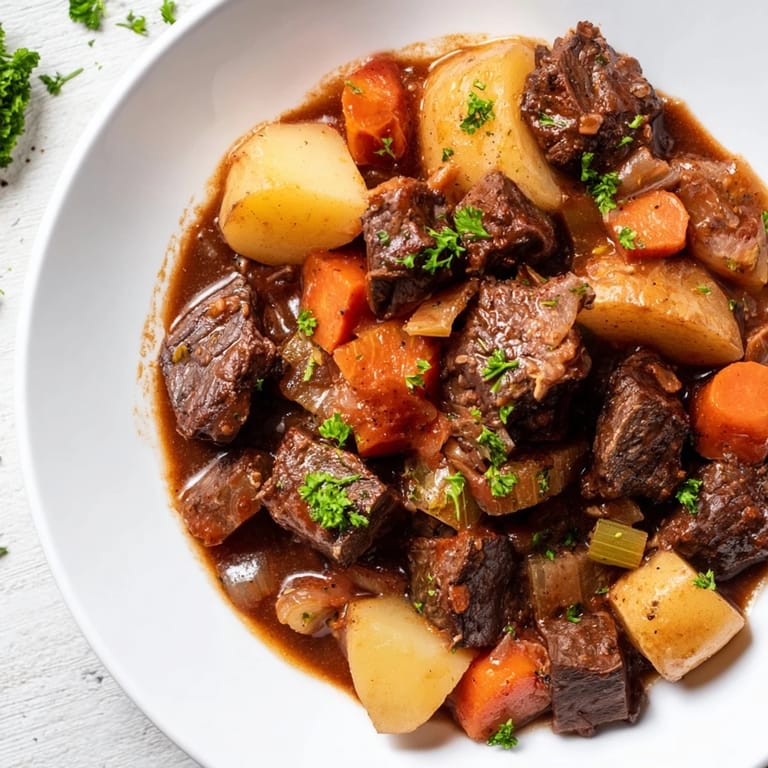
 There's a reason this stew has lasted centuries—it asks almost nothing of you except time, and gives back warmth, fullness, and the kind of satisfaction that lingers long after dinner. Make it once and you'll understand why people travel across oceans carrying recipes like this one.
Recipe FAQs
- → What cut of beef works best?
Beef chuck is ideal due to its marbling and ability to become tender during slow cooking.
- → Can I omit the dark beer?
Yes, the stew remains flavorful without it; simply increase the beef stock to compensate.
- → How do I thicken the stew?
Mash some potato pieces against the pot’s side and stir them in to achieve a thicker consistency.
- → What herbs enhance the flavor?
Bay leaves, thyme, and rosemary provide aromatic, earthy notes that complement the beef and vegetables.
- → How long should it simmer?
Simmer gently for 2 to 2.5 hours until the beef is fork-tender and vegetables are soft.