 Pin it
 The first time I made kibbeh, my hands were shaking slightly as I shaped each torpedo—not from nerves, but from the cold dough sticking to my palms while my grandmother watched silently from the kitchen corner. She'd never taught me before; I was learning from a hastily scrawled recipe and pure muscle memory borrowed from watching her cook decades earlier. When the first golden batch emerged from the hot oil, crackling and perfect, she simply nodded and said, "Now you know." That moment taught me that kibbeh isn't just meat and bulgur—it's a quiet passing of something precious between hands.
Years later, I made kibbeh for a dinner party where I was nervous about impressing my partner's family. The table fell silent after the first bite, and someone asked for the recipe before dessert even arrived. That's when I realized kibbeh has this quiet power—it tastes like home, like tradition, like someone cared enough to take time with their hands and their ingredients.
Ingredients
- Fine bulgur wheat: Rinse it thoroughly and let it hydrate—this is where the texture of your kibbeh is decided, so don't rush this step or your dough will be gritty.
- Lean ground beef or lamb: The leaner the better; any excess fat will make the mixture greasy and difficult to shape.
- Onion: Finely chopped, almost minced, so it distributes evenly and melts into both the dough and filling.
- Allspice and cinnamon: These warm spices are the soul of kibbeh; don't skip them or substitute, they're what make it unmistakably Lebanese.
- Pine nuts: Toast them gently in the filling so they release their buttery flavor and turn golden, which elevates the entire dish.
- Salt and black pepper: Season boldly; kibbeh can handle it.
- Cold water: Add gradually to the dough to achieve the right texture—too wet and it falls apart, too dry and it cracks.
- Vegetable or olive oil: For frying, use vegetable oil; for baking, olive oil gives a richer flavor and helps achieve crispness.
Tired of Takeout? 🥡
Get 10 meals you can make faster than delivery arrives. Seriously.
One email. No spam. Unsubscribe anytime.
Instructions
- Hydrate and soften the bulgur:
- Rinse the bulgur under cold water until the water runs clear, then let it sit for 10 minutes. You want it tender but not mushy—it should feel like wet sand.
- Build the dough:
- Combine the softened bulgur with ground meat, chopped onion, salt, allspice, cinnamon, and pepper in a large bowl. Knead it like bread, adding cold water a tablespoon at a time until the mixture becomes smooth and holds together. This takes patience; don't rush it.
- Make the filling:
- Heat olive oil and sauté onions until they're soft and sweet, about 3 minutes. Add the ground meat, breaking it apart as it cooks so no lumps remain.
- Toast the pine nuts:
- Once the meat is browned, stir in the pine nuts along with allspice, cinnamon, salt, and pepper. Cook for another 3 to 4 minutes until the pine nuts turn golden and smell absolutely intoxicating. Let it cool slightly before you touch it.
- Shape with wet hands:
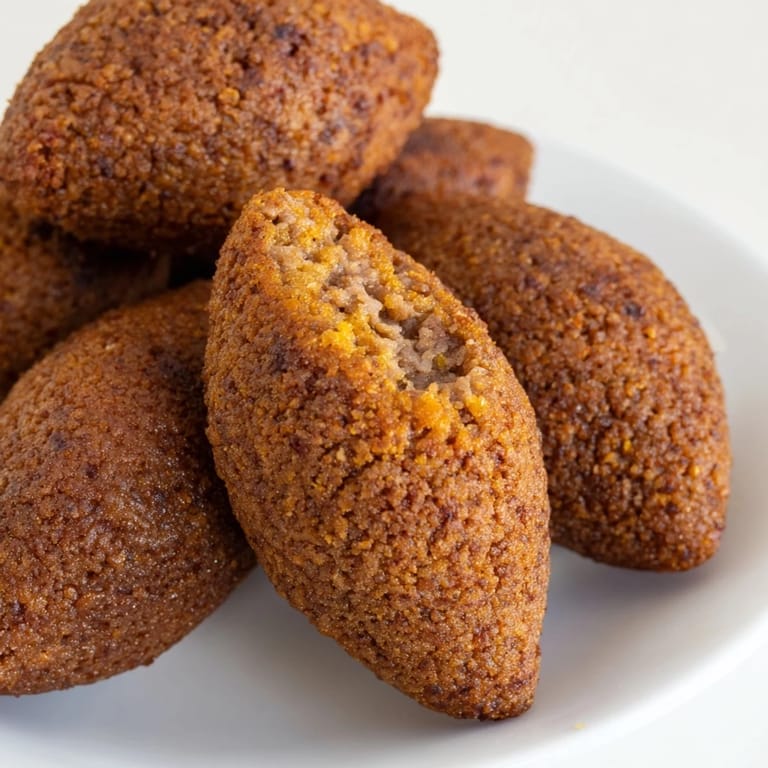
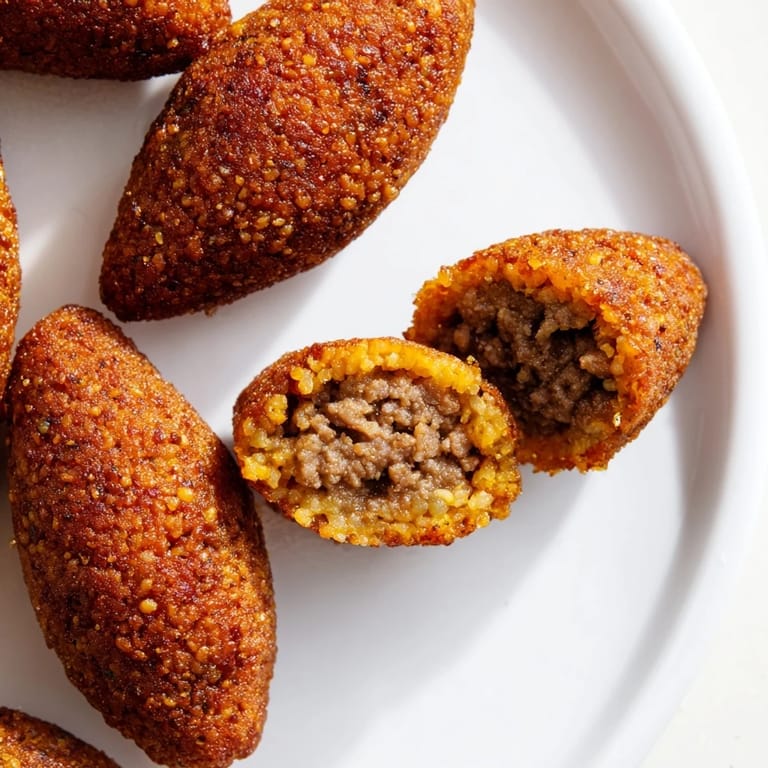
- This is the meditative part. Wet your hands so the dough doesn't stick, pinch off a golf-ball-sized piece, flatten it gently in your palm into a thin oval shell. Spoon 1 to 2 teaspoons of filling into the center, then carefully pinch the edges closed, shaping it into a torpedo or football shape.
- Fry until golden:
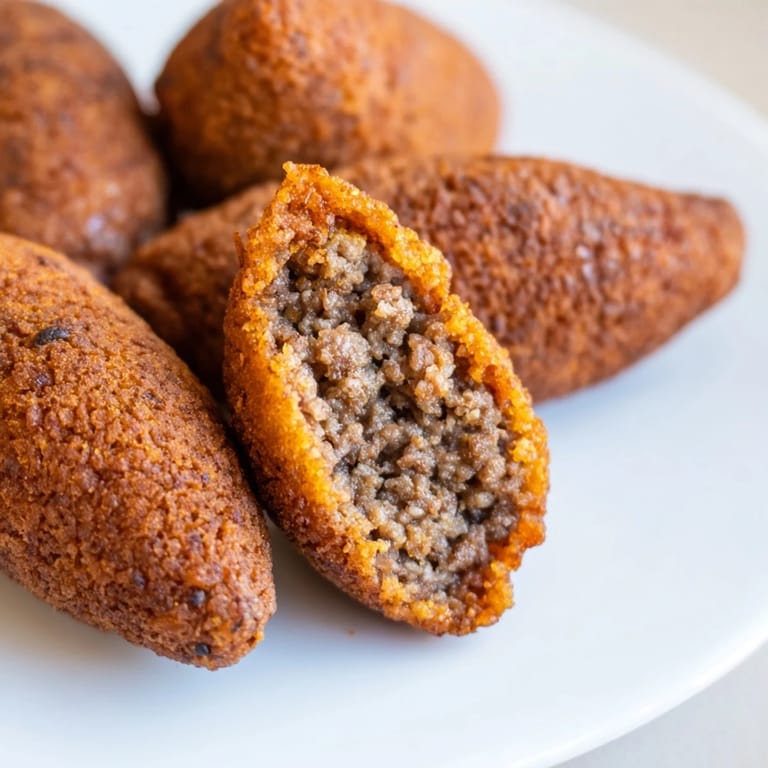
- Heat vegetable oil to 180°C (350°F) and fry kibbeh in batches for 4 to 5 minutes, turning once, until they're deep golden brown and the exterior crackles when you touch it. Drain on paper towels while they're still warm.
- Or bake for a lighter touch:
- Preheat the oven to 200°C (390°F), arrange kibbeh on a parchment-lined baking sheet, brush lightly with olive oil, and bake for 25 to 30 minutes, turning halfway through, until crispy and golden.
 Pin it
 One afternoon, I made a double batch of kibbeh while my nephew watched from the kitchen counter. He asked why I kept dipping my hands in water between each piece, and I showed him how the dough would otherwise stick and tear. He tried shaping one himself, his small hands gentle and focused, and when it fried perfectly golden, his face lit up in a way that reminded me why we cook—not just to eat, but to share the small magic of knowing how to make something with your own hands.
Frying vs. Baking: Finding Your Method
The choice between frying and baking kibbeh is deeply personal. I grew up with fried kibbeh—that shattering, crackling exterior that yields to a tender, warm filling is the traditional experience, and honestly, it's hard to beat. But life changes; sometimes I'm feeding someone watching their oil intake, or I simply don't want to stand over a hot pan. Baked kibbeh is lighter and just as delicious if you brush it properly with olive oil and turn it halfway through baking. The filling stays juicy, the outside crisps beautifully, and you have the freedom to walk away.
Serving and Sharing
Kibbeh begs for accompaniments. Serve them warm with thick, cooling yogurt on the side, or a tahini sauce fragrant with lemon and garlic. A simple salad of tomatoes, cucumbers, and parsley alongside them creates a meal that feels both light and deeply satisfying. I've found that kibbeh somehow tastes better when shared, when there's conversation and laughter around the table, as if the spices unlock something that only happens between people.
Planning Ahead and Making Variations
One of the greatest gifts kibbeh gives you is its freezer-friendliness. Shape your kibbeh, place them on a baking sheet, freeze until solid, then transfer to a container where they'll keep for up to three months. Fry or bake them straight from frozen, adding just a minute or two to the cooking time—it's like having a treasure chest of warm comfort ready whenever you need it. For a vegetarian version, I've had beautiful results using cooked lentils mixed with sautéed mushrooms and the same spices in the filling; it has an earthy, satisfying depth.
- Make a large batch on a Sunday afternoon and freeze in portions for easy weeknight dinners.
- Taste the filling and dough separately before assembly and adjust the spices; everyone's palate is different.
- If your dough keeps breaking while shaping, it's too dry—add a touch more water and knead again briefly.
 Pin it
 Kibbeh is more than a recipe; it's an invitation to slow down and use your hands with intention. Every time you make it, you're part of a long chain of cooks stretching back generations, and that's something worth honoring.
Recipe FAQs
- → What is kibbeh made of?
Kibbeh consists mainly of fine bulgur wheat combined with ground meat, typically beef or lamb, seasoned with spices such as allspice, cinnamon, and black pepper.
- → How do you shape Lebanese kibbeh properly?
Wet your hands before shaping to form thin oval shells from the bulgur dough, then fill with a spiced meat mixture and pinch edges to seal, creating torpedo-shaped croquettes.
- → Can kibbeh be baked instead of fried?
Yes, kibbeh can be brushed with olive oil and baked at 200°C (390°F) for 25-30 minutes, turning halfway to achieve a crispy and golden texture without frying.
- → What fillings can be used in kibbeh?
The filling typically includes ground beef or lamb sautéed with onions, pine nuts, and warm spices; vegetarian versions use lentils and sautéed mushrooms instead.
- → What sides complement kibbeh well?
Kibbeh pairs nicely with yogurt or tahini sauces and a fresh salad, enhancing the dish's rich and aromatic flavors.