 Pin it
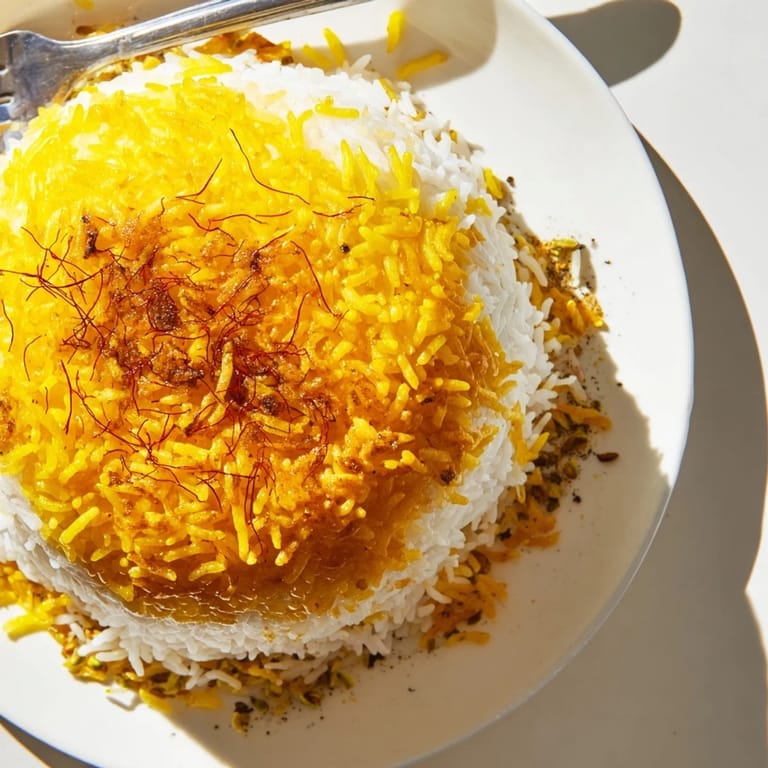
 The first time I watched my grandmother unfold a kitchen towel around a pot lid, I thought she was being overly cautious. Then she inverted the whole thing onto a platter with a confident thud, and out tumbled this mahogany-gold disc of caramelized rice so crispy it shattered under a spoon. That was tahdig, and I understood immediately why she guarded this recipe so carefully.
I once brought this to a potluck, and an older Persian woman pulled me aside afterward, eyes gleaming, asking if I'd learned from family. I hadn't yet, but I was determined to after seeing how much that golden crust meant to her.
Ingredients
- Basmati rice (2 cups): The grains need to stay separate and tender, not mushy, so basmati is essential; its length and subtle fragrance become even more pronounced after soaking.
- Saffron threads (1/4 teaspoon): This tiny amount transforms into liquid gold that whispers through the rice; grinding the threads first helps them release their full perfume.
- Plain Greek yogurt (4 tablespoons): This creamy base prevents the tahdig from burning while creating that coveted caramelized layer.
- Vegetable oil and unsalted butter (2 tablespoons each, plus extra): Together they build enough heat to create the crust while keeping the rice from sticking.
- Ground turmeric (1/2 teaspoon): Optional, but it adds an earthy warmth and beautiful color that honors the dish's roots.
- Ground black pepper (1/2 teaspoon): A grounding spice that prevents the dish from feeling one-dimensional.
Tired of Takeout? 🥡
Get 10 meals you can make faster than delivery arrives. Seriously.
One email. No spam. Unsubscribe anytime.
Instructions
- Rinse and soak the rice:
- Run the basmati under cold water, stirring it with your fingers until the water runs clear; this removes the starch that would otherwise make the grains stick together. Soak it in salted water for at least thirty minutes, which helps the grains absorb water evenly and cook through.
- Parboil until just tender:
- Bring a large pot of water to a rolling boil, add the drained rice, and let it cook for five to six minutes until it's tender but still has a subtle firmness when you bite into a grain. The rice will finish cooking in the pot, so don't let it go fully soft.
- Brew the saffron elixir:
- Grind the threads with the back of a spoon in a small bowl, then pour hot water over them and let them steep for ten minutes until the color deepens into a rust-tinged liquid that smells like perfume.
- Mix the tahdig base:
- Combine yogurt with one tablespoon of your saffron water, the turmeric if you're using it, and one cup of the parboiled rice, stirring until everything is evenly distributed and the mixture looks like thick pudding. This is your insurance policy against burnt bottoms and your foundation for the crust.
- Heat the cooking vessel:
- Pour oil and melted butter into your heavy-bottomed pot over medium heat, letting it shimmer for a moment until you can smell the butter toasting slightly; this takes about two minutes.
- Build the tahdig layer:
- Spread the yogurt-rice mixture in an even layer across the bottom of the hot pot, listening for the gentle sizzle that tells you the caramelization is beginning. Work quickly but gently so you don't splash.
- Add the remaining rice:
- Spoon the rest of the rice over the yogurt layer, mounding it gently toward the center to help steam circulate, then drizzle the remaining saffron water over the top. Use the handle of a wooden spoon to poke five or six small holes through the rice so steam can escape without building up pressure.
- Steam with patience:
- Wrap your pot lid in a clean kitchen towel to trap moisture, cover the pot tightly, and cook over medium heat for ten minutes until you hear a faint crackling sound from below. Lower the heat to low and let it cook untouched for thirty-five to forty minutes; resist the urge to peek because each opening releases precious steam.
- Invert and serve:
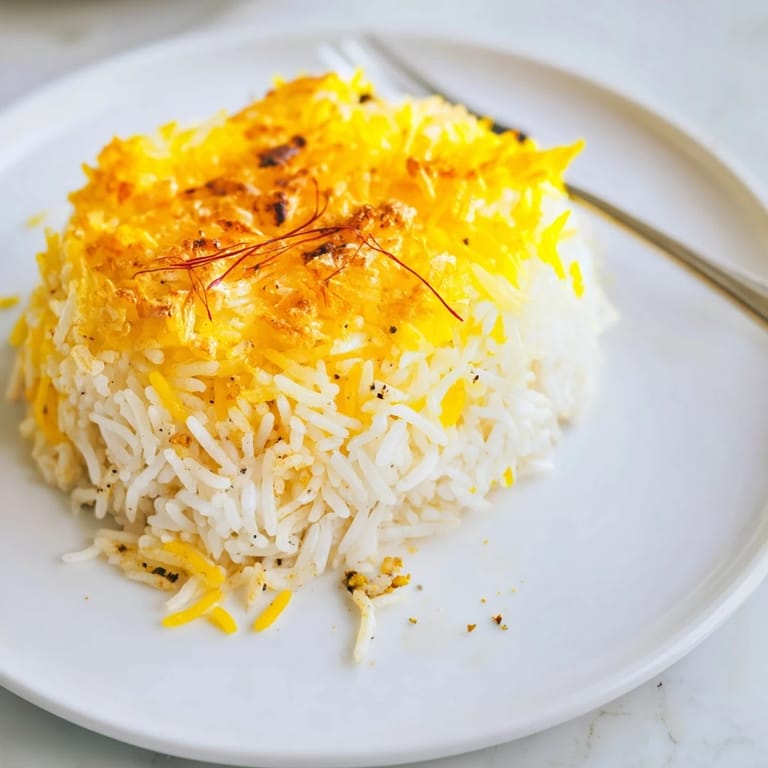
- Remove from heat and let the pot rest for five minutes so the tahdig can release from the bottom without breaking apart. Place your serving platter upside-down over the pot, take a breath, and flip it quickly and confidently; the whole golden crust should tumble out as one magnificent disk.
 Pin it
 I learned the hard way that a serving platter matters more than you'd think; a flat, heavy one gives you the confidence to flip quickly and without hesitation, which is when the tahdig stays whole instead of crumbling into the pot.
The Magic of the Tahdig
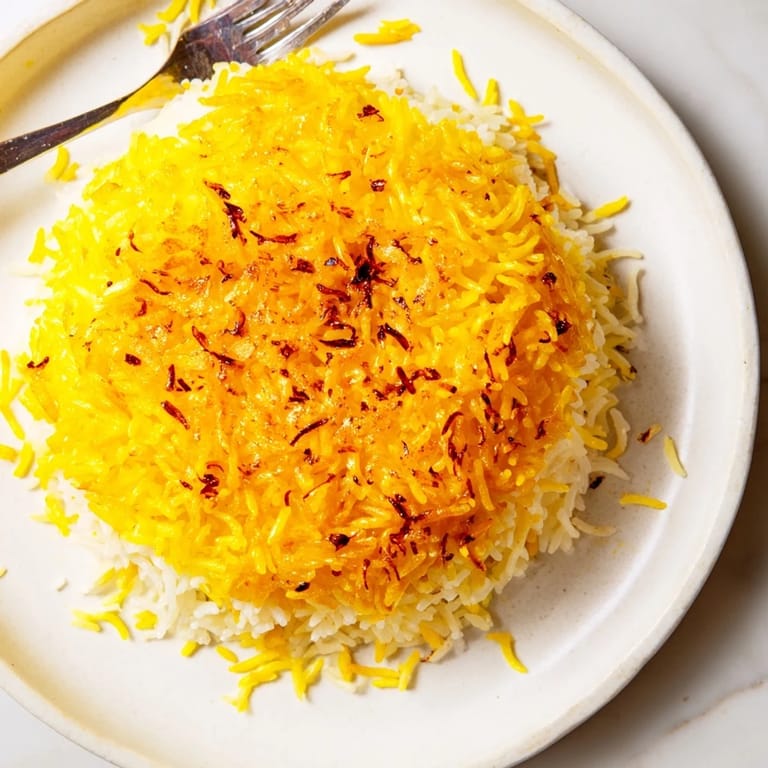
There's something alchemical about how the yogurt and rice, seemingly humble together, transform into this caramelized crust that cracks like burnt sugar. The saffron threads infuse it with flavor and that sunset color, but the real magic happens from the heat below, which slowly builds the Maillard reaction into something between crispy and chewy. This is comfort and spectacle happening simultaneously, which is why tahdig commands such reverence at Persian tables.
Timing and Temperature
The two-stage cooking method is crucial: the medium heat burst at the beginning kickstarts the crust formation, while the extended low-heat period finishes the rice without burning what's underneath. If you start too hot, the bottom will char before the rice cooks through; if you skip the initial medium heat, the tahdig will never develop. The wrapped lid prevents condensation from raining back down and undoing all your work, so that small gesture carries enormous weight in the final result.
Variations and Flourishes
Once you've mastered the basic tahdig, the dish opens up to your creativity and whatever ingredients call to you in the moment. You can substitute thin potato slices for the yogurt layer if you want an earthier base, or tear flatbread into pieces and use that instead. A cinnamon stick or a few cardamom pods added to the soaking water will whisper spice through every grain, while barberries scattered on top before serving add a bright tartness that cuts through the richness.
- Barberries, dried cranberries, or even pomegranate seeds add color and a tart note that balances the richness.
- Fresh herbs like cilantro or parsley stirred into the finished rice bring freshness and a whisper of brightness.
- A squeeze of lime juice over the warm rice just before serving lifts everything and prevents the dish from feeling heavy.
 Pin it
 This dish teaches you something every time you make it about patience, heat, and the rewards of ritual. Serve it to people you love and watch their faces as they encounter that golden crust for the first time.
Recipe FAQs
- → What is tahdig and how is it made?
Tahdig is the golden, crispy crust that forms at the bottom of the pot when cooking Persian rice. It’s made by combining yogurt, saffron, and some of the parboiled rice before layering it and cooking on low heat to caramelize.
- → Can I use other rice types instead of basmati?
While basmati rice is preferred for its aroma and texture, other long-grain rice can be used but may affect the final fluffiness and fragrance.
- → How do you achieve the perfect crispy tahdig crust?
Using a heavy-bottomed pot and cooking on medium then low heat with a lid wrapped in a towel helps steam the rice evenly and form a crisp tahdig without burning.
- → What are common aromatics added to Persian tahdig rice?
Saffron is essential for its color and aroma, with optional turmeric and pepper enhancing flavor. Some add cinnamon sticks or cardamom pods during boiling for extra fragrance.
- → Is tahdig suitable for vegetarian and gluten-free diets?
Yes, this version is vegetarian and gluten-free, containing dairy from yogurt and butter but no gluten ingredients.