 Pin it
 I discovered the power of a color gradient on a fruit platter completely by accident, when a friend challenged me to make something "Instagram-worthy" for a summer gathering. I stood in my kitchen, pomegranate in hand, and realized I had this beautiful collection of berries and stone fruits that ranged from deep crimson to pale blush. Instead of tossing them on a board randomly, I arranged them by shade—and watching people's faces when they saw it emerge was worth every careful placement. It became less about fancy technique and more about letting the fruit speak through color, which felt like discovering something I didn't know I needed.
The first time I made this for a dinner party, my cousin walked in mid-arrangement and spent ten minutes just watching, commenting on how the colors reminded her of a sunset. That's when I realized this wasn't just a fruit platter—it was a conversation piece that made people slow down and actually look at their food. Now whenever I need something that feels special but doesn't stress me out, this is the answer.
Ingredients
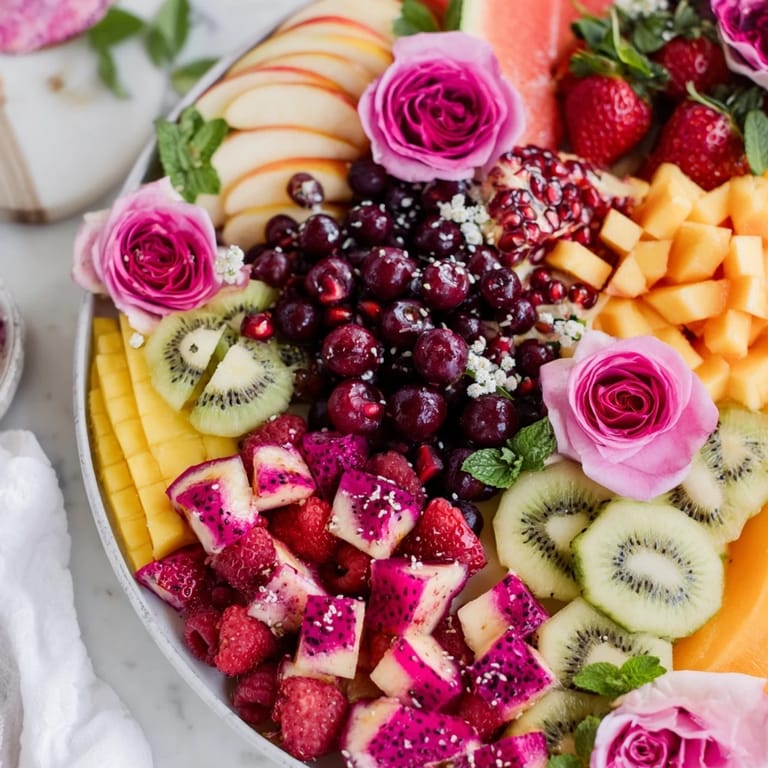
- 1 large pomegranate, halved: The heart of this whole arrangement—choose one with deep color and a firm, unblemished skin, as it anchors both the visual and the flavor profile.
- 1 cup dark cherries, pitted: These jewel-toned fruits anchor the deepest part of your color story, and pitting them ahead means no sticky fingers during plating.
- 1 cup red grapes: They hold their shape beautifully and provide natural glossiness that photographs like a dream.
- 1 cup strawberries, hulled: Slice thicker ones lengthwise to maximize surface area and visual impact in the red section.
- 1 cup raspberries: These bridge the gap between red and pink—handle them gently as they bruise easily, and add them last if your platter will sit for a while.
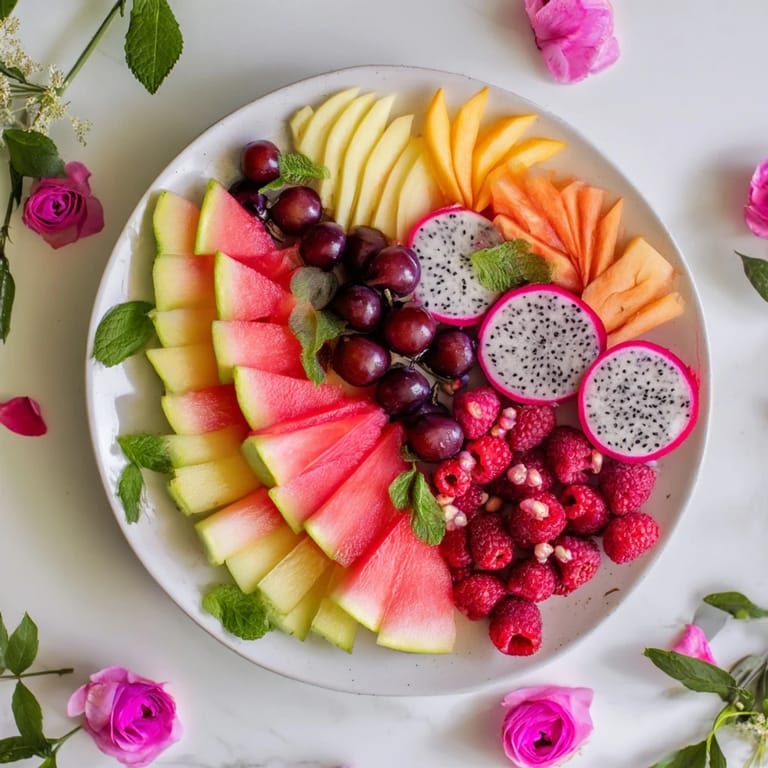
- 1 cup watermelon, cubed: Cut these into neat cubes rather than chunks; the uniform size keeps the gradient feeling intentional.
- 1 cup pink grapefruit segments: Membrane them carefully so each segment stays plump and pristine—this detail makes the difference between casual and curated.
- 1 cup dragon fruit, cubed: The pale pink interior creates that crucial transition to the white fruits, and the tiny black seeds add unexpected texture.
- 1 cup apple slices, pink or blush varieties: Toss these in a tiny bit of lemon juice the moment you slice them to prevent browning.
- 1 cup pear slices: These are your palest element, so they should be arranged at the outermost edge of your gradient for maximum visual flow.
- Fresh mint leaves and edible rose petals (optional): These garnishes aren't just decorative—they signal to guests that this is a thoughtful, special arrangement worth savoring.
Tired of Takeout? 🥡
Get 10 meals you can make faster than delivery arrives. Seriously.
One email. No spam. Unsubscribe anytime.
Instructions
- Start with your centerpiece:
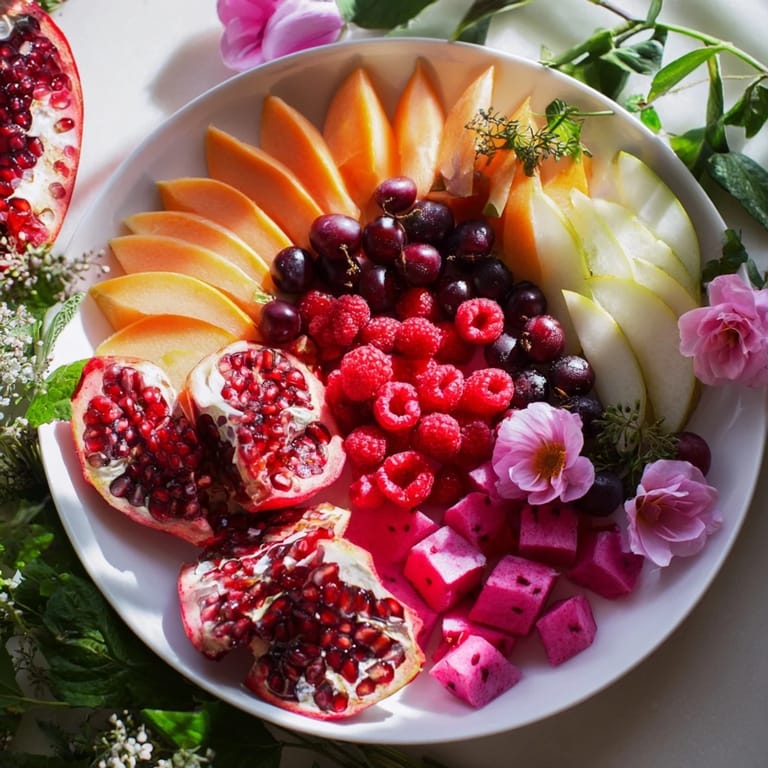
- Place the halved pomegranate cut-side up in the absolute center of your platter, positioning it slightly off-center if your platter is round—it feels more dynamic that way. This is your anchor, so make sure it's stable and won't shift as you layer around it.
- Lay down the deepest reds:
- Arrange the dark cherries, red grapes, and strawberries in a loose crescent around the pomegranate, letting them nestle close but not overlap too much. Step back and look at the shape—you're creating a frame, not a solid mass.
- Build the pink transition:
- Add your raspberries, watermelon cubes, and grapefruit segments in the next ring, overlapping slightly with the reds to create a soft gradient. The watermelon should fan slightly and the raspberries can nestle into little gaps to fill out the circle.
- Finish with the pale edge:
- Layer your dragon fruit, apple slices, and pear slices around the outer perimeter, creating a gentle fade to almost-white. This is where precision matters—stagger the slices so they catch the light and create visual rhythm.
- Final garnish:
- Scatter fresh mint leaves across the whole platter in loose clusters, and if you're using edible rose petals, dot them strategically where they'll stand out against the fruit. Serve immediately or refrigerate covered until your guests arrive.
 Pin it
 There's something almost meditative about standing over a platter, arranging fruit by shade, knowing that something so simple can bring genuine joy to a table. It shifted how I think about entertaining—not everything needs to be complicated to feel thoughtful.
The Art of the Gradient
This platter works because our eyes are drawn to color progression in nature—sunsets, flowers, even ripening fruit on a tree. The moment you commit to a gradient instead of random placement, suddenly it feels intentional and elevated. I've learned that when you arrange food by color, people unconsciously eat it in order, savoring the flavor journey you've created. It's a quiet form of storytelling that happens on the plate.
Seasonal Swaps and Flexibility
This platter flexes beautifully across seasons—in winter you might swap in pomegranate arils, red currants, and sliced persimmons; in summer, add fresh lychees or white peaches to the pale section. The structure stays the same, so you're never reinventing the wheel, just responding to what looks beautiful at the market. I keep a mental list of which fruits work at each color level, so I can pivot based on what's actually good that week.
Make It Memorable
The beauty of a platter like this is that it gives people permission to eat with their hands, to pick and taste, to linger. It becomes less about consumption and more about experience—and that's when food becomes memorable. I've started bringing these to potlucks and small gatherings specifically because it changes the energy of the table.
- Chill your serving platter in the freezer for 15 minutes before assembling—cold surfaces keep fruit fresher and make the colors pop.
- If you're transporting it, use a flat, sturdy container and keep it on the car floor rather than a seat to minimize jostling.
- Set it out 10 minutes before serving so the fruit comes to just slightly above refrigerator temperature for the best flavor.
 Pin it
 This platter reminds me why I cook at all—not because it's complicated, but because taking care to make something beautiful is its own kind of love. Serve it with intention, and watch what happens.