 Pin it
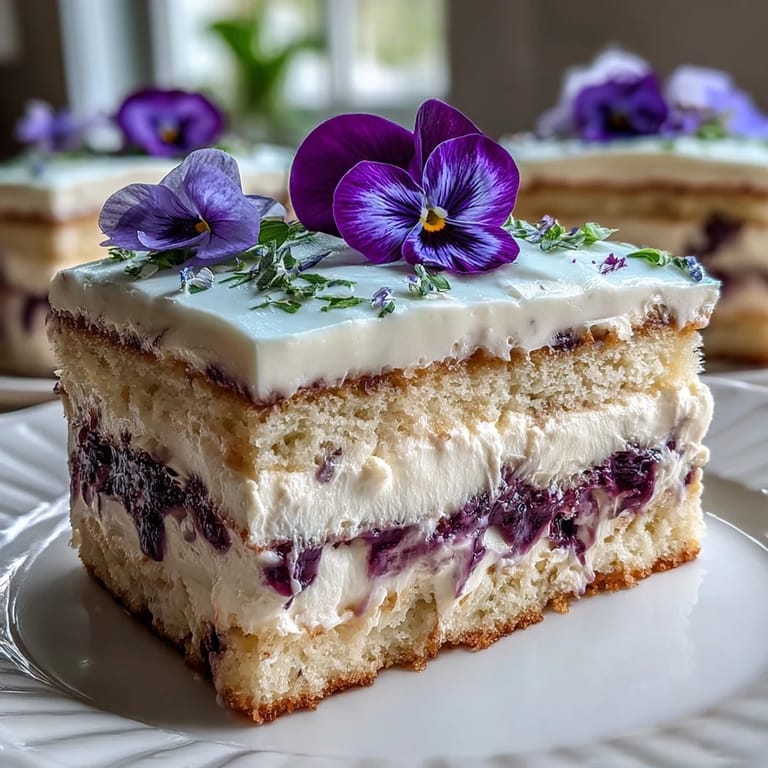
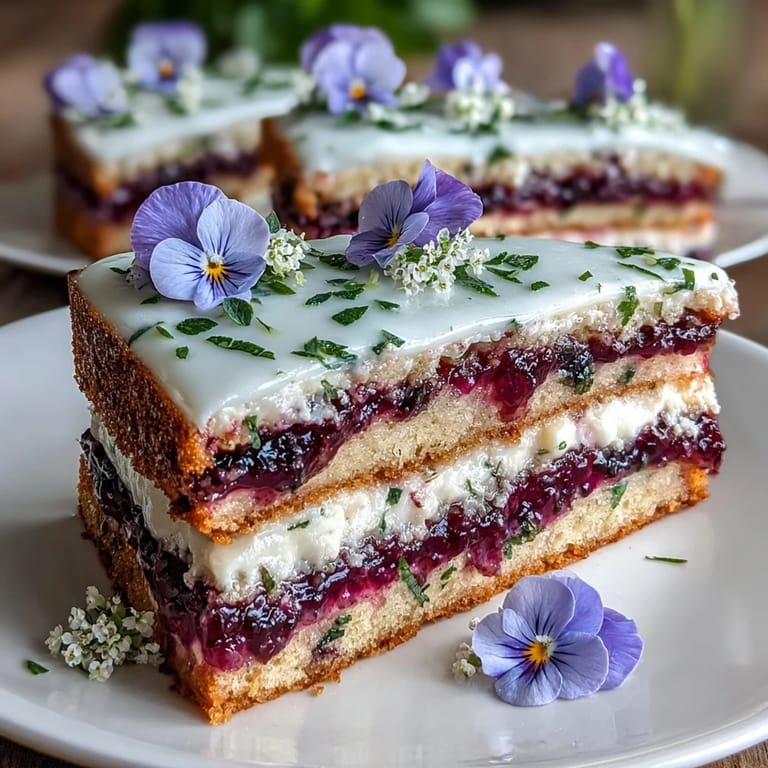
 My neighbor Sarah handed me a small envelope of pressed violets one April morning, insisting I needed to do something beautiful with them before they faded. I'd never worked with edible flowers before, but standing in my kitchen with those delicate purple petals, I suddenly understood why she was so excited. This spring cake became my answer—a tender vanilla layer cake that transforms into something truly magical the moment those flowers catch the light.
I baked this for my daughter's garden party last May, and watching guests literally gasp when they saw it emerge from the kitchen felt worth every minute of preparation. Someone asked if I'd hired a pastry chef, and I laughed so hard I nearly dropped it. That's when I realized this cake doesn't just taste good—it makes people feel something.
Ingredients
- All-purpose flour (2 1/2 cups): Don't sift it obsessively, but do sift it once to break up any clumps—this prevents dense pockets in your finished cake.
- Baking powder (2 1/2 tsp): Fresh baking powder matters here, so check your expiration date if your cakes have been falling flat lately.
- Salt (1/2 tsp): A small pinch that makes the vanilla sing without tasting salty at all.
- Unsalted butter (1 cup, softened): Leave it on the counter for at least an hour before you start—cold butter won't cream properly no matter how long you beat it.
- Granulated sugar (1 3/4 cups): The key to a tender crumb is creaming this long enough with the butter until it looks pale and mousse-like.
- Eggs (4 large, room temperature): Cold eggs seize the batter; room temperature ones blend in smoothly and create a better structure.
- Pure vanilla extract (1 tbsp): This is not the place to use imitation vanilla—the pure stuff actually tastes like spring tastes.
- Whole milk (1 cup, room temperature): The alternating method with flour keeps the batter from breaking, which is the secret to a tender crumb.
- Heavy whipping cream (2 cups, cold): Chill your bowl and beaters first, and stop beating the moment peaks turn stiff—overbeaten cream becomes grainy.
- Powdered sugar (1/2 cup): Sift this to avoid little lumps in your frosting.
- Pressed edible flowers (1/2–1 cup): Press them between parchment and heavy books for at least 24 hours; they should be papery-thin and completely dry before decorating.
- Fresh mint leaves (optional): These add a whisper of green that balances the flowers beautifully.
Tired of Takeout? 🥡
Get 10 meals you can make faster than delivery arrives. Seriously.
One email. No spam. Unsubscribe anytime.
Instructions
- Prepare your pans and heat your oven:
- Preheat to 350°F and grease two 8-inch round pans with butter or cooking spray, then line the bottoms with parchment paper—this ensures your cakes release cleanly. Have everything ready before you start mixing because this batter doesn't wait.
- Mix your dry ingredients:
- Sift the flour, baking powder, and salt together into a medium bowl, which aerates the flour and distributes the leavening evenly. Set this aside and don't second-guess yourself.
- Cream butter and sugar until fluffy:
- Beat them together for 3–4 minutes until the mixture lightens in color and texture, almost like thick frosting. You'll hear the mixer change tone when it's ready—listen for that subtle shift.
- Add eggs one at a time:
- Beat each egg in fully before adding the next, which prevents the batter from looking curdled or broken. Scrape down the bowl between additions.
- Stir in vanilla:
- A simple stir, nothing fancy—the vanilla is already dissolved and ready to flavor everything ahead.
- Alternate flour and milk in three additions:
- Start with flour, then milk, then flour, always beginning and ending with the flour mixture; this keeps the batter emulsified and tender. Mix just until combined—overmixing develops gluten and makes the cake tough.
- Divide batter evenly and bake:
- Split the batter between your pans, smooth the tops gently, and bake for 30–35 minutes until a toothpick comes out clean. The kitchen will smell absolutely divine.
- Cool the cakes properly:
- Let them rest in the pans for 10 minutes, then turn out onto wire racks to cool completely—rushing this step can crack your layers. Completely cool cakes frost better and don't melt the whipped cream.
- Make the whipped cream frosting:
- Beat cold cream, powdered sugar, and vanilla in a chilled bowl until stiff peaks form—this takes about 2–3 minutes with an electric mixer. Don't walk away; the transition from perfect to grainy happens fast.
- Assemble the cake:
- Place one cooled cake layer on your serving plate, spread a generous layer of whipped cream on top, then crown it with the second layer. Frost the top and sides with the remaining whipped cream, using an offset spatula to create soft, natural-looking swirls.
- Press on the flowers:
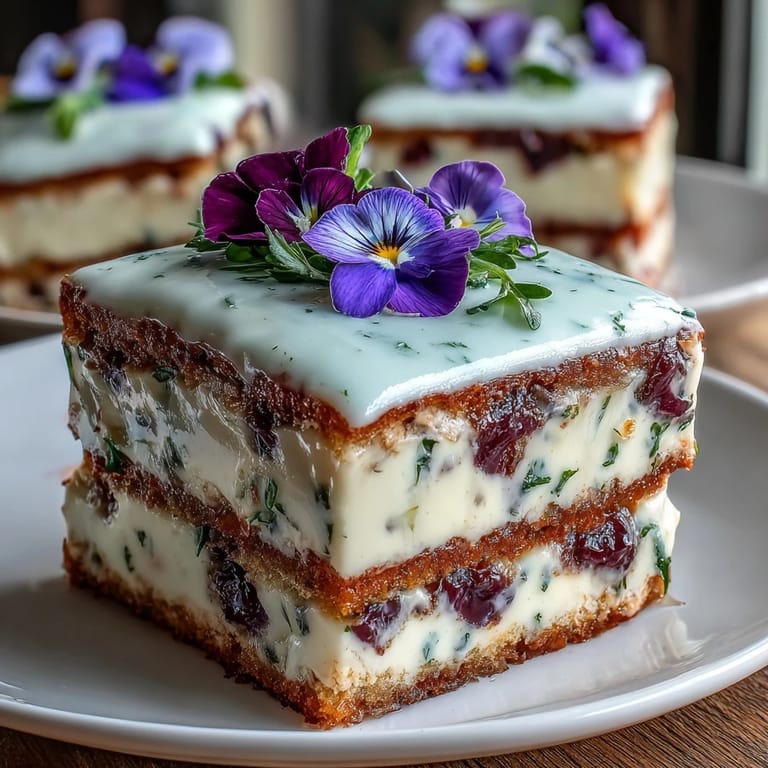
- Gently press your dried flowers onto the frosted cake, arranging them in a pattern that feels right to you—there's no wrong way here. Scatter mint leaves around if you'd like.
- Chill before serving:
- Refrigerate for at least 30 minutes so the frosting sets and the flowers adhere properly. This resting time also lets all the flavors settle and the cake slice cleanly.
 Pin it
 After the garden party ended and everyone had gone home with full bellies and compliments, my daughter hugged me in the kitchen and said, 'That cake made people happy just by looking at it.' Somehow that simple observation made all the technique and timing feel worthwhile.
The Art of Pressing Flowers
The flowers matter more than you'd think, and pressing them yourself teaches patience in a way that's worth the wait. I learned the hard way that flowers need to be harvested on a dry morning after the dew has evaporated, then placed between parchment pages and weighted down with heavy books in a dark, cool place. After about a week they start to feel papery, but give them the full 24 hours—the drier they are, the longer they'll last on the cake and the more vivid their color.
Why Whipped Cream Makes All the Difference
Buttercream would mask the delicate vanilla flavor of the cake, but whipped cream gets out of the way and lets everything shine. The best part is that whipped cream frosting is forgiving—a little wobble or rustic swirl actually looks more elegant than a perfectly smooth finish. It also means you're not piping elaborate designs, just spreading and pressing flowers, which keeps this cake approachable even if you're not a decorating expert.
Serving and Storage Wisdom
This cake is best served chilled, straight from the refrigerator, because the whipped cream holds its shape better and the flavors taste brighter when cold. Slice with a warm, damp knife for the cleanest cuts, wiping the blade between slices so the frosting doesn't drag and distort your pretty flowers.
- Store leftovers covered in the fridge for up to 24 hours, though the frosting will slowly weep water as it sits.
- If you're making this ahead, bake the cake layers a day early and wrap them undecorated, then frost and flower it a few hours before serving.
- For a citrusy spring version, stir 1–2 tsp lemon zest into the batter before baking.
 Pin it
 This cake transformed my understanding of what home baking can be—not just delicious, but genuinely beautiful and full of meaning. It's worth making once just to see the look on someone's face.
Recipe FAQs
- → How do pressed edible flowers enhance the cake?
Pressed edible flowers add a natural, elegant visual appeal without overpowering the delicate vanilla and cream flavors.
- → What is the best way to achieve a light texture in the cake layers?
Creaming softened butter and sugar until fluffy, then gently alternating flour and milk additions helps achieve a tender, airy crumb.
- → Can I prepare the whipped cream frosting in advance?
Yes, whip the cream just before assembling to maintain firmness, or chill briefly before use to keep it stable.
- → Why is chilling recommended after decorating the cake?
Chilling allows the whipped cream to set firmly and helps pressed flowers adhere gracefully to the surface.
- → Are there optional flavor additions to complement the vanilla base?
Adding a teaspoon or two of lemon zest to the batter offers a fresh citrus note that pairs well with floral decorations.